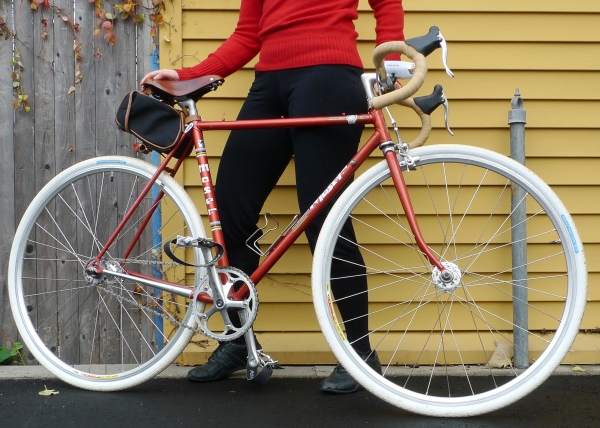
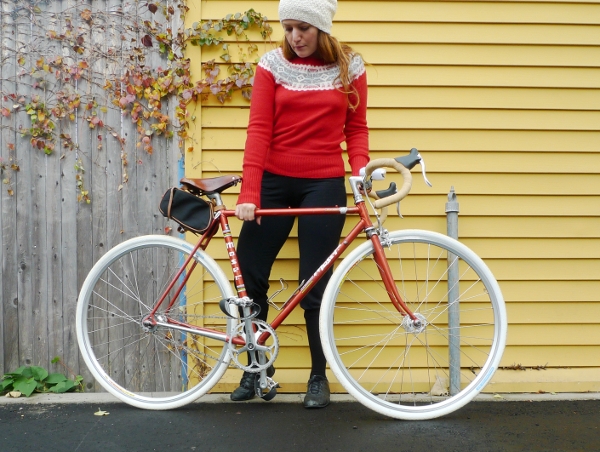
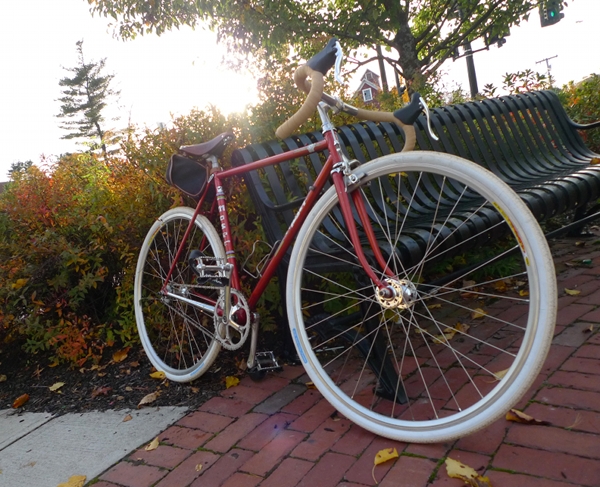
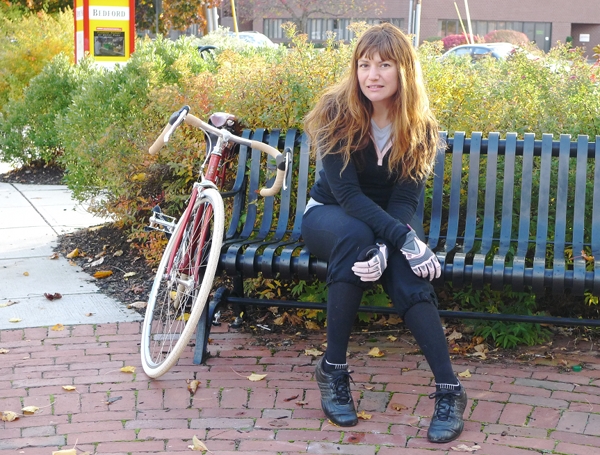
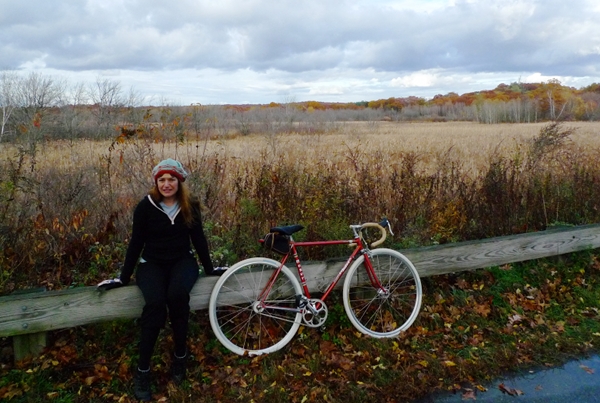
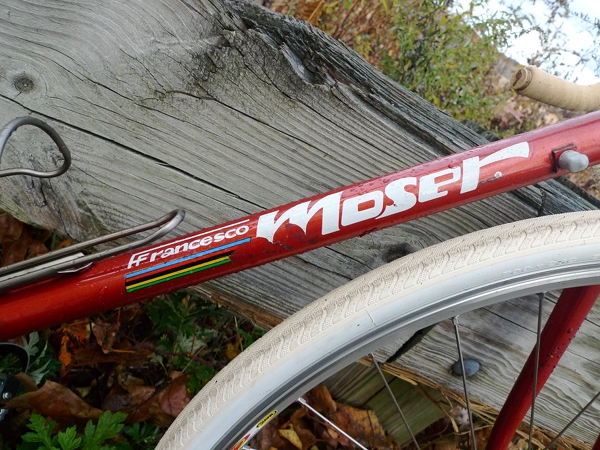
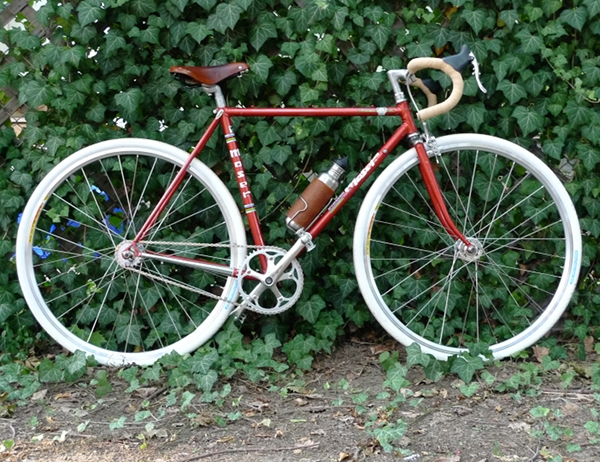
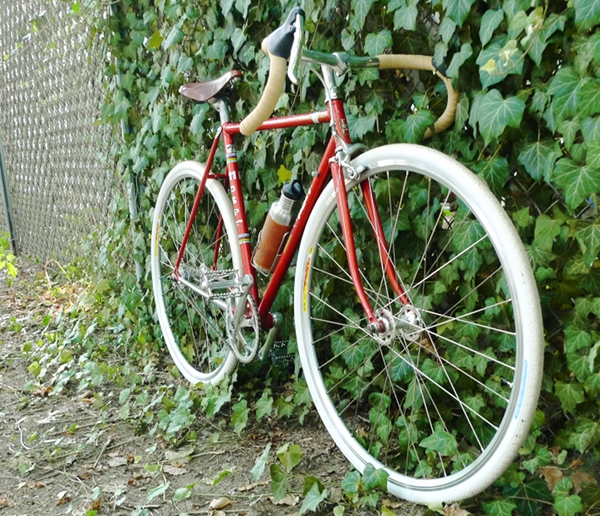
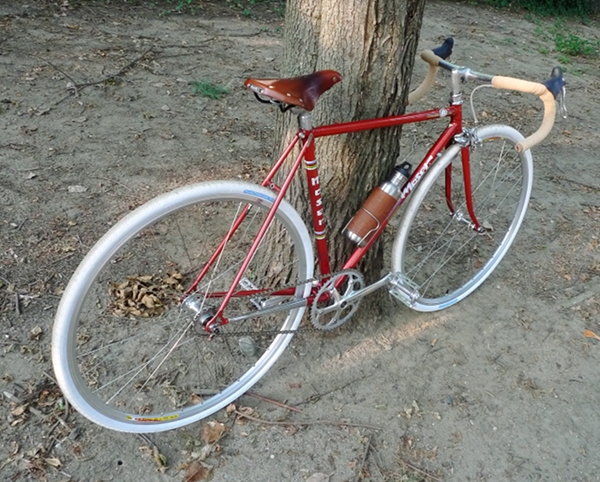
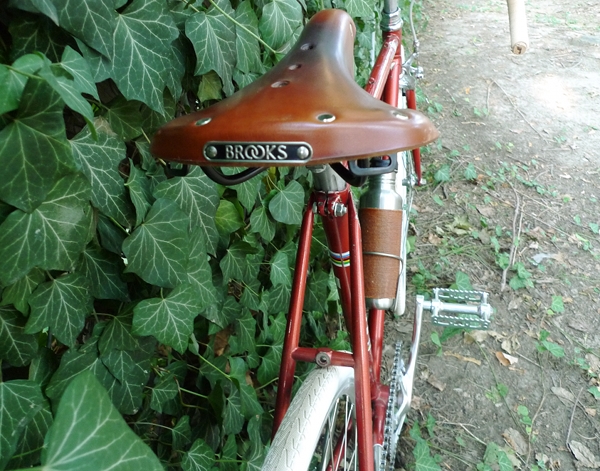
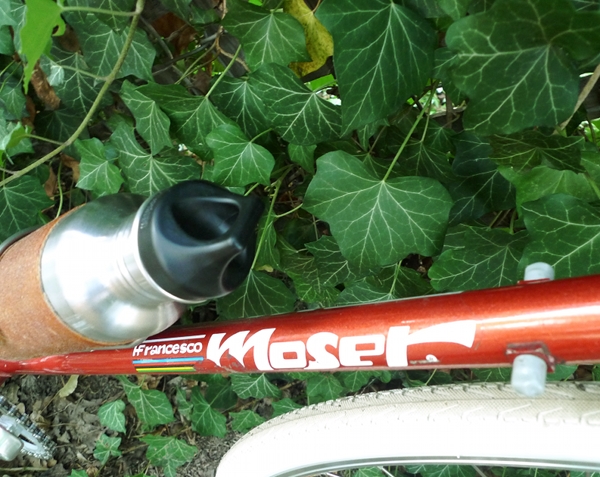
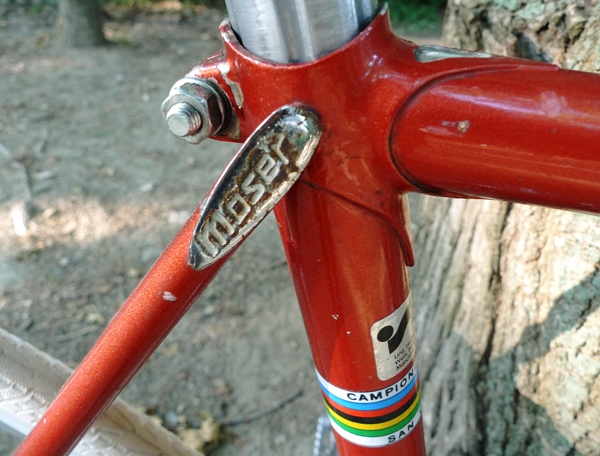
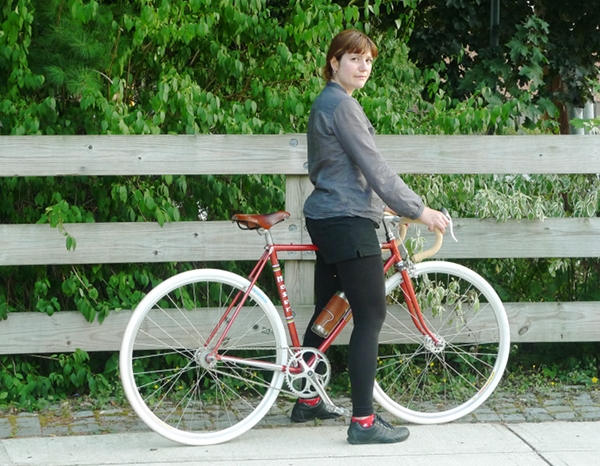
I have been riding my Francesco Moser roadbike as a fixed gear since July. I love this bicycle and ride it considerably more than I thought I would. For an aggressive roadbike, it is puzzlingly comfortable and easy. My bicycle handling skills have improved thanks to this bike and I have grown very attached to it.
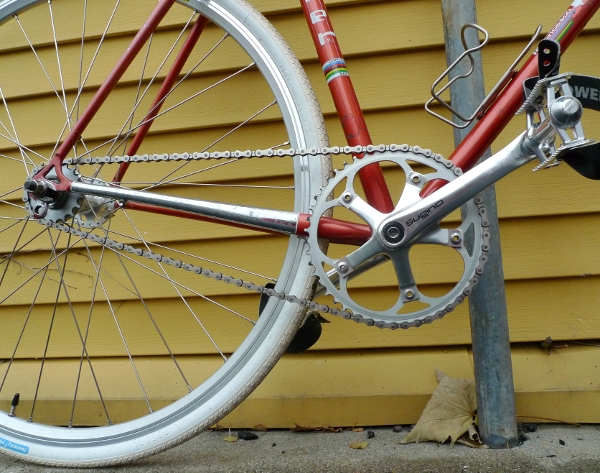
But here is the problem - or rather what I keep hoping is not a problem, and would like your opinion about: The frame has a low bottom bracket. In our innocence, we did not notice this when we were building it up, and I don't even think the person who gave me the frame noticed quite how low it was. The bike originally came with skinny tubulars, but we fitted the frame with 700C wheels and 28mm tires - which raises the bottom bracket off the ground more than originally.
The cranks are 165mm, which is already as short as I can reasonably go with here, and just recently I switched the pedals (originally MKS "Touring") to the narrower MKS "Stream". All of this has helped ward off "pedal strike," but I still worry whether it is safe. A couple of people have taken one look and told me that I should get a different bike, with an expression of concern on their faces. Others have told me that it's not too bad and there should be no problem as long as I am not too aggressive on turns and don't take it on the velodrome.
So my question: Is there an objective way to tell? How high should the bottom bracket be off the ground in order for a fixed gear bike to be "safe"? And "aggressive on turns" seems like such a subjective concept. I think of myself as a bad cyclist and I think of my speed as slow - but I am not sure how to quantify these things. Once I get going, I like to ride 15-18mph on this bike. But I am consciously very careful on corners and slow down on them due to paranoia over this issue.
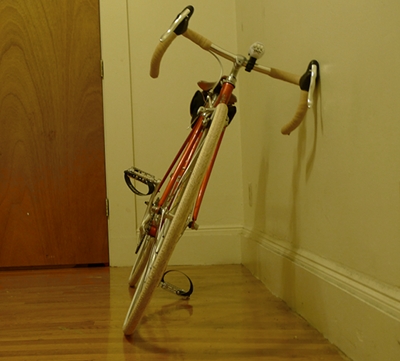
So far, the MKS "Stream" pedals (purchased from Cambridge Bicycle) seem to have made a big difference, and I am keeping my fingers crossed that perhaps they solved the problem. This is what the lean of the bike used to be in order to get pedal strike, but the Streams have improved things considerably.
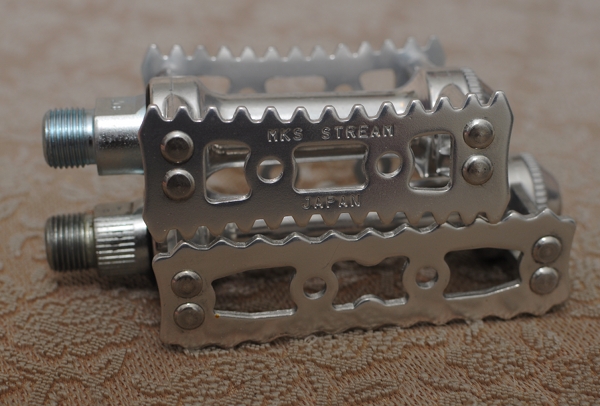
Here are the MKS "Touring" (left) vs the MKS "Stream" (right) pedals side by side. As you can see, they are very similar except for the size.
The MKS Streams are basically touring-style pedals that are the size of track pedals. They are comfortable and accept both toe clips and Power Grips. I was worried that my feet might feel cramped on them, but I have felt absolutely no discomfort so far.
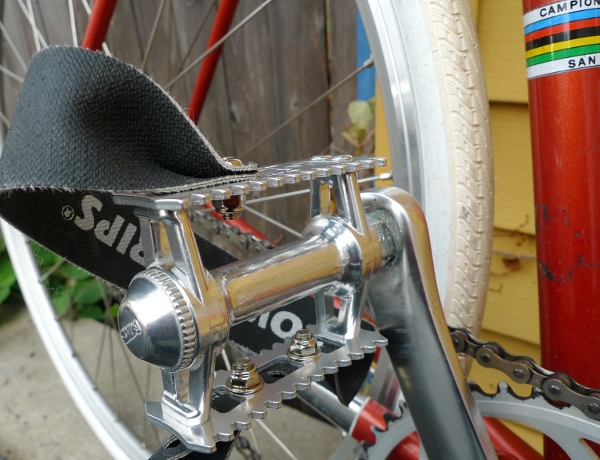
Here is another size comparison.
And notice the difference in teeth. The Streams are more grippy.
The ride quality with the new pedals feels the same as previously, with the benefit of additional "room to breathe" on turns. But is it enough? If I do need to start thinking about a new frame, I doubt that I can find something as good as the Moser (Columbus tubing, Italian quality) in anything resembling a reasonable price range. My best bets are probably to look into Mercian or to wait for the Rivendell "Simpleone". And if you can recommend a vintage model that resembles the Moser in ride quality but has a higher bottom bracket, I am of course all ears. I do not want a new fixed gear roadbike. I love this one and would prefer to ride it forever. I just want to know whether that is a good idea.
Showing posts with label fixed gear. Show all posts
Tuesday, November 23, 2010
Saturday, November 20, 2010
Over the River and Through the Wood: the Season of Lone Travelers
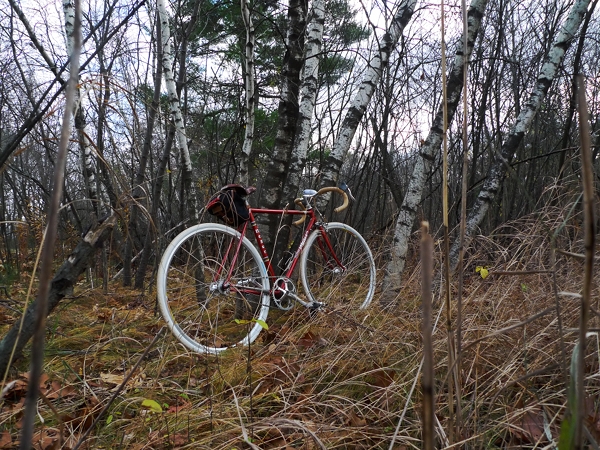
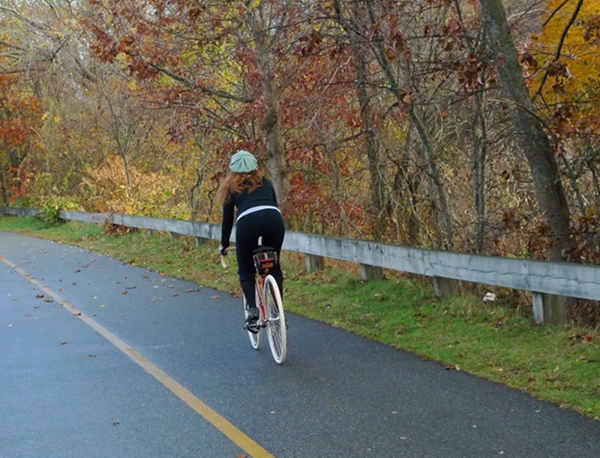
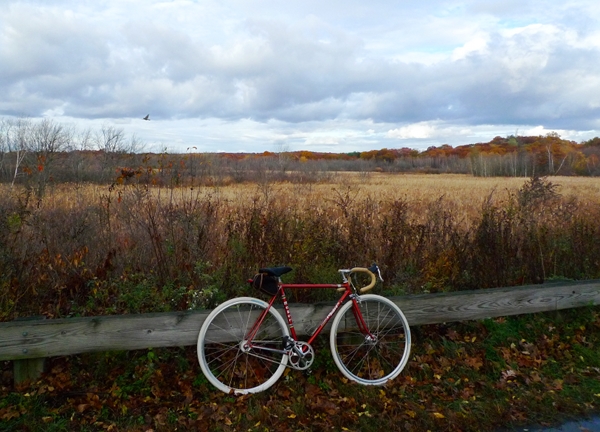
Yesterday I cycled to a wooded area 15 miles away to take pictures for a backdrop for a painting I am working on. I needed some detailed shots of birch trees, and November is the perfect time to get them - With most of the foliage gone, the birches stand out tall and lean, every detail of their beautiful bark crisply outlined against the bare landscape.
All in all, this is such a quiet time. A deep hush has fallen over the forest as it braces for the fury of winter storms. There is even a particular sound that goes along with this state of things - like a very quiet ringing.
Now that we are getting into late November, the number of cyclists out there - especially outside of the city, on the hilly roads and on the trails - has dwindled down remarkably. And those who remain apparently feel a sense of comradery with their fellow lone travelers, as I have never gotten so many comments from passing roadies before.
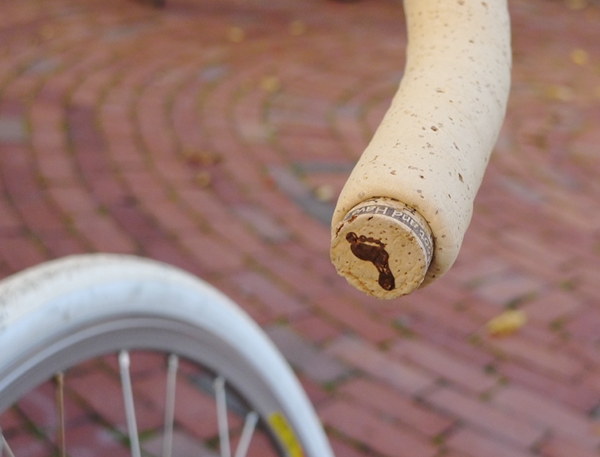
First I was asked by a cyclist where I got my Moser and how I like the bike. We discussed that for a bit, with him concluding that he must find a vintage Moser frame for himself (he-he, I am such an enabler!). Later, another cyclist (of the "pedantic retrogrouch" variety) was indignant that I was not only riding an Italian racing bike as a fixed gear, but that I fitted it with "rando-bars" (a French style of drop handlebars with a curvature better suited for long distance touring). I did not really know what to reply to that accusation except "yes".
And later still, I was complimented on my "trackstand" at a traffic light, which made me question whether I understand what trackstands are. I was pretty sure that a trackstand is when you are actually able to stand still, as a sort of balancing trick. I cannot do that at all. But I play games at intersections, where I cycle so slowly that I am basically moving forward mere millimeters at a time until the light turns green. It may look like a trackstand to an unscrutinous eye, but I am definitely cheating. But anyhow, my point really is that I haven't had verbal exchanges like these with other cyclists until now - whereas yesterday alone I had nearly half a dozen. The few cyclists who are out there this time of year must be feeling especially lonely.
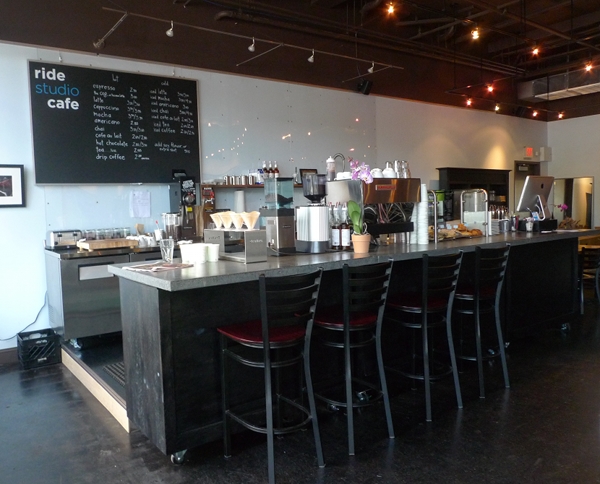
On the way back from my photo trip, I stopped by the Ride Studio Cafe that I wrote about earlier, when I saw through the window that their coffee bar was open. I just want to say one thing: If I could count on their in-house coffee shop consistently being open, I would go out of my way just to go there. They serve good coffee and hot chocolate - and they have back issues of Bicycle Quarterly! Once settled in, I had to almost forcibly pry myself away. Funny, because I remember reading Bicycle Quarterly last year and finding the articles difficult to understand, whereas now everything makes sense and seems terribly interesting. I should probably start subsrcibing to it. And for those who have been reading BQ all along: Could you tell me in what issue I can find Jan Heine's review of a Rivendell? I am pretty sure he wrote one, but haven't been able to locate it.
As I needed to run some additional errands in different parts of town, I ended up spending the entire day on my bike - which made me realise just how quickly both the temperature and the light conditions can change this time of the year. I am paranoid about getting stranded in the dark, so even for my sporty bicycles I carry at least some battery-operated lights that I can quickly attach to the handlebars and to my saddlebag. As winter approaches, I somehow find myself riding this particular bike more and more - so maybe it is time to find a more permanent and attractive lighting solution for him (bottle dynamo on a fixed gear, anyone?).
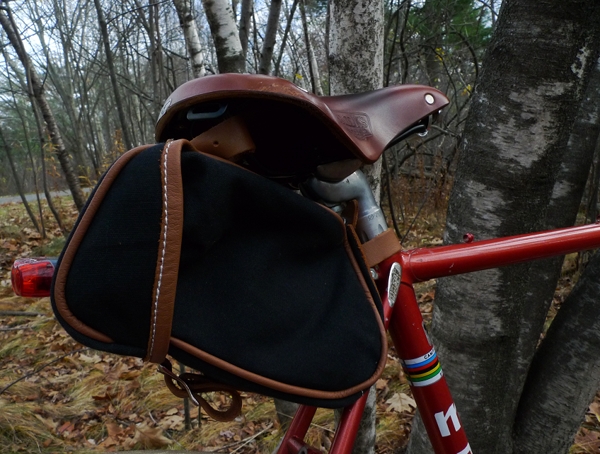
And it is surprising how much stuff my tiny saddlebag can fit, as long as I don't need to carry my laptop around. Perfect for a short trip by a lone traveler on a late November day.
All in all, this is such a quiet time. A deep hush has fallen over the forest as it braces for the fury of winter storms. There is even a particular sound that goes along with this state of things - like a very quiet ringing.
Now that we are getting into late November, the number of cyclists out there - especially outside of the city, on the hilly roads and on the trails - has dwindled down remarkably. And those who remain apparently feel a sense of comradery with their fellow lone travelers, as I have never gotten so many comments from passing roadies before.
First I was asked by a cyclist where I got my Moser and how I like the bike. We discussed that for a bit, with him concluding that he must find a vintage Moser frame for himself (he-he, I am such an enabler!). Later, another cyclist (of the "pedantic retrogrouch" variety) was indignant that I was not only riding an Italian racing bike as a fixed gear, but that I fitted it with "rando-bars" (a French style of drop handlebars with a curvature better suited for long distance touring). I did not really know what to reply to that accusation except "yes".
And later still, I was complimented on my "trackstand" at a traffic light, which made me question whether I understand what trackstands are. I was pretty sure that a trackstand is when you are actually able to stand still, as a sort of balancing trick. I cannot do that at all. But I play games at intersections, where I cycle so slowly that I am basically moving forward mere millimeters at a time until the light turns green. It may look like a trackstand to an unscrutinous eye, but I am definitely cheating. But anyhow, my point really is that I haven't had verbal exchanges like these with other cyclists until now - whereas yesterday alone I had nearly half a dozen. The few cyclists who are out there this time of year must be feeling especially lonely.
On the way back from my photo trip, I stopped by the Ride Studio Cafe that I wrote about earlier, when I saw through the window that their coffee bar was open. I just want to say one thing: If I could count on their in-house coffee shop consistently being open, I would go out of my way just to go there. They serve good coffee and hot chocolate - and they have back issues of Bicycle Quarterly! Once settled in, I had to almost forcibly pry myself away. Funny, because I remember reading Bicycle Quarterly last year and finding the articles difficult to understand, whereas now everything makes sense and seems terribly interesting. I should probably start subsrcibing to it. And for those who have been reading BQ all along: Could you tell me in what issue I can find Jan Heine's review of a Rivendell? I am pretty sure he wrote one, but haven't been able to locate it.
As I needed to run some additional errands in different parts of town, I ended up spending the entire day on my bike - which made me realise just how quickly both the temperature and the light conditions can change this time of the year. I am paranoid about getting stranded in the dark, so even for my sporty bicycles I carry at least some battery-operated lights that I can quickly attach to the handlebars and to my saddlebag. As winter approaches, I somehow find myself riding this particular bike more and more - so maybe it is time to find a more permanent and attractive lighting solution for him (bottle dynamo on a fixed gear, anyone?).
And it is surprising how much stuff my tiny saddlebag can fit, as long as I don't need to carry my laptop around. Perfect for a short trip by a lone traveler on a late November day.
Friday, October 29, 2010
Happy Feet
Today was the first time I felt well enough to ride a roadbike since having gotten sick last month. It was only 26 miles, but it felt great to have my full lung capacity and energy back.
Continuing with the Italian theme, I took Francesco - my fixed gear stallion. How happy he was, basking in the precious minutes of sunshine in between thunderstorms.
Riding a fixed gear roadbike is an experience that fills me with a special kind of enjoyment - I think because it combines the sensations of walking and flying (fly-walking?).
I was worried that I might be too out of shape to make it, but I had forgotten how comfortable Francesco is. The 26 miles of pedaling felt like a stroll in the park. Although, I have learned by now that even if I feel "fine" riding fixed gear while I am actually doing it, it does take more out of me than a free-wheel bicycle. I usually sleep longer after such a ride, and sometimes I am sore the following day.
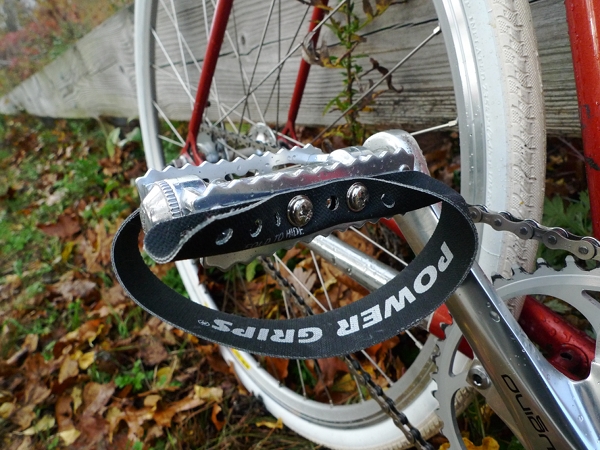
One thing that has improved my comfort level with fixed gear cycling considerably, are these "fixie" Power Grips. I wrote about the standard Power Grips here, and since my initial review I have become addicted to these things. The fixed gear version differs from the standard model, in that it makes it easier to insert and remove your feet while pedals are in motion. I cannot tell what it is about the design that makes this possible, but none the less it seems to work. I insert my right toe at the starting position and start cycling slowly while nudging the left pedal with my left toe - then swiftly insert the toe into the left grip on the first stroke. After some practice this became a familiar and instinctive sequence of movements - though it definitely helped that I was already comfortable using this system on a free-wheel bike prior to trying it on a fixed gear.
Now that I am able to use foot retention on this bicycle, I am no longer apprehensive about cycling over bumps and potholes or going downhill at high speeds. The experience is pretty much perfect and very enjoyable. One thing in particular I have noticed, is how easy it is for me to ride "in the drops" - Francesco almost seems more stable when the handlebars are held this way than higher up. Is that possible?
And another interesting thing: I find it much, much easier to get out of the saddle and pedal standing up on Francesco than I do on my other bicycles. Is it the fixed-gearness that is facilitating this or the geometry? As I've mentioned before, I have a terrible sense of balance, and that is what I believe normally prevents me from pedaling while standing up. But on this bicycle, it seems not to matter.
It rained on and off for the duration of our ride, and the colourful leaves strewn over the trail turned into a mess of a slippery carpet. Was I so excited to be riding Francesco that I began to imagine things, or is it easier to ride in slippery conditions on a fixed gear bike? I have read comments about traction before, but I admit that I don't understand them. Could somebody explain it in layman's terms?
As I prepare for some more pruning of my bicycle overgrowth, it is clear to me that I "need" a fixed gear roadbike. So while I am now considering selling my Trek - which has been fun, but not essential - I will definitely be keeping the Francesco Moser.
In the long run, however - maybe a couple of years from now - I will probably want to replace it with a "real" fixed gear bicycle. Mainly, this is because the Moser's bottom bracket is not as high as it should be - and even though my lean on turns is not aggressive enough to warrant worrying about pedal strike yet, it would be better if this wasn't even a potential issue.
But for now, Francesco is my dashing Italian gentleman and I thank him for my happy feet.
Continuing with the Italian theme, I took Francesco - my fixed gear stallion. How happy he was, basking in the precious minutes of sunshine in between thunderstorms.
Riding a fixed gear roadbike is an experience that fills me with a special kind of enjoyment - I think because it combines the sensations of walking and flying (fly-walking?).
I was worried that I might be too out of shape to make it, but I had forgotten how comfortable Francesco is. The 26 miles of pedaling felt like a stroll in the park. Although, I have learned by now that even if I feel "fine" riding fixed gear while I am actually doing it, it does take more out of me than a free-wheel bicycle. I usually sleep longer after such a ride, and sometimes I am sore the following day.
One thing that has improved my comfort level with fixed gear cycling considerably, are these "fixie" Power Grips. I wrote about the standard Power Grips here, and since my initial review I have become addicted to these things. The fixed gear version differs from the standard model, in that it makes it easier to insert and remove your feet while pedals are in motion. I cannot tell what it is about the design that makes this possible, but none the less it seems to work. I insert my right toe at the starting position and start cycling slowly while nudging the left pedal with my left toe - then swiftly insert the toe into the left grip on the first stroke. After some practice this became a familiar and instinctive sequence of movements - though it definitely helped that I was already comfortable using this system on a free-wheel bike prior to trying it on a fixed gear.
Now that I am able to use foot retention on this bicycle, I am no longer apprehensive about cycling over bumps and potholes or going downhill at high speeds. The experience is pretty much perfect and very enjoyable. One thing in particular I have noticed, is how easy it is for me to ride "in the drops" - Francesco almost seems more stable when the handlebars are held this way than higher up. Is that possible?
And another interesting thing: I find it much, much easier to get out of the saddle and pedal standing up on Francesco than I do on my other bicycles. Is it the fixed-gearness that is facilitating this or the geometry? As I've mentioned before, I have a terrible sense of balance, and that is what I believe normally prevents me from pedaling while standing up. But on this bicycle, it seems not to matter.
It rained on and off for the duration of our ride, and the colourful leaves strewn over the trail turned into a mess of a slippery carpet. Was I so excited to be riding Francesco that I began to imagine things, or is it easier to ride in slippery conditions on a fixed gear bike? I have read comments about traction before, but I admit that I don't understand them. Could somebody explain it in layman's terms?
As I prepare for some more pruning of my bicycle overgrowth, it is clear to me that I "need" a fixed gear roadbike. So while I am now considering selling my Trek - which has been fun, but not essential - I will definitely be keeping the Francesco Moser.
In the long run, however - maybe a couple of years from now - I will probably want to replace it with a "real" fixed gear bicycle. Mainly, this is because the Moser's bottom bracket is not as high as it should be - and even though my lean on turns is not aggressive enough to warrant worrying about pedal strike yet, it would be better if this wasn't even a potential issue.
But for now, Francesco is my dashing Italian gentleman and I thank him for my happy feet.
Wednesday, September 1, 2010
Velo Orange Croissant Bag: Small, Tidy, Classic
While I prefer a large saddlebag for long distance, on my fixed gear roadbike I wanted something minimal: a bag just big enough to hold a few necessities, but small enough to hang neatly behind the saddle without sticking out to the sides. I considered a "bike burrito" style wrap, but ultimately I like structured bags with secure closures and multiple attachment points. There are several options out there, but I was already placing an order with Velo Orange and decided to get their Croissant Bag while I was at it.
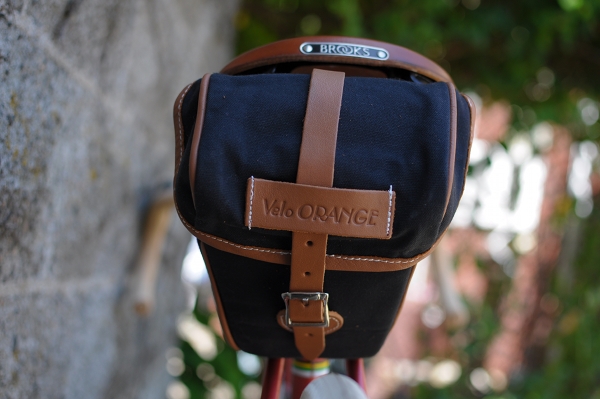
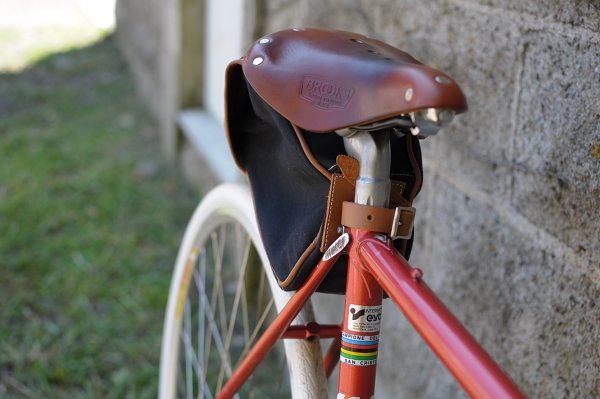
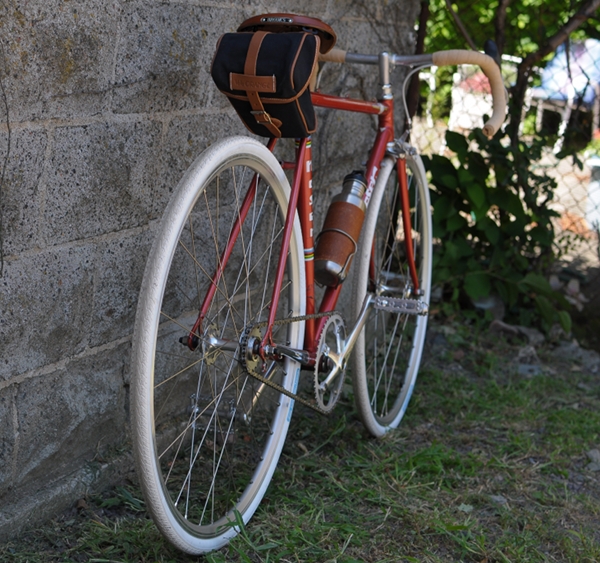
When I removed the bag from its packaging, it was larger than it had looked in the pictures and I was worried that it would not fit in the space under my saddle. But as you can see, everything fit nicely. So even if you have a bit less than the recommended "fistful" of seatpost showing, it should work. The bag retains its structure perfectly, and the straps stay in place. There is no bouncing, and nothing rubs the tire or fender.
Close-up view. The leather and canvas feel to be of good quality. The leather is a medium brown that somewhat (but not exactly) matches the colour of Brooks "honey", as well as the colour of amber-shellacked twine.
View from the front. The lower strap goes around the base of the seatpost; the upper strap threads through the rails under the saddle (not through the bag loops). Installing the bag is fairly straightforward.
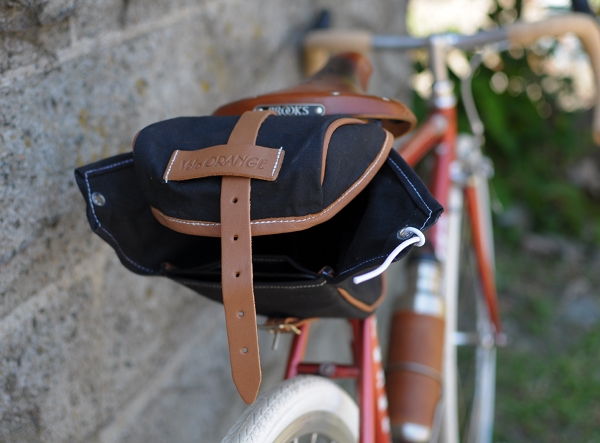
The bag opens by unfastening the strap closure and untying the white cord that holds the inner flaps together.
Inner flaps with cord.
Inside, the Croissant bag is shaped like a Chinese food take-out container, and holds about the same volume. (I do not suggest that you stuff it with fried rice, though I found it tempting.) Notice the stiffener in that little pocket on the bottom - that explains how the bag keeps its shape so nicely.
When I removed the bag from its packaging, it was larger than it had looked in the pictures and I was worried that it would not fit in the space under my saddle. But as you can see, everything fit nicely. So even if you have a bit less than the recommended "fistful" of seatpost showing, it should work. The bag retains its structure perfectly, and the straps stay in place. There is no bouncing, and nothing rubs the tire or fender.
Close-up view. The leather and canvas feel to be of good quality. The leather is a medium brown that somewhat (but not exactly) matches the colour of Brooks "honey", as well as the colour of amber-shellacked twine.
View from the front. The lower strap goes around the base of the seatpost; the upper strap threads through the rails under the saddle (not through the bag loops). Installing the bag is fairly straightforward.
The bag opens by unfastening the strap closure and untying the white cord that holds the inner flaps together.
Inner flaps with cord.
Inside, the Croissant bag is shaped like a Chinese food take-out container, and holds about the same volume. (I do not suggest that you stuff it with fried rice, though I found it tempting.) Notice the stiffener in that little pocket on the bottom - that explains how the bag keeps its shape so nicely.
There is not a great deal to say about a bag this small and this simple, and perhaps that is a good thing. It looks and functions exactly as I hoped it would. The Velo Orange Croissant Bag is an excellent choice if you need a small saddlebag that is neat, structured, well-made, and classic.
Monday, August 16, 2010
Handmade Dress Guards from Holland, by Simeli
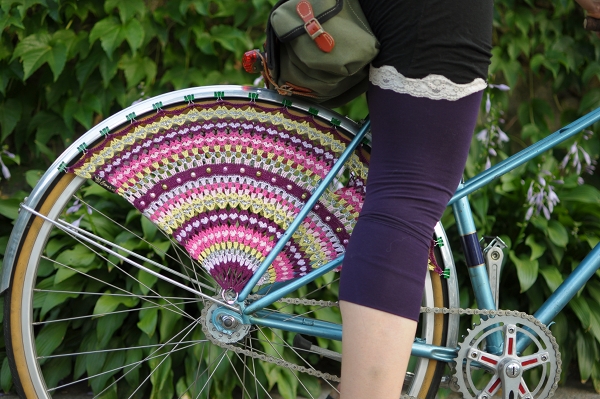
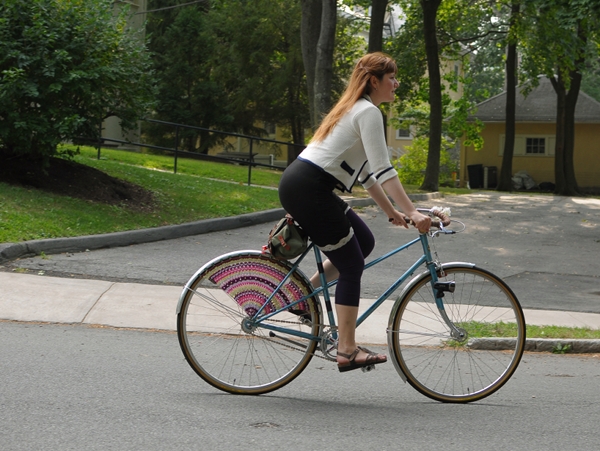
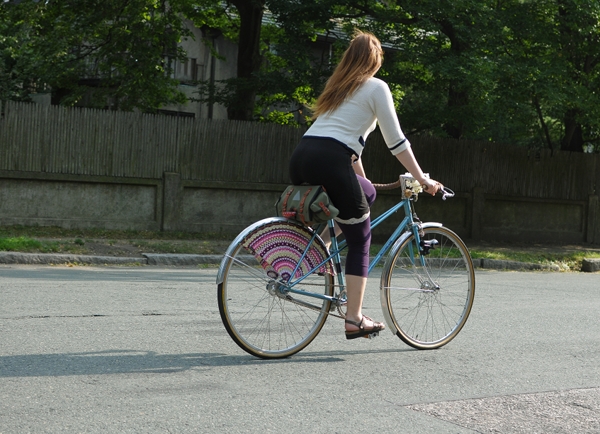
My bicycles are not exactly run-of-the-mill, and they tend to get noticed when I am out and about. But nothing has compared to the effect of installing these dress guards on Marianne. Without exaggeration, the dress guards draw crowds of women, their eyes full of wonder at the sight of these unique creations. Subtle they are not. But they are sure to brighten up your day. I received these dress guards as part of an equal value exchange from Simeli (a sponsor July - August 2010), and here are my impressions:
First I must say that I've had the dress guards for some time now, but could not find a bike on which to install them. I was initially hoping to fit them on a loop frame bicycle, but all of mine already had dress guards and removing them would have been a pain. Finally I installed them on my mixte, and the combination is unexpectedly fabulous.
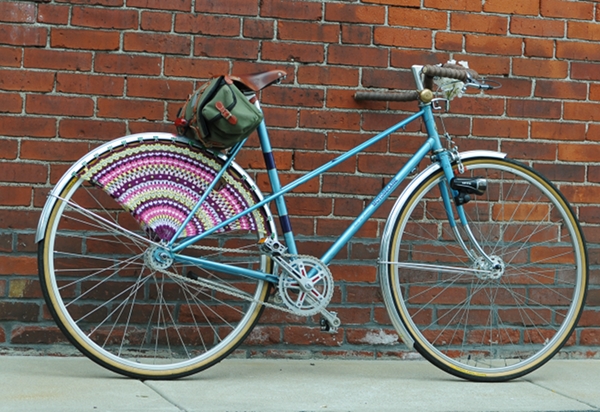
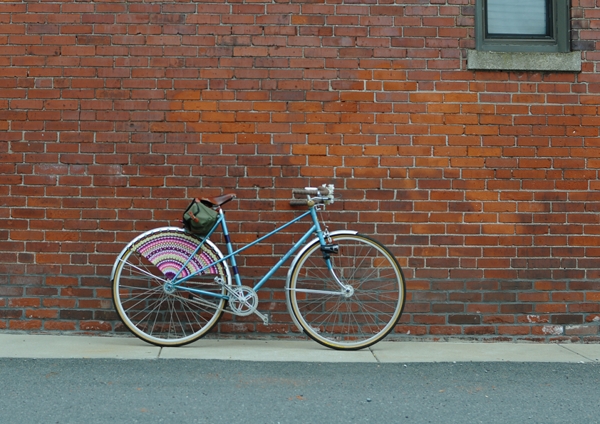
Here is a straight-up view. It is not as typical to install dress guards on a mixte as it is on step-through bicycles, but I really do not see why not. It was done in the past, and in Europe you will find many older mixte bicycles with holes drilled into the fender - evidence that at some point the dress guards were there. If you use your mixte for transportation and you wear fluttery skirts or coats, this is a useful accessory.
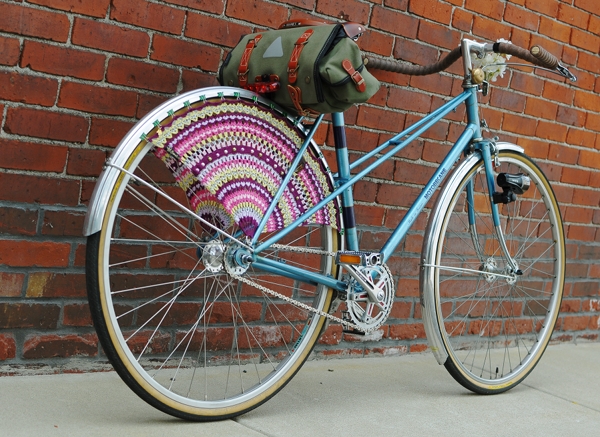
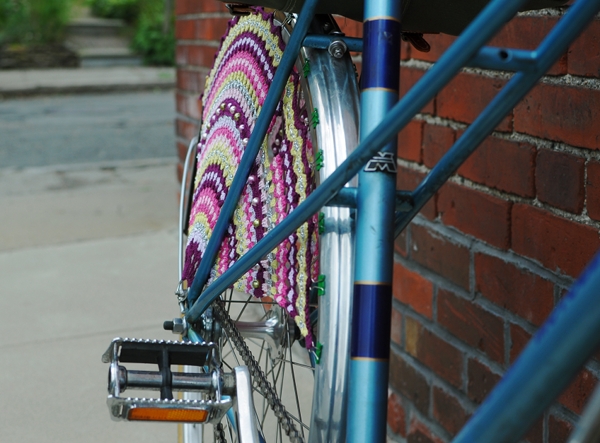
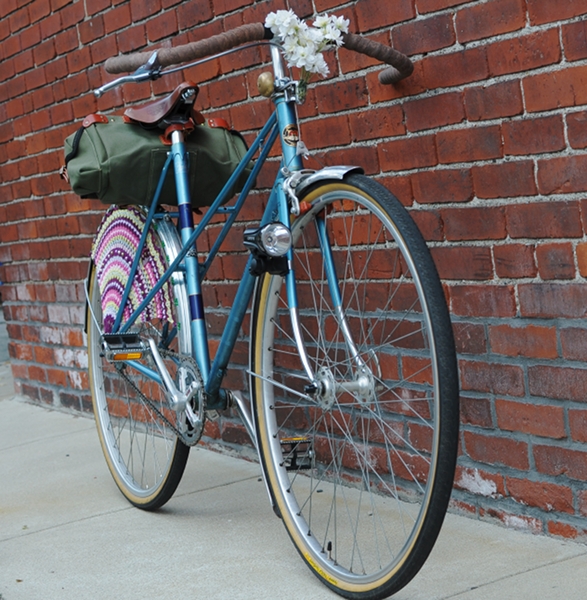
This angle gives you an idea of how the dress guards are attached: They connect to the bolts (or the fender stays) at the rear dropouts and to the fenders via clips. The clips are supplied by Simeli along with the dress guards, and are available in a variety of colours. If your fenders are deep enough to fit the clips without rubbing the wheel, you do not need to drill holes. However, please note that the attachment system was designed for the sort of wide, deep fenders that are found on Dutch bikes, English roadsters, and similar bicycles. If you have fenders like the ones pictured on my mixte, the clips will likely rub the tire. We have angled the clips on my bike as best as we could, and they still rub a bit. So if I keep this set-up in the long run, I will drill the fender and re-install the dress guards that way.
Simeli dress guards were designed to work with either 28" or 26" wheels, so anything in between is fine as well. This includes 650B, 27"and 700C wheels. The wheels on my bicycle here are 27" and the dress guards stretch tightly.
Another thing to note is that - like most dress guards - these have an opening to fit over either a "cafe lock" or a caliper brake on the rear wheel (click to enlarge the picture to see the opening). The opening is aligned with the rear stays, so even if you have neither a lock nor a caliper brake on the rear wheel, it is unobtrusive.
As far as performance goes, these dress guards certainly do their job. They cover a large portion of the wheel and are densely knit. Any outfit you could wear is safe from the spokes with these installed. They do not shift or flutter or make any noise (other than the potential problem of the clips rubbing narrow fenders), and they hold up securely.
Of course the singlemost feature one is drawn to when discussing these, is the looks. There are several models offered by Simeli, and all of them feature crochet work in bright, cheerful colours. Mine are pink, lilac and light green, with silvery thread and a row of peralescent beads woven in between (the model is Linde).
Here is a close-up of the colours and the row of beads. If you've been reading this blog, you know that I do not tend to go for colourful designs like this, and instead gravitate towards neutral colour palettes. But it's nice to try new things once in a while, and hey - it's summer after all!
The shimmery aqua-blue of Marianne's frame is too much for me as it is, so I decided to go all out and make her my "technicolor dream coat" bicycle. And that she is!
But the crucial question: Would I buy these dress guards if they were not sent to me for review? I would if they were available in an off-white or natural-hemp sort of colour, or even something silvery or gold-ish. In fact, I am looking for something like that for the new custom mixte we are building up and would even gladly drill the fenders if they prove too tight for the clips. The bright and cheerful colours on the models currently available are not my style - but given the response they get out in the streets, I believe I am in the minority in that respect.
Final note: I've received emails from readers who are interested in the dress guards but cannot understand how to navigate the website (which is entirely in Dutch). If you'd like to order a set or have questions, please just contact Simone (the owner of Simeli) directly. She speaks English and can answer all your questions.
First I must say that I've had the dress guards for some time now, but could not find a bike on which to install them. I was initially hoping to fit them on a loop frame bicycle, but all of mine already had dress guards and removing them would have been a pain. Finally I installed them on my mixte, and the combination is unexpectedly fabulous.
Here is a straight-up view. It is not as typical to install dress guards on a mixte as it is on step-through bicycles, but I really do not see why not. It was done in the past, and in Europe you will find many older mixte bicycles with holes drilled into the fender - evidence that at some point the dress guards were there. If you use your mixte for transportation and you wear fluttery skirts or coats, this is a useful accessory.
This angle gives you an idea of how the dress guards are attached: They connect to the bolts (or the fender stays) at the rear dropouts and to the fenders via clips. The clips are supplied by Simeli along with the dress guards, and are available in a variety of colours. If your fenders are deep enough to fit the clips without rubbing the wheel, you do not need to drill holes. However, please note that the attachment system was designed for the sort of wide, deep fenders that are found on Dutch bikes, English roadsters, and similar bicycles. If you have fenders like the ones pictured on my mixte, the clips will likely rub the tire. We have angled the clips on my bike as best as we could, and they still rub a bit. So if I keep this set-up in the long run, I will drill the fender and re-install the dress guards that way.
Simeli dress guards were designed to work with either 28" or 26" wheels, so anything in between is fine as well. This includes 650B, 27"and 700C wheels. The wheels on my bicycle here are 27" and the dress guards stretch tightly.
Another thing to note is that - like most dress guards - these have an opening to fit over either a "cafe lock" or a caliper brake on the rear wheel (click to enlarge the picture to see the opening). The opening is aligned with the rear stays, so even if you have neither a lock nor a caliper brake on the rear wheel, it is unobtrusive.
As far as performance goes, these dress guards certainly do their job. They cover a large portion of the wheel and are densely knit. Any outfit you could wear is safe from the spokes with these installed. They do not shift or flutter or make any noise (other than the potential problem of the clips rubbing narrow fenders), and they hold up securely.
Of course the singlemost feature one is drawn to when discussing these, is the looks. There are several models offered by Simeli, and all of them feature crochet work in bright, cheerful colours. Mine are pink, lilac and light green, with silvery thread and a row of peralescent beads woven in between (the model is Linde).
Here is a close-up of the colours and the row of beads. If you've been reading this blog, you know that I do not tend to go for colourful designs like this, and instead gravitate towards neutral colour palettes. But it's nice to try new things once in a while, and hey - it's summer after all!
The shimmery aqua-blue of Marianne's frame is too much for me as it is, so I decided to go all out and make her my "technicolor dream coat" bicycle. And that she is!
But the crucial question: Would I buy these dress guards if they were not sent to me for review? I would if they were available in an off-white or natural-hemp sort of colour, or even something silvery or gold-ish. In fact, I am looking for something like that for the new custom mixte we are building up and would even gladly drill the fenders if they prove too tight for the clips. The bright and cheerful colours on the models currently available are not my style - but given the response they get out in the streets, I believe I am in the minority in that respect.
Final note: I've received emails from readers who are interested in the dress guards but cannot understand how to navigate the website (which is entirely in Dutch). If you'd like to order a set or have questions, please just contact Simone (the owner of Simeli) directly. She speaks English and can answer all your questions.
Tuesday, August 10, 2010
Meet My New Cycling Coach - Francesco!
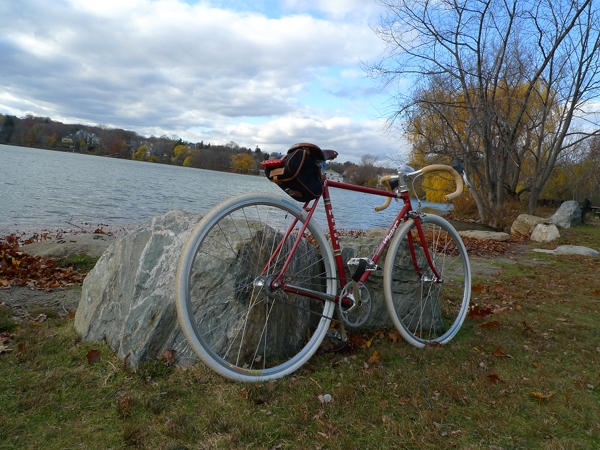
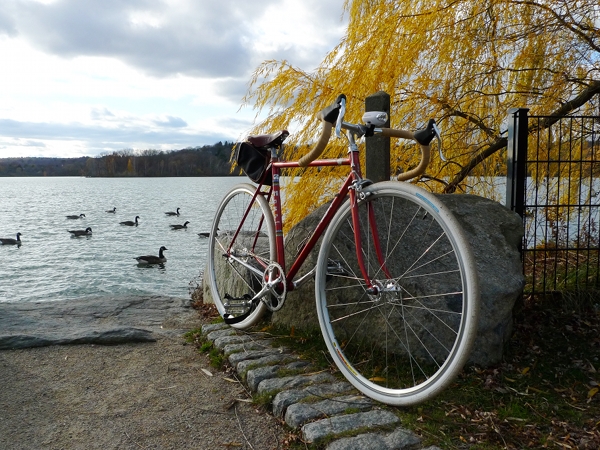
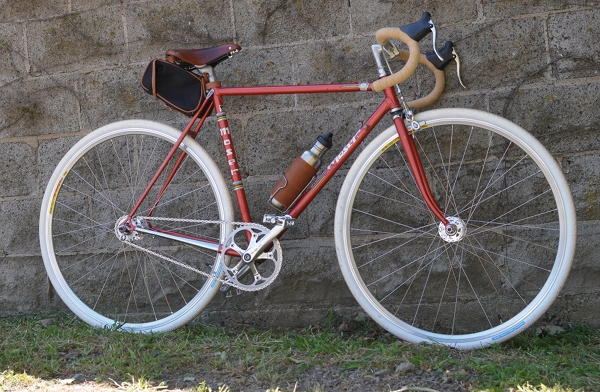
I had mentioned in passing that I brought a vintage frame with me from my last stay in Austria to build up as a fixed gear road bike... Well, here is the result:
As you may have noticed, the Co-Habitant has turned into a bicycle mechanic this summer - to my appreciative delight, as I have neither the aptitude nor the time for it. He bought a bike stand, has accumulated the necessary tools for most jobs, and has been enjoying learning the ins and outs of bicycle repair. This was his first complete bike build, after he practiced with the fixed gear conversion on Marianne. As a mechanic he is meticulous, and this is reflected in the quality of the results. The bicycle is tight and smooth and noiseless and just the way I wanted it.
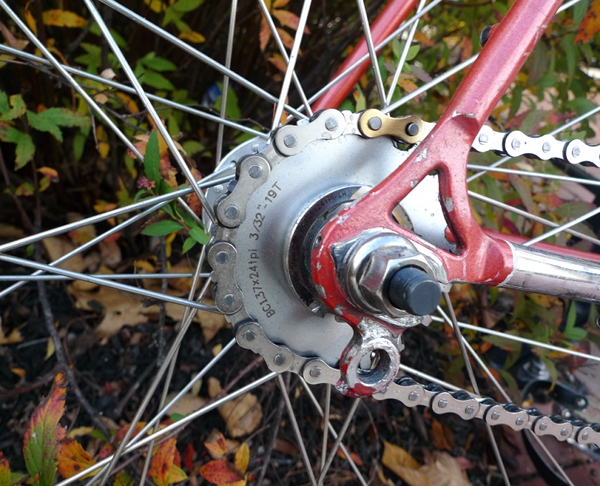
If you are interested in components, they include a Sugino RD2 crankset, a Mavic CXP2 wheelset, and white Panaracer Pasela tires (700x28C). The seat post (manufacturer unknown), stem (Nitto), handlebars (GB) and brake (Shimano, model unknown) were recycled from various used/vintage sources. The brake levers are the same Tektro short reach I have on my Rivendell, and these are pretty much the only roadbike brake levers that I am actually able to squeeze with my poor hands. I have both brake levers despite there only being a front brake, because I like to keep my hands on the hoods. The right lever activates the brake; the left lever is inactive. Though I find it silly to have a "blank" brake lever, I cannot think of a better solution.
As for the lack of rear brake, the reason is two-fold. First, a rear brake in unnecessary on a fixed gear bike. And second, our tire choice made the rear clearance too tight to allow one. It looks in the picture as if the bridge is actually touching the tire, but I assure you it is not. There is enough clearance so that it is perfectly fine to ride, just won't fit a brake.
This bicycle originally came with tubular wheels and narrow tires, so fitting it with 700C wheels and the cushy white 28mm Paselas was really pushing the limits of its clearances. But we decided to go with them, because these tires are just a spectacular ride, as well as a safer choice for my pothole-ridden "training route". The larger wheels and tires also have the positive effect of raising the bottom bracket - which is a good thing for a fixed gear bike, as pedaling while leaning on a turn can potentially result in hitting the ground with the edge of a pedal. Needless to say, there will not be room for fenders on this bike. That is fine with me in this case, as the bicycle's purpose is entirely athletic. (Also, I think the "naked" white tires look quite good with the red frame.)
I should also mention, that while we built this bike up as a fixed gear, we did not file off any of the braze-ons or bosses. The rear derailleur hanger and the rear brake routing have been left as they were, and the downtube shifter bosses have been covered with these rubber "boss cozies" for safety and aesthetics.
Francesco Moser frames are quite nice, and are well-regarded in Austria. I am told that this model is made of Columbus tubing, though there is no longer a decal testifying to this.
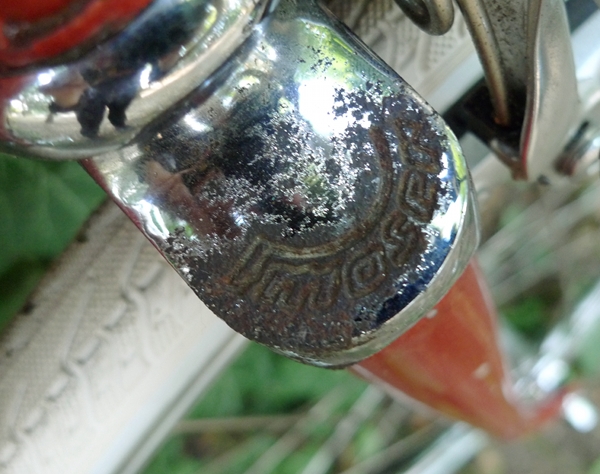
The frame is in great condition, except for some rust on these chrome parts. I plan to clean that up as soon as I determine what the safest method is.
Now that I have given all the excruciating details regarding the bike, some are probably wondering why in God's name I needed a fixed gear roadbike. Well, I'll tell you. I had been planning this ever since having ridden that trackbike in Vienna and discovering that riding a fixed gear bike helps me build up my road cycling skills. It does that by addressing my biggest frustrations, which are balance and coordination. I have plenty of endurance to cycle fast for relatively long periods of time, but I suck at pretty much every other aspect of cycling (for instance, making turns and cycling closely to others at high speeds). The aspect of fixed gear cycling that most people find difficult (the constant pedaling) I am fine with, which makes it the perfect tool to help me with the other stuff.
I have gone on two long rides on Francesco so far: a 26 mile ride with only very mild hills, and another 26 mile ride with steeper hills. Though the hilly ride was challenging, I have not experienced any pain or discomfort, despite this bicycle's aggressive geometry. Francesco seems like he will be a great cycling coach, and I look forward to getting to know him better.
Subscribe to:
Posts (Atom)