Showing posts with label diamond frame. Show all posts

Friday, December 17, 2010

Second Chances for Custom Bikes?

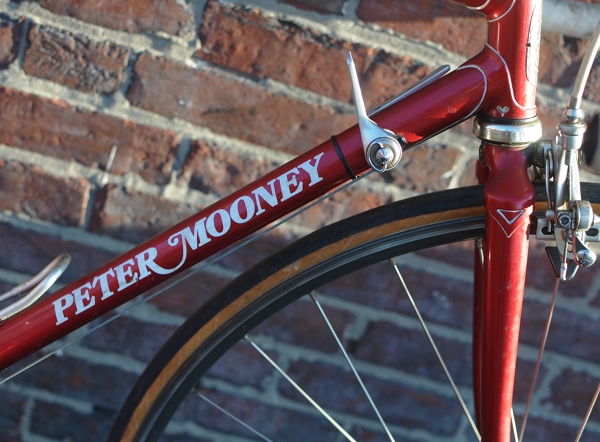
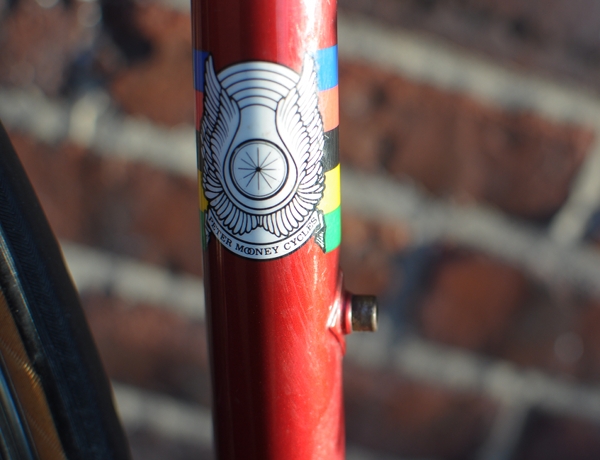
As a (somewhat) reasonable person, I recognise that sometimes a deal is just not for me, no matter how good it is. But I can still feel disappointed, can't I?  Peter Mooney is a famed local framebuilder who has been making custom bicycles since the 1970s, including his own lugwork. I love his frames and very much hope to have one of my own some day. And for a brief, dazzling moment, it seemed that such a day might come much, much sooner than I expected.

As usual, these things have a way of finding me when I am not looking, and in this case the "thing" was a second hand Peter Mooney bicycle. As soon as I learned of the bike's existence and availability, I was ready to bargain and prepared to sell or trade my other vintage roadbikes in order to get it. Going by the description, it seemed that the frame was my size - so it was only a matter of seeing it in person and test riding it.

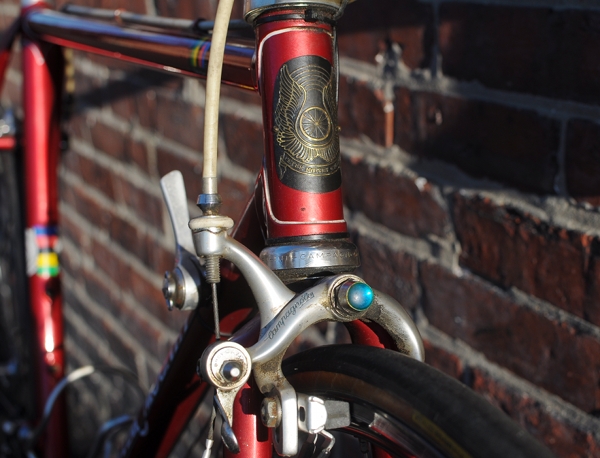
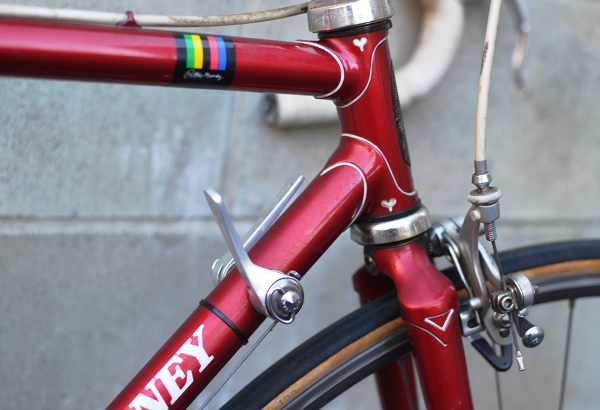
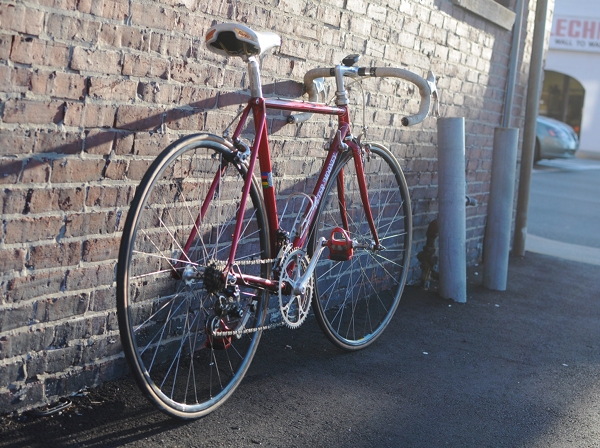
But the stars were not aligned in my favour. Although the bicycle does not look all that small in the pictures (compare it to my Moser), it felt very small once I tried to ride it. The size is 50cm (center of the bottom bracket to toptube), which is only 2cm smaller than the size I normally ride - so maybe there was something additional in the proportions that didn't feel right to me. Not sure what it could be, because the top tube actually seems long-ish, and the stem is long as well. Does anything unusual jump out at you, looking at this frame? 

And I guess that is just the thing with a custom-built frame: It was custom-built for someone else, which is bound to make second-hand purchases tricky. And the fact that it was built for someone else (judging by the components, most likely in the mid-1980s?) also makes me wonder what is the story of this bicycle - why did the previous owner give it up? 

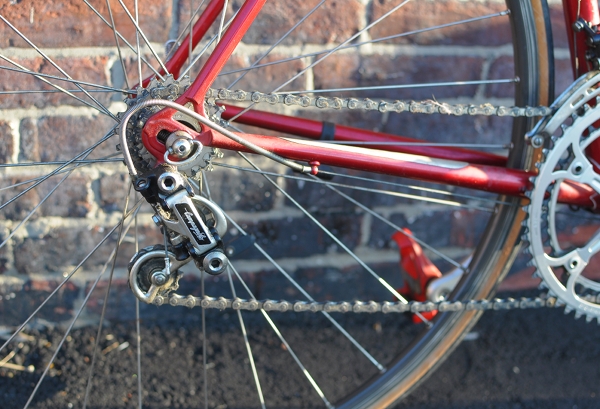
The bicycle certainly has nice components - Campagnolo everything. And though it was clearly ridden, it looks to have been well maintained.

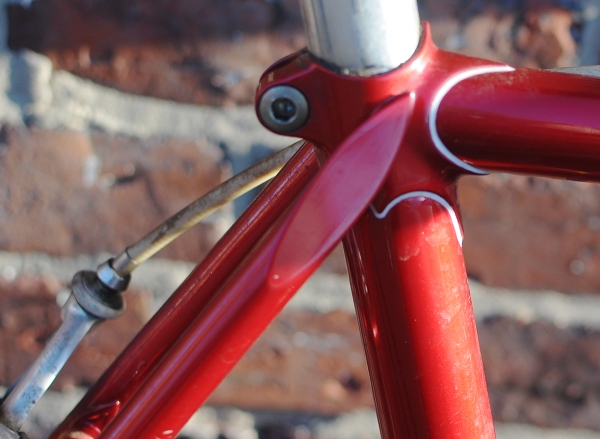
The elegant seat cluster with the white outlining is my favourite part of the lugwork. I hope the original owner appreciated it as well. 

Who knows, maybe some years from now I will have a Peter Mooney bicycle of my own - in my size, in my favourite colour, and maybe even with custom lugwork (let's just say that I already have sketches for the lugwork!). But with this particular bike, I am glad that I was able to resist. It's a bad idea to get a bicycle that doesn't fit you, no matter how good of a deal it is. 

If you are between 5'3" and 5'6" and are interested in this bicycle - it is in the custody of Vin at Old Roads, whose contact information you can find here. For the right person, it is a rare chance to own a bicycle by one of the great framebuilders. But what are your thoughts on getting a custom bike second-hand? I imagine that the more unique the original owner's anatomy, the more difficult it would be to find a new home. I wonder how many custom bikes get second chances, and what are the circumstances under which they switch owners.

Wednesday, December 8, 2010

Diamond Frames and Sizing: How Big Is Too Big?

I have come into the possession of a roadbike that was described by the previous owner as a 52cm frame, but in fact measures 54.5cm. On a diamond frame, that can be a significant difference, and I am trying to determine  - without giving in to wishful thinking - whether the bike is too big for me to ride safely. When it comes to step-through bicycles, I prefer to ride the largest frame possible, as long as I am able to hoist myself onto the saddle. My Gazelle is 57cm, my Raleigh DL-1 is 56cm, and my Bella Ciao is 54cm. But with a diamond frame, that approach is not possible, because top tube clearance is an additional factor to consider. That is why my roadbikes have 52cm frames.

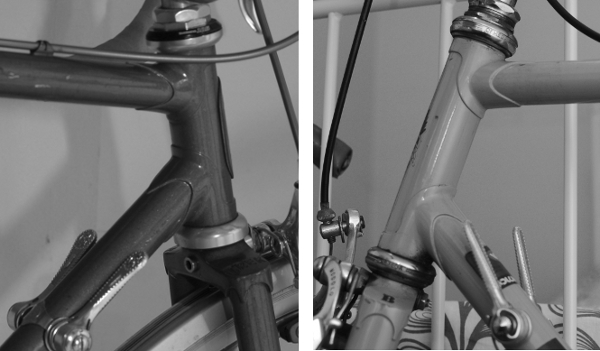
To illustrate what a difference just over 2cm can make, here is the new fosterbike (right), face to face with one of my 52cm roadbikes (left). The perspective of the shots exaggerates the larger bike, but look at the space between the lugs on the head tubes to get a more accurate sense of the difference. It is considerable.

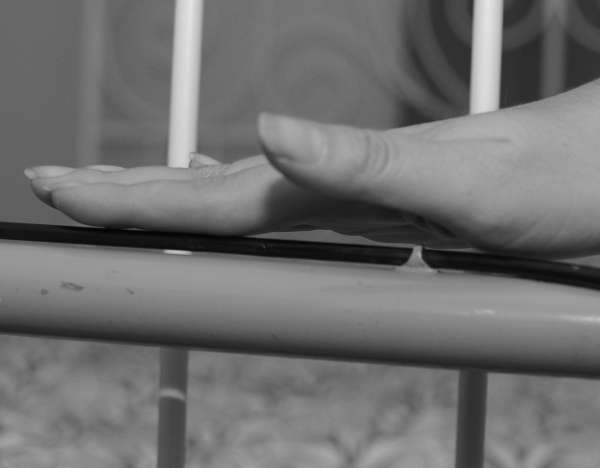
The bike is not in rideable condition, so I can't try it out. But standing over the top tube in my bare feet, there is less than 1mm of clearance between my "soft tissue" and that black cable. 

In the shoes I usually wear, the space underneath my forefinger illustrates the clearance I get - less than 1/2". The bike needs a lot of work and some component replacements, before I can actually ride it and determine for sure whether I am okay with so little clearance. And naturally, I am reluctant to do that work if in the end I won't be able to ride it. My main worry, is that when dismounting I might hit my pelvis on the top tube, since our knees tend to bend a little when we jump. But I am not sure whether in actuality that is a valid concern.

How much top tube clearance are you comfortable with? Are there standard guidelines for how much clearance is "safe"?

Tuesday, December 7, 2010

Celestial Beings

[image via Spernicelli]

Depending on who you speak to, it is either the most over-rated vintage bicycle in existence, or the Holy Grail: The classic Bianchi in the legendary "celeste" green.

[image via Spernicelli]

The first time I saw a true vintage Bianchi was a couple of years ago, in Austria. It was many decades old and partially dilapidated, hanging in a dark corner of a stuffy bike shop - among dozens of other classic Italian bikes. Still, the Bianchi was the one I noticed. From across the room, I walked toward it with a flutter in my chest, my hand already stretching out to touch the lugwork. Amore.

[image via Mike's Bikes]

Started in Milan in 1885, Bianchi is described as the world's oldest bicycle company still in existence. Though it has always produced a wide variety of models, Bianchi is best known for its classic racing bikes - particularly in the distinct "celeste" shade that has become its signature colour. Of dubious origins (some say inspired by the Milan sky, but most likely a product of surplus WWII paint), the exact formula of "celeste" has varied throughout the years. But it has always been some magical mix of sage green and powder blue - offset by the seductive shimmer of Campagnolo components.  

[image via the Fixed Gear Blog]

As I stare at these images and sigh, I wonder what on earth attracts me to these bikes - Straight out racing bikes that two years ago I would not have even known how to mount, let alone ride. 

[image via theoelliot]

Bianchi even produced several mixte models throughout the years - But somehow, it's the classic racing bikes that really draw me in.  

[image via Steve Otto]

And while initially my interest in Bianchi was purely aesthetic, that began to change as my cycling skills expanded. Over time, I have transitioned from thinking of these bicycles as mere eye candy, to seeing myself riding one in future - most likely as my "wildcard" bike, to replace the vintage Trek currently occupying that spot.


One interesting industry development, is that the current Bianchi company is re-introducing lugged steel to its modern line-up as part of the Classica line. This began with the partly lugged Dolomiti roadbike in 2009 - greeted with some dismay due to its awkward mix of modern and classic features. The 2011 line up looks more promising, with the Tipo Corsa and the Pista Classica - both featuring chrome lugwork and fork crowns. Though the lugs look somewhat generic to me and the price is likely to be prohibitive, I am excited to see this and look forward to the models being released. Bianchi "celeste" is at its best when surrounded by lugwork, on a classic steel bike. 

Friday, November 19, 2010

Winter Project: a Roadbike for the Ladies Who Fear Roadbikes

The house is full of excitement, as the Bicycle Fairy has visited me again! It was a Japanese bicycle fairy. She spoke through an interpreter, and these were her words:
The bicycle fairies have decided that you need a winter bike project! We have chosen this bicycle for a reason. When you see it, you will know what to do with it...
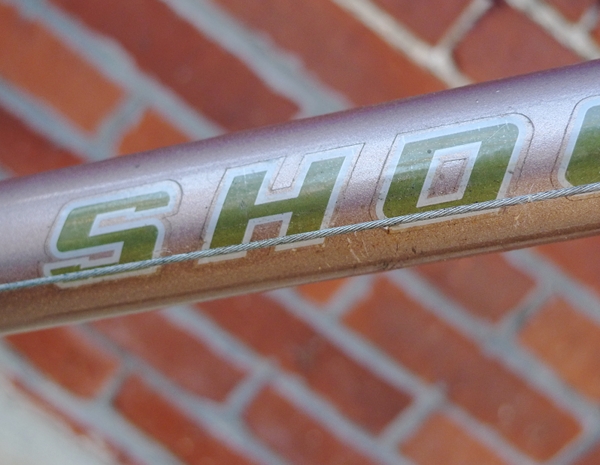
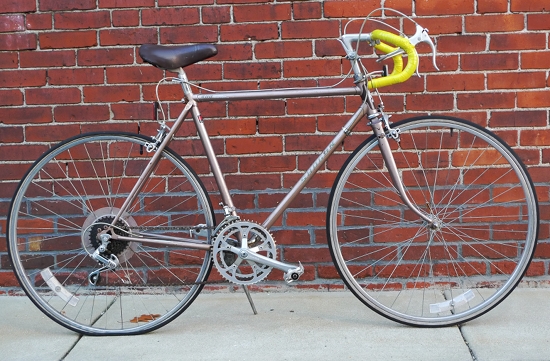
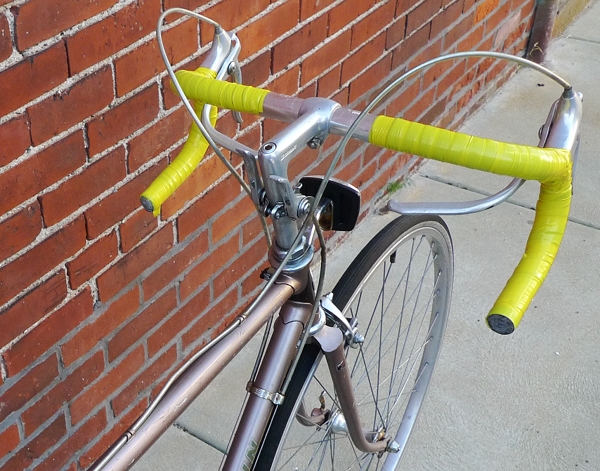
And indeed I knew exactly what to do once I saw this neglected beauty, her frame an enchanting mixture of mauve and champagne. She is a 1980's Shogun - a Japanese touring bike in double butted cromoly steel.

While I don't need another roadbike, I think that many other ladies out there do - particularly this bicycle, once I get through with it! What's so special about this bike? Well, I will start from the beginning. I hear a lot of stories from women who have tried to ride a roadbike, but felt that it was too aggressive and uncomfortable and gave up - as well as from women who would like to ride a roadbike, but are too nervous to try in the first place. I understand that state of mind, because when I first tried to ride a bike with drop bars, it felt awful and I eventually gave up. What then made me succeed on my Rivendell this year? For me, the big difference was comfort, stable handling, and a choice of components that I believe works especially well for women.

As far as comfort and stable handling, this Shogun has that down - whereas the same is definitely not true for all vintage roadbikes. This particular bicycle is stable and fairly relaxed - a vintage predecessor to the Rivendell philosophy, if you will. Just like I had an easy time learning on my Rivendell, I think this Shogun will be great for that -  with the benefit of a much lower price point.

My plan is to give this bicycle a make-over, to learn a thing or two about vintage Japanese bikes in the process, and then to find a new home for it in the spring. I will keep a lot of its vintage goodness, but will replace some of the components with my own mix that I have found especially comfortable and easy to use - and I think that other women will too. As I begin to work on the bike, I will explain what it is I am changing about it, and why. And I will also post a test ride report soon, comparing it to other vintage roadbikes that I have tried. I am excited about this project, because I think this bicycle is just perfect for a woman who would like to try a roadbike but is not confident about her skills. The right bike can make all the difference!

Sunday, November 14, 2010

Mesmerising Metallics - and the Colours That Go with Them

[early Raleigh in unpainted steel, image via A. Weed]

I love the look of silvery-metalic bicycles: stainless steel, clear-coated steel, chromed, nickel-plated, silver paint, even titanium. And though I do not own such a bicycle myself, it is nice to live vicariously through others. One of my readers, Jim P. , is getting a stainless steel bicycle from Royal H. Cycles that will be ready in a couple of months. 

[stainless steel Gerhard Marshall bike at DBC, image via Lovely Bicycle]

Jim's bicycle will be fitted with an internally geared hub and upright handlebars. It will be a sportier and more personalised alternative to his main bicycle - a Workcycles "Secret Agent" Dutch bike. 

[chromed Raleigh Sports, image via lernerbikes]

While waiting for his frame to be finished, Jim is trying to decide about colour. The frame will mostly be stainless steel, but he is considering a secondary colour - for some panels, Royal H. insignia, and lug outlining - and has asked me for advice. After thinking about it, I realised that it is actually quite difficult to decide what goes with stainless steel, or any silvery frame.

[Co-Habitant's silver Motobecane, image via Lovely Bicycle]

One direction to take, would be to go for low contrast. For instance, the Co-Habitant's vintage Motobecane Super Mirage has black insignia and decals that blend in with the frame colour. I have also seen beige, navy blue, white, and coppery-gold used in the same manner: to break up the sea of steel, silver, or chrome without attracting attention to the secondary colour.

[chromed Rene Herse, image by Mike Kone via J. Ferguson]

Or one could go in the entirely opposite direction, and choose a colour that creates a strong contrast. Red seems to be a popular choice when going this route, like on the Rene Herse above.

[chromed Alex Singer randonneur, image via cyclezine]

or on this Alex Singer

[chromed Waterford bicycle, image via velospacee]

or on this modern Waterford, which I believe was built as an homage to the vintage Schwinn Paramount (though could somebody please explain that saddle?...).  I have also seen the high-contrast look achieved with a lemony yellow (on a vintage Panasonic touring bike), and I think orange and pink can work pretty nicely as well - for those who like those colours, of course.

[nickel-plated bicycle; via Steve on Bike]

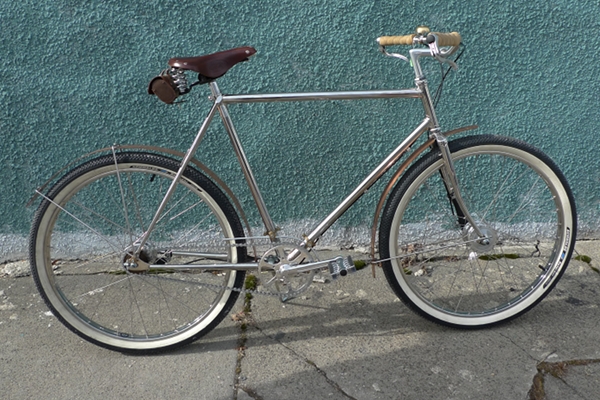
One colour Jim was considering was turquoise, or blue-green. I was not able to find any examples of this colour integrated with the frame, but you can sort of tell how it would look next to the stainless steel based on the picture above. Personally, I think this would be a great choice. It would not provide quite as much contrast as red, yellow, orange or pink, but it wouldn't blend in with the frame either. It would be an interesting and unexpected combination, and would evoke a shimmery seascape - which would be fitting, as Jim P. lives near the water. If it were me, I might also choose violet - which would offer a similar degree of contrast as the turquoise, but in a slightly warmer tone. And I would definitely keep the secondary colour to a minimum - maybe some narrow strips on the seat tube and downtube instead of full panels.

[chromed Peugeot PX10 via fixomatosis]

Of course if Jim is feeling indecisive, he can go with a little bit of everything and choose the rainbow look - which, if done in moderation, I in all seriousness think could look nice.

[silver Royal H. track bike, image by Eric Baumann]

Generally speaking, what do you think of stainless steel as a frame material? - in of itself, as well as in comparison to chromed frames, nickel-plated frames, titanium, and "plain old" silver paint?  Personally, I think stainless is a great idea, especially for those who live near salt water, or who cycle through the winter. And the finish looks fantastic to me. But I was surprised that I was not able to find any good images of stainless steel bikes on the internet. I have seen a few in person, but apparently not many builders are showing them off online. Bob Brown does have a few here, but I can't find one of a fully built up bike without a carbon fork. There are also a few by Bilenky, such as this one, but I am a little confused by the wiring and the components these bicycles are fitted with. Feel free to point me to any others, if I have missed them. Of course, when Jim's bicycle is finished I will take loads of pictures, so the internet should have no shortage of stainless steel "bike porn" after that point!

Sunday, November 7, 2010

Born for the Hills! A Review of the Rivendell Sam Hillborne

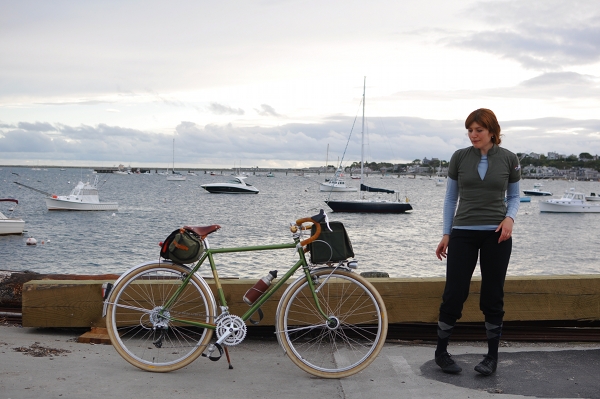
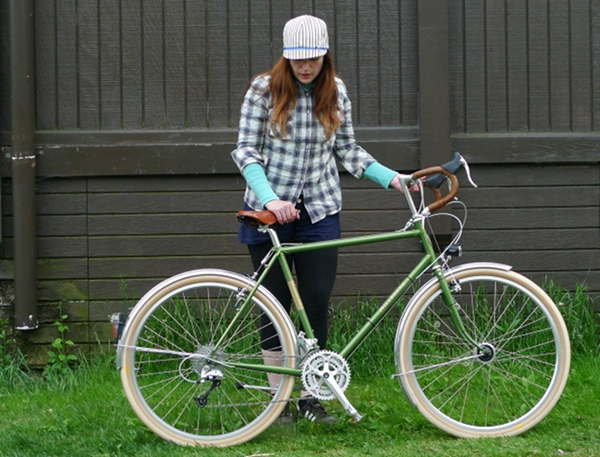
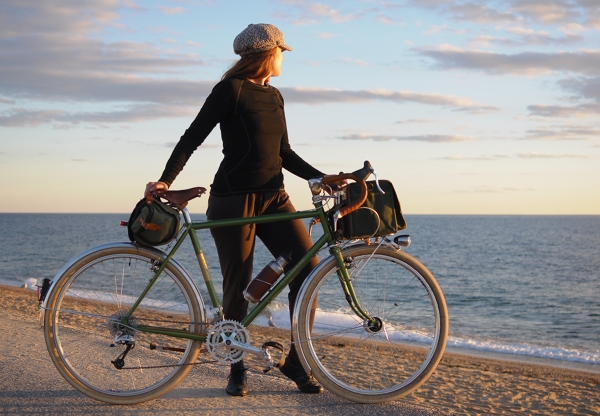
I have owned my Rivendell Sam Hillborne ("Graham Greene") for 6 months now, and have ridden it for 1,800 miles, which makes it long overdue for a review. The short version is: "I love it. I love it so much!" For the long version, read on.

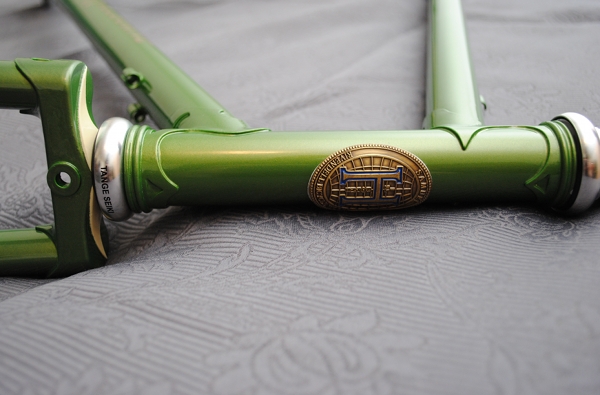
I received a Rivendell Sam Hillborne frame as a holiday gift in December 2009, purchased from Harris Cyclery in West Newton, MA. We were not yet comfortable building up a bike on our own, so the build was done at Harris as well. It took me a few months to save up for the components, and the bicycle was ready in the end of April. Note that Harris Cyclery was not a sponsor at the time, and that everything in relation to this bicycle was a standard purchase.

My choice of build for the Hillborne was informed by test-riding a floor model in my size. Since I had no real experience riding a roadbike at that point, I mostly went with recommended specs. These included a 3x8 drivetrain, Sugino cranks, Nitto Noodle handlebars with Silver bar-end shifters, and a Brooks B17S saddle. My 52cm frame was built for 650B wheels and cantilever brakes.

The three things I specifically chose for this bicycle were handbuilt wheels with dynamo lighting (see details here), Grand Bois Hetre tires (see review here), and Tektro short reach brake levers. The discovery of these brake levers was crucial for me. One thing that had hitherto prevented me from riding bicycles with drop bars, was my inability to squeeze the brake levers - especially from the hoods. I have small hands and I have damaged nerves in my hands. The combination made squeezing this type of lever impossible. When I described the problem to Elton at Harris Cyclery, we went through different brake levers to see whether any existed that I was able to squeeze. The Tektro levers were it and I am extremely happy with them. Elton also showed me some methods of hand and finger placement that work well for me and do not send electric currents through my fingers. I cannot stress enough what a break-through this was in terms of understanding why I was having problems riding with drop bars before.
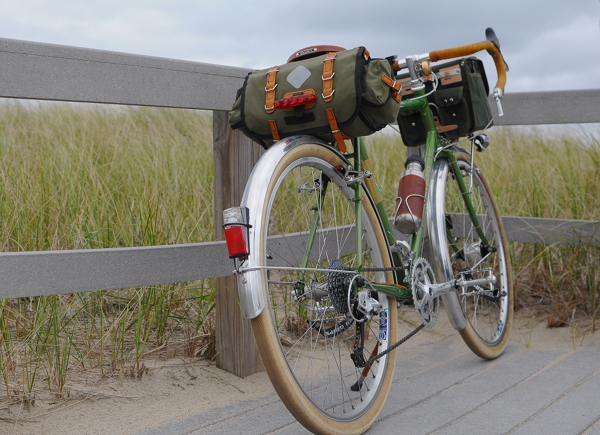
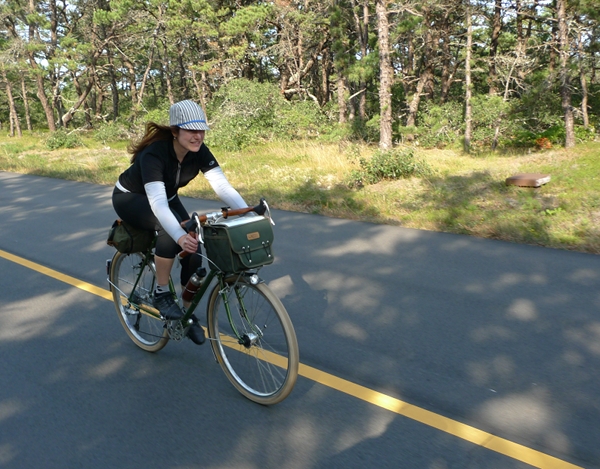
Over time, I added other personal touches to the bicycle. These include a Carradice saddle bag,

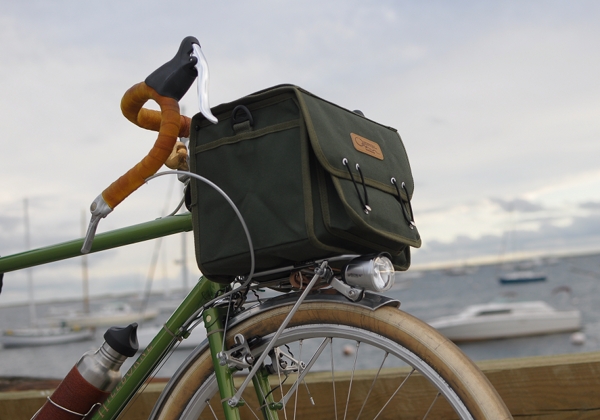
a Nitto M-18 front rack from Renaissance Bicycle (a sponsor), an Ostrich handlebag bag from Velo Orange which I use on long trips,

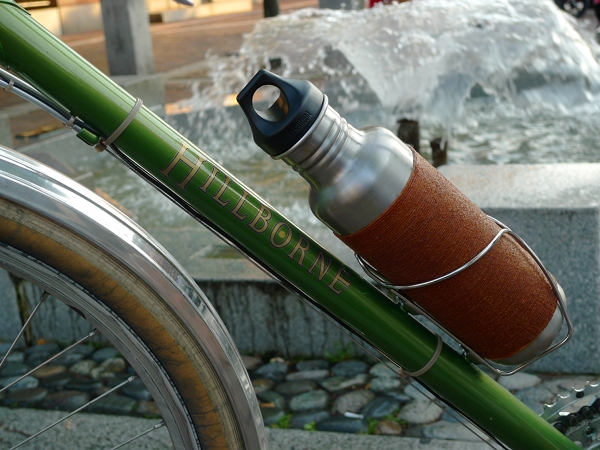
a twined and shellacked Klean Kanteen water bottle,

and my beloved Power Grips (see here for my initial review of them).

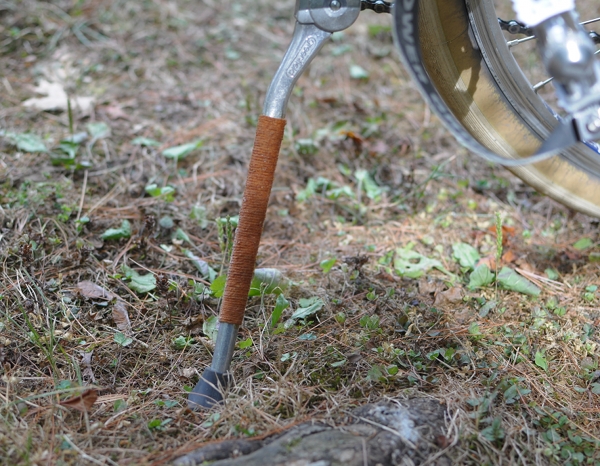
I have also twined and shellacked the kickstand (to prevent it from scraping against the pedal when the bike is parked),

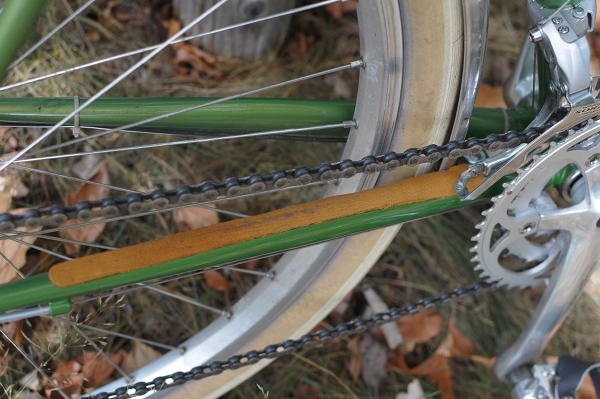
and added a leather Velo Orange chainstay protector. This product is great for preventing the paint on the right chainstay from getting nicked by the chain slapping against it when the bicycle goes over bumps - which began to happen to my Rivendell within the first few rides I went on.

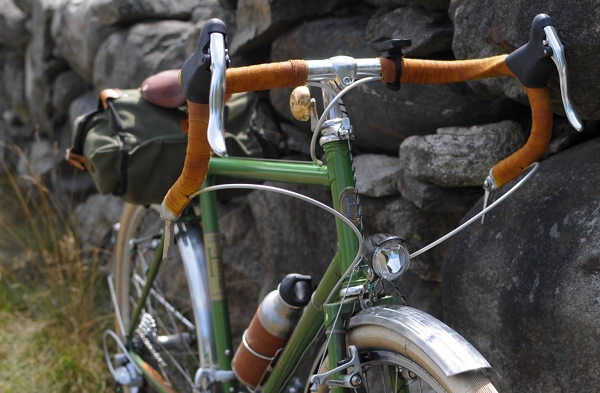
There are a few additional little details that I enjoy, but no one else probably notices - like these green cable endcap crimps,

and the "taupe" zipties (see top right, under the waterbottle) for routing the dynamo lighting that I find to be less noticeable than black ones.

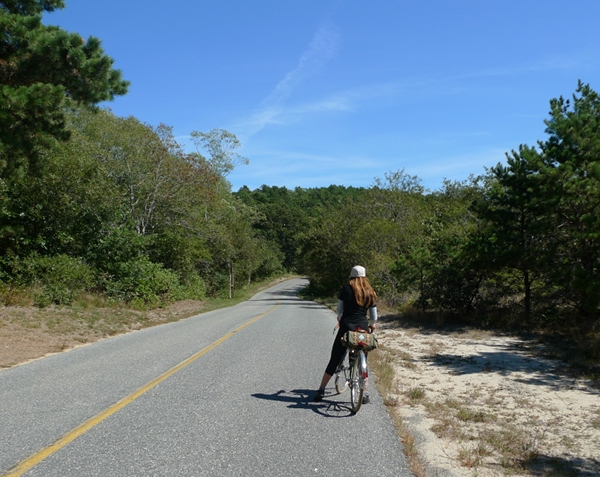
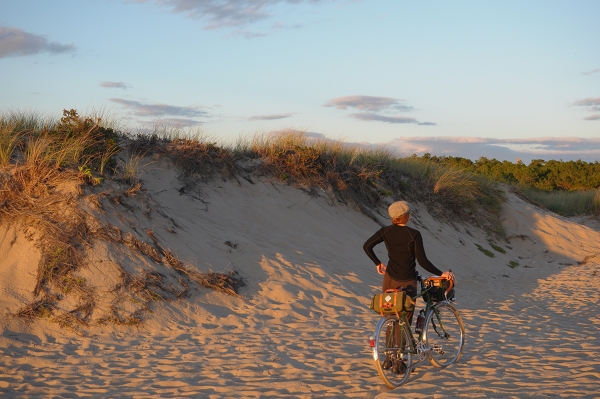
Over the time I have owned him, I feel that Graham has attained an appearance that is distinctly personalised. Looking at him reminds me of the many "firsts" I experienced on this bicycle: from learning to ride with drop bars to going downhill at 30 miles per hour, while cornering, with a full handlebar bag.

These experiences certainly did not happen all at once. After I first brought the complete bicycle home, I had a minor hysterical breakdown when the reality of owning it hit me. What on Earth would I do with such an expensive bike with drop bars? What if I wasn't able to ride it? The bike would end up standing in my livingroom as a beautiful, ridiculous testament to the gap between my imagination and my abilities.

This emotional self-flogging lasted for a couple of days, but then I began to ride the bike. I took it slow and started by setting the handlebars quite high, so that I could get used to the drop bars. The Hillborne has what I would say is a long top tube, and I have a short torso - so the degree of lean this placed me in required some adjustment on my part.

Over the course of the first month I owned the bike, I rode it almost daily and lowered the handlebars weekly - until eventually I was comfortable with them being at the level of the saddle. I would recommend this method to those who find dropbars intimidating.

I love pretty much everything about this bicycle and find it difficult to muster up any words of criticism. It may be worth noting that some dislike the slight upward slope to the top tube on the Hillborne, but I have no problem with it. If I have to find something bad to say, then maybe it's that the paint seems to be a bit delicate - but then I am used to powdercoat, and it's just a fact that liquid paint is easier to nick. I am equally happy with my choice of components - perhaps with the exception of the Shimano Deore rear derailleur, which I have managed to bang up pretty badly in the course of ownership. Next spring, I may replace it with the Shimano XT "Shadow," which seems more immune to abuse. Otherwise, everything is perfect.

I don't know how to describe the ride quality of the Sam Hillborne in technical terms, but in non-technical terms I feel as if I could live on it. Nothing hurts, ever. The bicycle is miraculously cushy over bumps.  There is no "toe overlap" with the front tire when turning. The seat tube angle is just right: relaxed enough to be comfortable without having to shove the saddle back on the rails, but not so relaxed as to stand in the way of "performance." I can keep up with the Co-Habitant just fine on the Hillborne, and he is a fast cyclist. The most challenging ride I have gone on so far has been a very hilly metric century (64 miles), and I felt great afterwards. No weight on my hands, no strain on my neck, no knee pain, just comfy cycling goodness. The bicycle seems equally stable at both high and low speeds. I can go over 20 miles per hour while feeling as if I am going 10 and I can plummet downhill while enjoying the view instead of panicking. It is also fantastic on climbs and seems to carry momentum well.

As I have mentioned at the start, I have now cycled 1,800 miles on this bike - which may be more than I have cycled on all my other bicycles combined. I had never imagined that I would be doing this much cycling, let alone on a roadbike. I know that it is all supposed to be about the cyclist and not about the bicycle, but I honestly do not think I would have come this far in my road cycling skills on a different bike, no way. I would even credit the Sam Hillborne with how well I took the track bike I rode in Vienna and to the Italian racing bike I subsequently built up as a fixed gear. Once I learned the skills on the Rivendell, I felt comfortable on other types of roadbikes as well - but I would not have been able to learn on them.

While the Sam Hillborne was great for me as a beginner, I am nowhere close to "outgrowing" it. If anything, I feel as if I am slowly growing into it and am only starting to appreciate its full potential. Next summer I am looking forward to doing some more extensive touring and attempting more challenging hills. After all - my bike was born for them.