Showing posts with label product reviews. Show all posts

Friday, February 4, 2011

Cycling Indoors: the Kurt Kinetic Trainer

Last month I asked for advice about bicycle trainers, but after reading all the comments decided not to get one after all. It was the promise of horrific boredom that dissuaded me: I didn't want to get a trainer and then end up never using it. But several blizzards and several yards of snow later, I once again found myself climbing the walls and thinking that any way to be on my roadbike would surely do. My birthday is coming up, and so I asked the Co-Habitant to get me a trainer as an early gift - requesting that he do all the obsessive gadget research himself, and just present me with it as soon as possible.

He was suspicious at first. "You want a trainer. For your birthday? Are you sure that's a sufficiently ...romantic gift?"

"It's a fine gift. Totally romantic. Just get it for me, please."

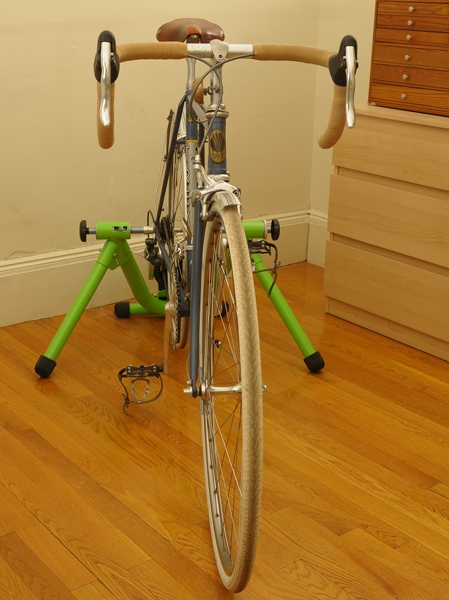
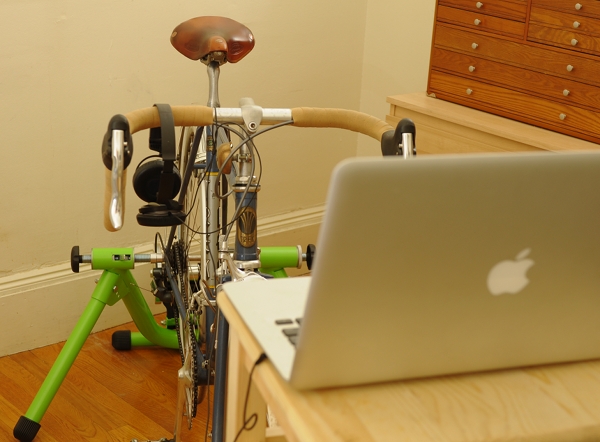
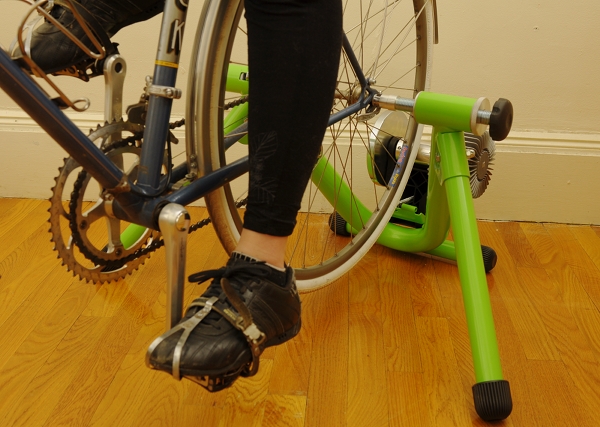
And so, since last week I have been the owner of a Kurt Kinetic Road Machine Fluid Trainer. The 2010 model was on sale at the Wheelworks in Somerville, MA (they had four left as of last week), and the opportunity was ceased. It is lime green and in no way blends in with any normal household decor. It is a good thing we have a "bohemian" apartment where pretty much anything goes, including a bike plugged into a neon contraption in the middle of the bedroom.

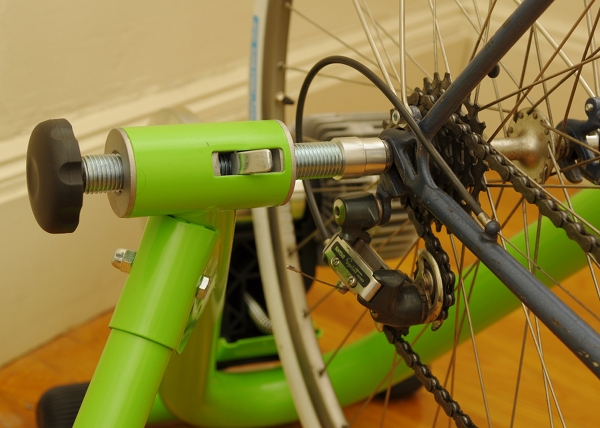
To set up the trainer, you have to attach the rear wheel of the bicycle using a special skewer, so that the tire rests firmly against the mechanism which provides resistance. I would describe the set-up process as somewhat tricky: You have to align the wheel just right and tighten everything just so.

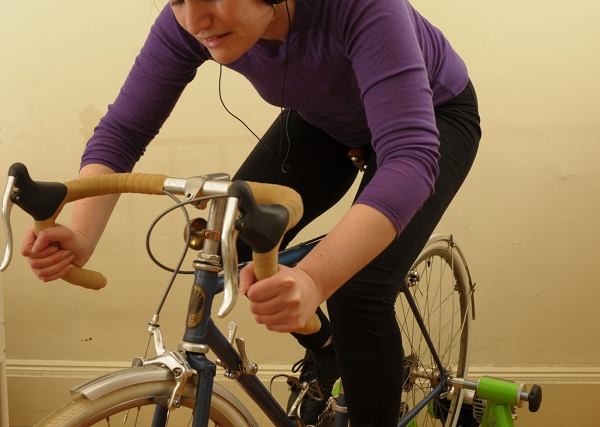
As you pedal, the resistance from the trainer is similar to the resistance you feel when cycling on the road. Beyond that, I admit that I have no idea how it works, and am not particularly curious as long as it does the job. Some prefer to put a block or a riser under the front wheel, but I feel fine without it.

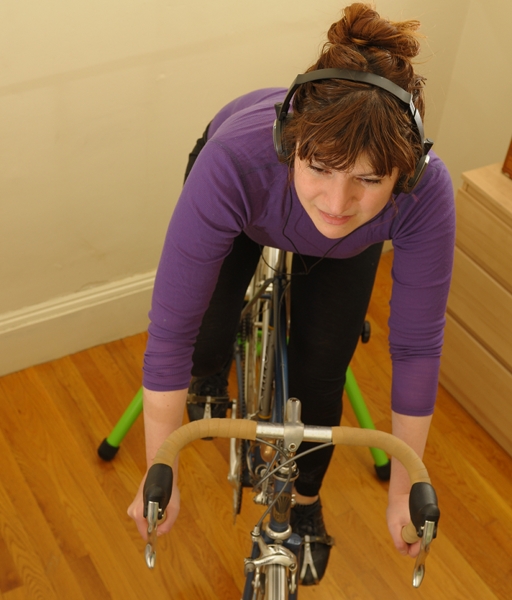
To me, using the trainer emulates the cycling experience realistically insofar that I am on an actual bike, and that the sensation of pedaling really does feel like being on the road. What's different, is that the bicycle doesn't lean, as would have been natural on the road, and - oh yes - that I am in my bedroom, staring at a wall and going absolutely nowhere. After the first time I used the trainer, it became clear that I needed visual stimuli - music alone was not sufficient to counteract the mind-numbing effect of looking at nothing.

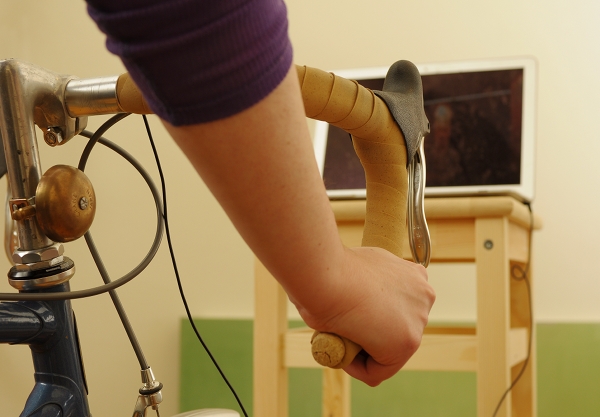
So I rigged up this "tower" using two wooden chairs (don't worry, they are very stable), which allowed me to place my laptop at eye level.

Thank goodness for Netflix and enormous earphones. The trainer is fairly quiet to begin with (the sound it makes is a sort of low hum - not high pitched or annoying), and if I had a TV rather than a tiny laptop, I don't think earphones would even be necessary. But the nice thing about using them, is that they drown out the sound of the trainer entirely, making it easier to get absorbed in the film and put my legs on autopilot.

It took me a couple of days on the trainer to learn how to pace myself. I guess on the road, there are factors that control my speed - traffic lights, obstacles, turns, and even just fear. With these factors gone, I had to keep forcing myself to slow down, so as not to get exhausted immediately. Watching a movie helps, because my pedaling starts to sync up with the highs and lows of the film - slowing down during the quiet parts and speeding up during the exciting parts. At the moment, I am able to keep going for 40 minutes at a time before needing to stop, but I am hoping to make it an hour by next week.

I don't want to give the impression that the trainer is anything other than what it is - a device that allows you to pedal your own bicycle as it remains stationary. The experience does not even begin to compare to "real" roadcycling, which to me is much more about exploration than about exercise. But if I approach it from the other end, and start with the given of wanting indoor exercise that emulates cycling, this trainer pretty much fits the bill. Having never tried others I can't compare, but the Kurt Kinetic trainer does everything I imagined a trainer doing, and it is quieter than I had hoped.

I think I have to face it that something in me has changed over the past year, and I now feel that my body "needs" strenuous exercise. I never thought that would happen to me, and I don't understand human physiology well enough to know how that works. All I know is, that I've been on a roadbike every day for the past week and I am feeling a little more like myself again. It's indoors, it's stationary and it's not real cycling - but I'll take it.

Saturday, January 8, 2011

Stealth Pantaloons: Clever Wool Trousers for Cycling

For some time now, I have been searching for "cycling pants" to be worn on a roadbike that look sufficiently like trousers. Regular trousers have seams in the crotch that start to hurt me after cycling for more than 15 minutes in a forward-leaning position. And women's trousers specifically tend to be quite form-fitting, which makes it uncomfortable to swing a leg over the diamond frame, as well as to pedal. I explored several possibilities for trousers that would work, but everything was either too sporty or had too much of a "cycling culture" look. I wanted something conservative and subtle. The "Stealth Pantaloons" from Clever Cycles seemed to fit the bill, and being my sponsors they graciously allowed me to try the pants before deciding whether to buy them. The pants ended up being just what I needed, and I have since purchased them.

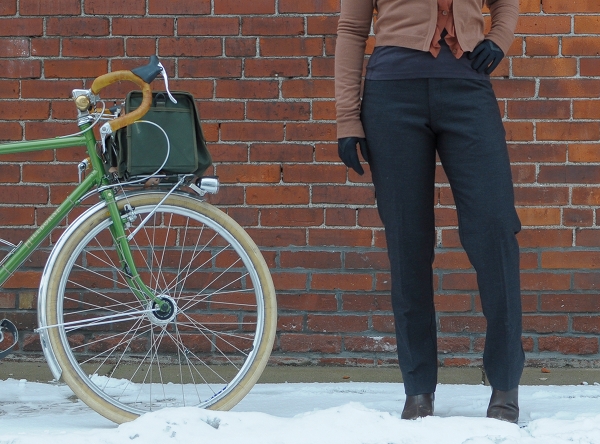
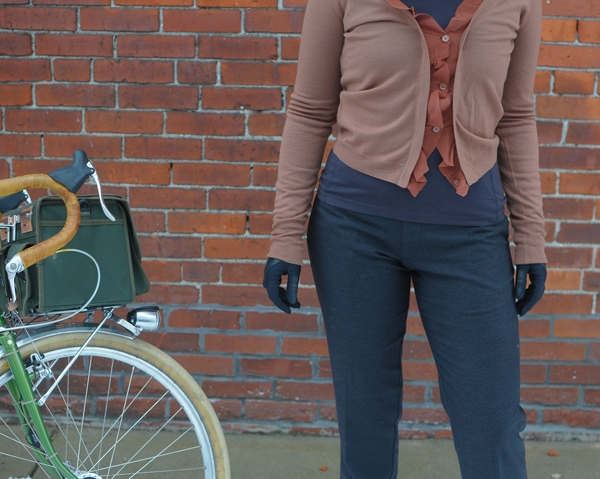
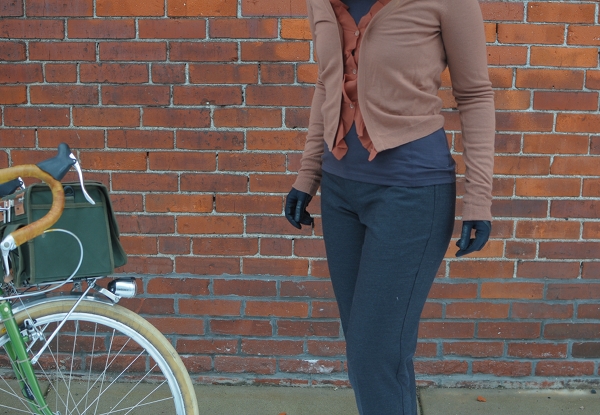
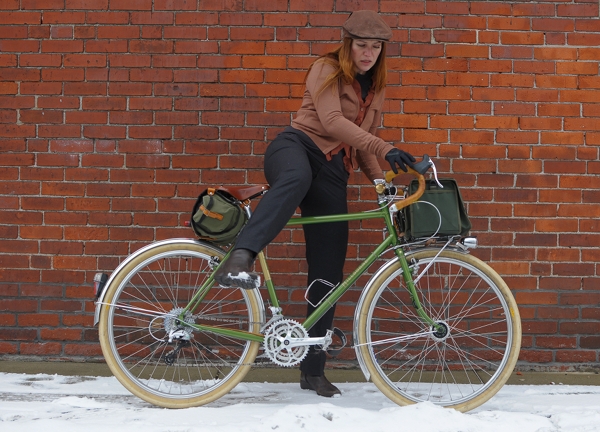
Upon superficial examination, the Clever Cycles "Stealth Pantaloons" look like regular trousers in every way. They are made of a lightweight wool and have a classic, straight cut to them that tapers slightly towards the ankles.

The cut is unisex, and after reading my MUSA knickers review Clever Cycles warned me that I might find some aspects of these not ideal for the female figure either. However, I found the "Stealth Pantaloons" to be reasonably flattering. For instance, compare the above picture to this. Not even in the same category.

I am 5'7" and wear a US women's size 4.  I got the Stealth Pantaloons in size 30. They look form-fitting in the pictures, but in fact they are fairly loose in the abdomen, inner thighs, and below the waistband in the back - similarly to the Rivendell MUSAs. What's not similar, is that the wool fabric falls and drapes in a way where this is not noticeable. As a result, I can wear these pants with leggings underneath or without, and the fit will be flattering either way. The versatility is good for when the temperatures fall below freezing.

I believe the waistband is supposed to hit about mid-waist. However, due to the elasticised area in the back (picture below), I find this to be adjustable: I can wear the pants both high on my waist and low on my hips by simply pulling them up or pushing them down. Here they are shown relatively high on the wait.

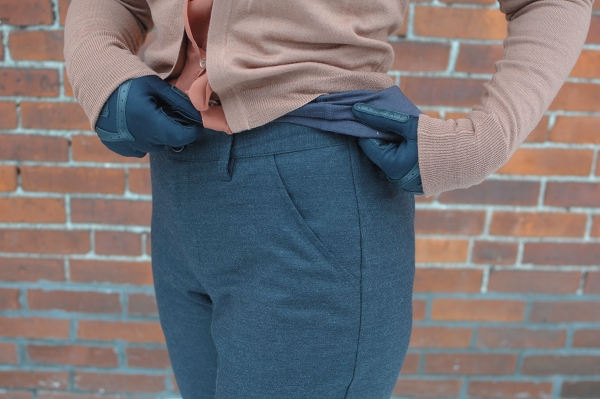
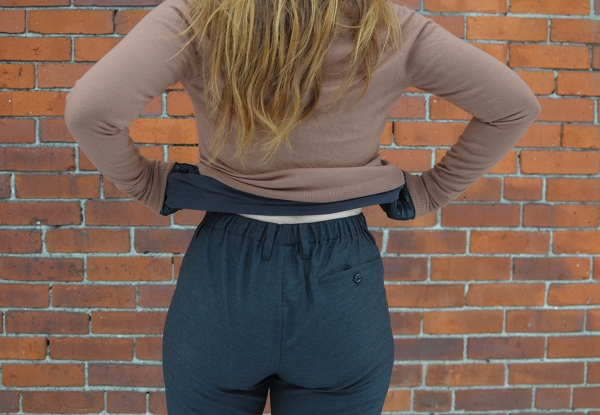
And here is the elasticised waist in the rear. This is the only aspect of the "Stealth Pantaloons" that is potentially unflattering to the female figure and it all depends on how you are built. The feature is useful in that it makes the fit versatile and prevents the waistband from digging into tummy fat when cycling in a leaned-forward position. However, it also detracts from the formal look of the trousers, and makes the fabric bunch up under the waistband. For me both of these problems are solved by the fact that I do not like to wear tucked-in blouses: My top covers up the elasticised area and the bunching underneath. If you like to wear your tops tucked in, beware. However, even with the elastic and the bunching, the look suits me better than this.

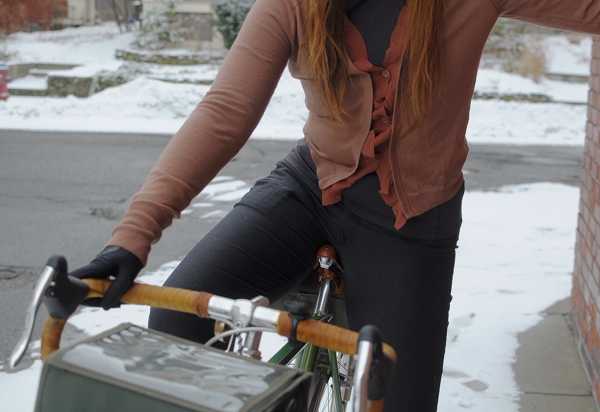
In addition to the elasticised feature, there is something about the fit of the "Stealth Pantaloons" that allows for unconstrained movement. I can mount a diamond frame while wearing without feeling any pulling at the seams. Same with pedaling or pretty much any motion. This is not typical of form-fitting women's trousers.

Another cycling-specific feature is the flat seam construction. The "Stealth Pantaloons" do not have a gusseted crotch. However, the seams are flat and do not cut into my "soft tissue" (crotch-related problems on a roadbike are an ongoing theme for me!) when I lean forward on the saddle. I have not gone on long rides with these yet, but I can usually feel seams right away once I am on the saddle, whereas these I cannot feel.

There is no bunching in the rear while on a bike, which is good.  As a woman with a smallish waist and an obscenely voluminous behind, I find it difficult to find even regular trousers that offer a flattering fit, let alone cycling-specific pants. The "Stealth Pantaloons" fit me better than I had imagined they would after the very cautious description I was given by Clever Cycles.  My experience may or may not be applicable to you, but I am happy. They are comfortable on and off the bike, they are all-wool, and they are a neutral colour. They can be worn with shoes, tucked into tall boots, or pushed up the calves like knickers. I am also told that they are fairly stain-resisant, though I have not yet tried this out. Oh, and today I was trying on a jacket in a clothing store and two women complimented the pants as they walked by. I am pleased with the purchase and might get another pair in black a few months from now.

Thursday, January 6, 2011

Gilles Berthoud Saddles: Something Different Entirely!

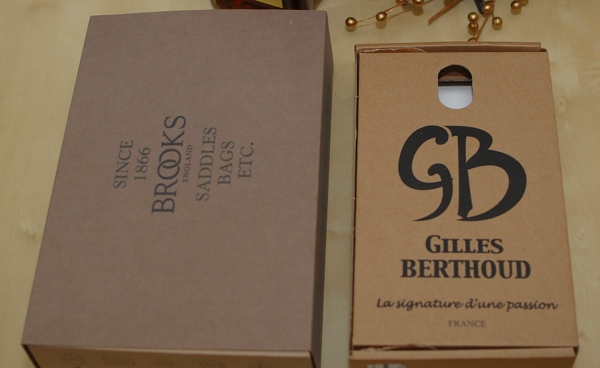
When I started having problems with the width of the Brooks B17 on my roadbike, I received many excellent suggestions from readers. I also received a suggestion from several staff members at Harris Cyclery: a Gilles Berthoud. Bethoud saddles and luggage are made in France and are associated with exquisite randonneuring bicycles. It is generally agreed that their handlebar bags are the finest one can get, and several respected members of the industry describe the saddles as being "even better" than Brooks. However, I was both skeptical of that description and weary of the high price tag. When I returned to Harris Cyclery the following week, I still had not decided what saddle to get, and they suggested that I try the Berthoud and see what I think. So I now have the saddle on loan, and have ridden with it on my Bianchi roadbike.

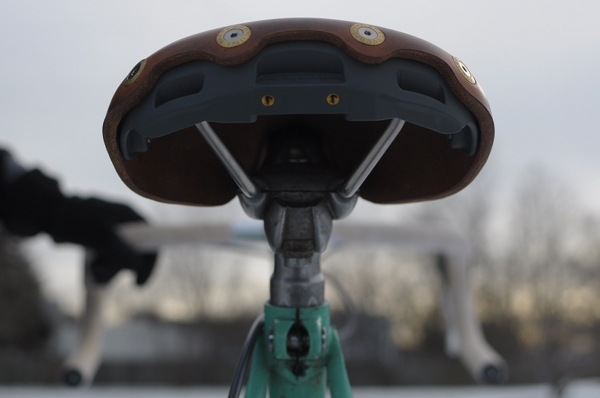
The saddle I have is a Gilles Berthoud touring model, which is available in three different colours (black, natural and cork), with regular or titanium rails, and in either a man's or a woman's length. Mine is the woman's version, which is the same width as the men's (160mm), but with a shorter nose. You can read the detailed specs for these saddles here. The woman's model is called the "Marie Blanque"- after a short, steep climb in the French Pyrenees.

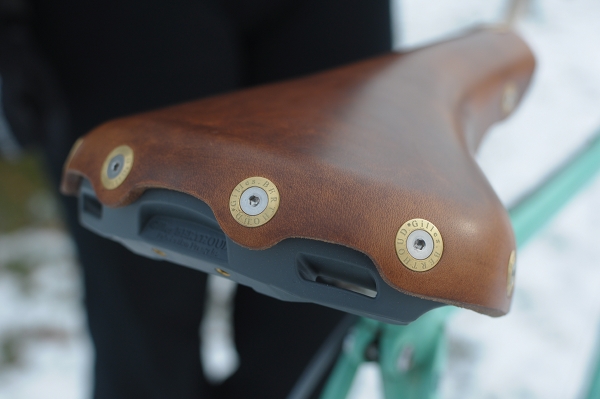
The Berthoud differs from Brooks and the other leather saddles available today in several ways. The leather is stretched using a different method - a modular system involving bolts instead of rivets. This system allows for the saddle to be taken a part and also for more control over tension adjustment. The leather is somewhat thicker than that of other brands.

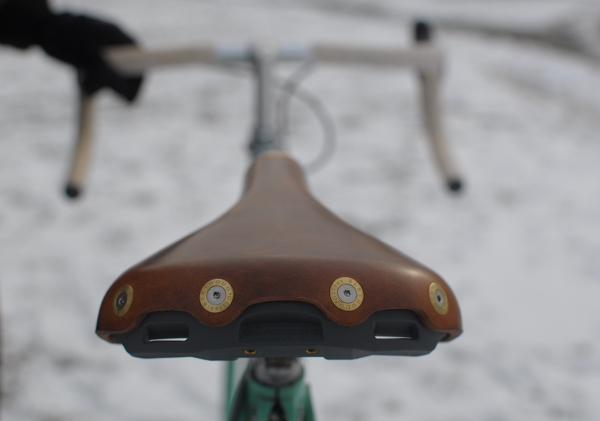
The undercarriage consists of metal rails combined with a polycarbonate (plastic) rear support, which accommodates the proprietary Berthoud "Klikfix" saddlebag attachments. The openings can probably also be used with standard saddlebag straps, though I have not yet tried to attach one. This aspect is where the Berthoud saddles receive most of their criticism: "Not only is the saddle more expensive, but it has plastic parts?" However, both Berthoud and fans of the saddle insist that this construction method is superior in terms of comfort and adjustment possibilities, and is not prone to failure. I am cautiously open-minded on this, and would be curious to know the statistics of Brooks vs Berthoud saddle failure.

Another distinct feature of the Berthoud's design, is that the bolts (not rivets) are located behind and below the surface of the saddle - so that the cyclist's rear end does not come in contact with them no matter how far back they sit. This will make a huge difference to those who are bothered by the texture of the rivets on other leather saddles.

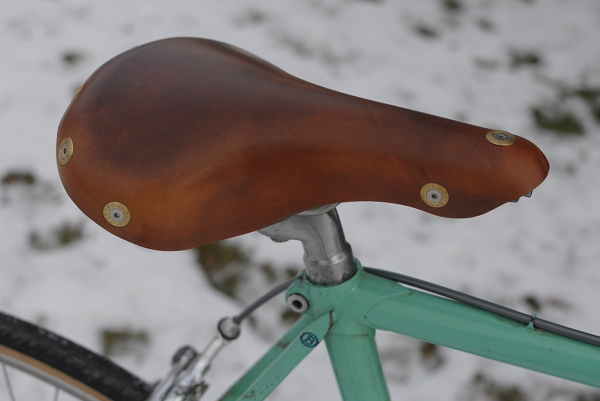
Finally, the very shape of the saddle is different than what I have gotten used to from Brooks. The Berthoud's surface platform is completely flat, whereas the surface of Brooks has "undulations" to it (some call it the "banana shape"). As a result,  the Berthoud works best when mounted completely level - whereas I mount the Brooks with the nose pointing slightly up, in order to not slide forward.

An additional difference, is the Berthoud's relative lack of "side skirts" (compare it to the Brooks here). Despite being classified as a touring saddle, the leather on the Berthoud is closely trimmed along the sides - typical of a much more aggressive saddle in the Brooks range.

My experience riding on the Berthoud is limited to a short (12 miles or so) winter ride, but here are my impressions so far: The saddle felt "just right" out of the box and I simply forgot about it once I got on the bike and began cycling (no padded shorts). Because the Bianchi is a bit big on me, I am leaned forward on it considerably. The saddle did not feel too wide (it is 10mm narrower than a lady's Brooks B17) and my legs did not rub against the "side skirts". Because the Berthoud is level, the nose does not come into contact with any sensitive areas. With Brooks road saddles, I need to make a lot of adjustments to get this aspect just right - but the Berthoud seems to naturally stay away from that region. As I was cycling, I was not so much experiencing any of this, as not experiencing anything. I was taken with the winter scenery and genuinely forgot that I was supposed to be trying the saddle and forming impressions of it. There were no impressions, and only later did I realise that this in itself meant that the saddle was comfortable.

I have to admit that I am "emotionally biased" towards Brooks, which is an obstacle to recognising that the Berthoud suits me better - at least on roadbikes with considerable forward lean. The Berthoud basically gives me the width of a touring saddle with the side cut-outs of a racing saddle - plus the shape does not interfere with my "lady areas". In that sense, it is also more versatile, and I can see myself using it both on a touring bike and on a more aggressive roadbike. All this is exactly what I need.  But... a $200+ saddle? I suppose that if I sell my spare Brooks B17S and the titanium-rail Brooks Finesse that I received in a trade but find unridable, that would give me the funds. But it still feels like an overindulgence and I need to think about it. Regardless of whether I keep the saddle or not, I hope this write-up was helpful to those considering a Berthoud.

Sunday, December 26, 2010

25th December, 25 Degrees... First Attempts at Winter Road Cycling!

Rejoicing at the empty roads on Christmas Day, the Co-Habitant and I decided to give winter roadcycling a serious try. Once the snow arrives, I find riding a roadbike to be inherently more challenging than cycling for transportation, and have not succeeded in doing it until now. One major concern is the slippery road conditions. On an upright step-through bicycle, navigating winter roads is fairly easy: If there is slush or snow, my tires can usually take it and the bike is sturdy enough to remain upright even if the wheels start to slide. But on a roadbike, my weight is distributed differently and the handling is "twitchier" - making for a potentially hazardous situation under the same conditions. When cycling for sport, I am also going quite a bit faster - giving me less time to react to slippery patches ahead.

The other challenge of roadcycling in winter, is figuring out how to dress. On an upright transportation bicycle, I can simply bundle up in my regular winter clothes and potter along at whatever speed I am comfortable with until I reach my destination. But when cycling for sport, it is more difficult to regulate body temperature: Most of my body warms up almost immediately once I pick up speed, so bundling up will cause overheating. At the same time, my hands and face are more vulnerable to the windchill than on a transportation bike because of how they are positioned on a roadbike. To find the perfect balance is tricky and can only be done via experimentation.
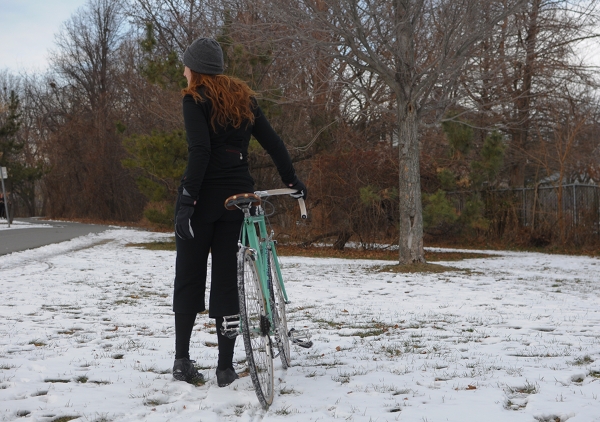
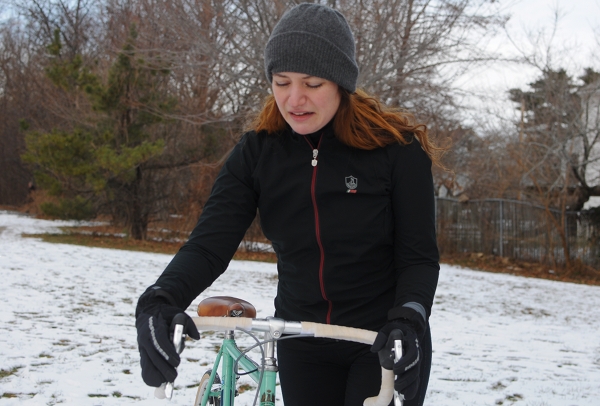
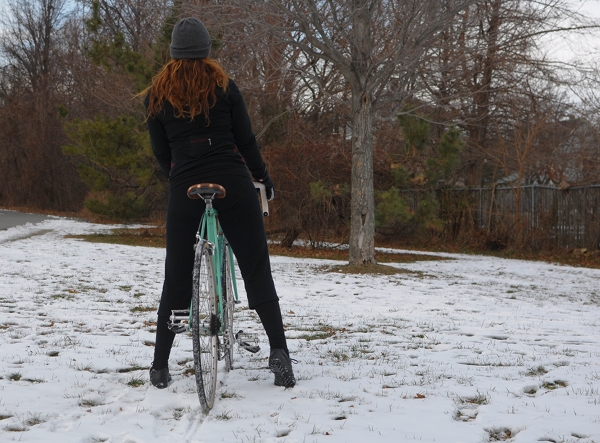
After resisting "technical wool" for as long as I could, I finally gave into it, because nothing else was working for me. I hope to write a comparison review of some popular wool brands soon, but basically what I am wearing in these pictures are just a couple of thin layers by Icebreaker and I/O Bio, an old wool hat, and a wind-proof cycling jacket. I am embarrassed to admit that the jacket is Campagnolo, but it is the best athletic jacket I have worn, ever, and I should write a separate review of it as well, as it certainly deserves it.

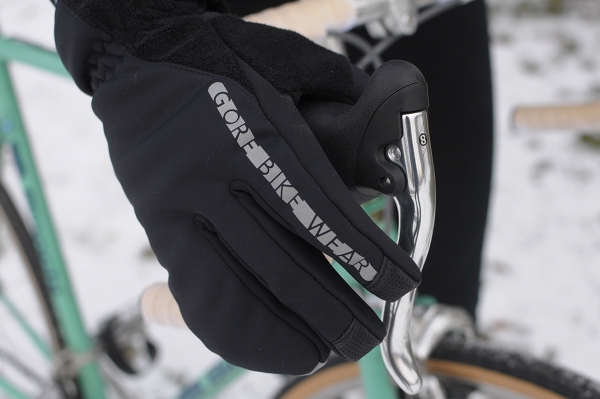
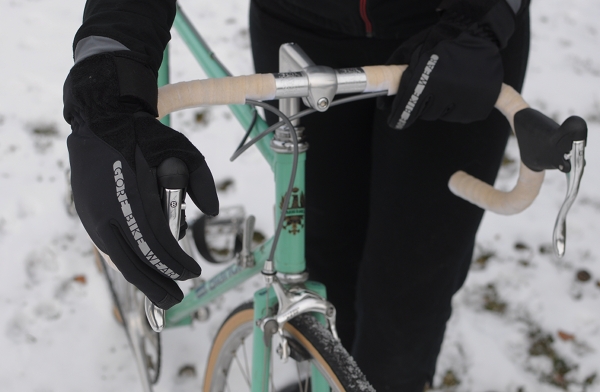
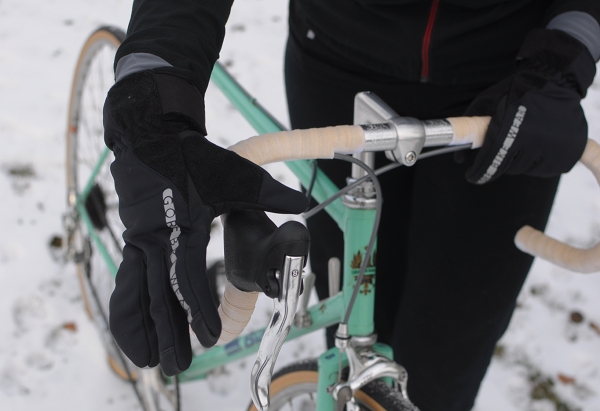
But my most interesting (as in "bizarre") acquisition for winter road cycling are these Gore Bike Wear "lobster gloves". After mentioning in a previous post about my hands freezing when riding with drop bars, I received suggestions from readers for this style of gloves, and the Co-Habitant got them for me as a gift. The concept of "lobster gloves" was new to me, but I was willing to try anything to keep my fingers from going numb when positioned on the brake hoods. These gloves really do make your hands look like enormous, mutant lobster claws, and whether you consider that cute or unacceptably grotesque is a matter of taste.

The ideas is, that, unlike regular mitten shells, "lobster gloves" make it possible to squeeze roadbike levers while still keeping at least your pinkie and ring fingers together for maximum warmth. There are different variations of this style, and some versions keep the index finger and middle finger together as well. We went to a local Eastern Mountain Sports store to look for these gloves, and I tried several versions by different manufacturers. I chose the ones by Gore Bike Wear (called "Radiator Gloves"), because they were the only ones that allowed me to freely squeeze the brake levers on the floor model roadbikes they had in the store. Similar-looking gloves by Pearl Izumi and other manufacturers constrained my hands too much and interfered with lever squeezing motions. The sizing of the Gore gloves was unisex, and size 6 fit me perfectly. Normally I wear I size 7 in women's gloves.

Once I wore the "lobster gloves" in action, I had to make some adjustments to how I positioned my hands on the brake hoods. Braking while wearing the gloves was more difficult than without, but do-able. And they did keep my hands warm, as well as dry. The inside material is soft and silky, and the outside material is textured, preventing slippage on the handlebars. Of all the available choices, I am glad that I got this version. But I would recommend that those looking for gloves in this style try them on in person if at all possible, especially if you have brake lever reach issues on a roadbike.

As for the handling of the bicycle itself - the Bianchi was great, except when encountering patches of ice or snow, at which point it was not great at all (think ice skating) and I had to get off and walk. After doing that a few times on the Minuteman Trail, it became clear that the trail was no longer usable at this time of year and it was only really possible to cycle on the main roads. A pity, as the roads leading out of town are usually heavy with traffic and unpleasant to negotiate. By the time I get through Arlington on my way to the more open countryside areas in Lexington, I am usually in a bad mood from competing with the aggressive drivers - not a situation I want to put myself in under slippery winter conditions. The additional difficulties of decreased visibility from my eyes tearing up, and a constantly running nose, contributed to my feeling of extra vulnerability on the road.

Although this is the closest I've ever gotten to winter roadcycling, it was still far from an actual success - especially since the the emptiness of the roads on Christmas Day is not something I can normally count on. From a logical standpoint, I don't think it's worth it to cycle for sport in the winter under these conditions - particularly for someone like me, whose bicycle handling skills are still relatively poor. But from an emotional standpoint, I am afraid I'll go nuts if I have to stay off roadbikes until late March; I had not realised until now how addicted I've become. Maybe I should snap out of it, be an adult and wait till Spring. Or maybe I should get goggles for my eyes, stuff wads of kleenex in my sleeve for easy nose-wiping access, consult with local cyclist about the safest winter routes, and try again. I guess we'll see how much I really want this. I am not big on setting goals or making resolutions, but I am curious about what will happen next.

Wednesday, December 22, 2010

Bicycle Quarterly: The Art and Science of Velo-Fetishism

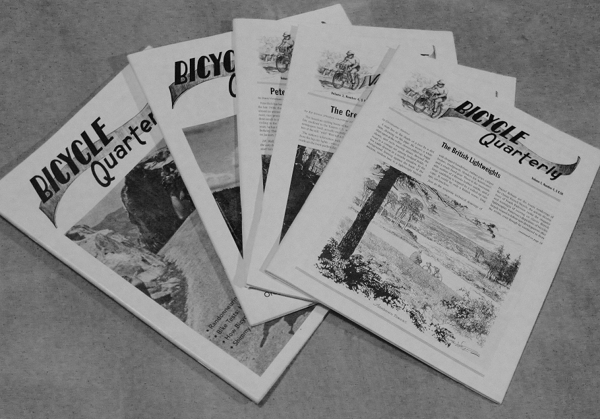
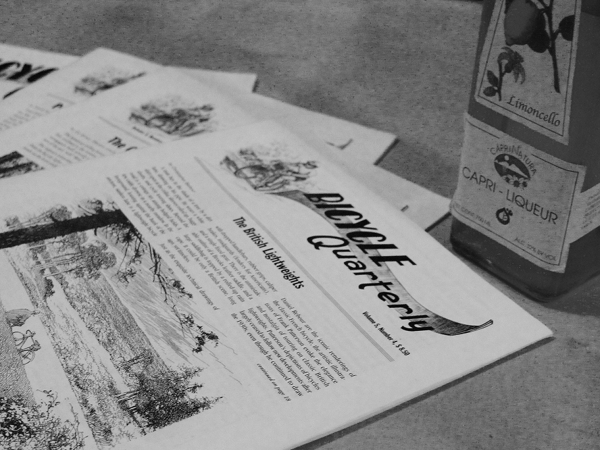
As a holiday gift, I received a subscription to Bicycle Quarterly and a set of back-issues containing articles I had been wanting to read for some time. The Winter 2010 issue and the older set arrived a little while ago, and I have been in a BQ-induced trance ever since. To describe this publication is challenging, as it defies easy classification. Part quasi-scholarly journal, part illustrated adventure book, something like this could only have been created by somebody with the mind of the relentlessly tenacious scientist and the spirit of the boy explorer. The result is wild, spectacular, engaging and maddening all at once - which is probably more emotion than any periodical has gotten out of me, ever. For that alone, the Bicycle Quarterly is worth every penny of its $30/year subscription fee.

Bicycle Quarterly focuses on randonneuring and cyclo-touring, and on the classic and vintage bicycles designed for these forms of cycling. Its content includes elaborate bicycle reviews, detailed historical articles, technical articles on frame building and ride quality, travel stories, book and product reviews, and much more in the same vein. But to leave the description at that would be to understate the unique nature of this magazine. First, there are the hand-drawn black and white illustrations. And then, there is the inimitable narrative voice of Jan Heine - both the publisher of Bicycle Quarterly and the author of most of the articles. Dr. Heine writes like a research scientist who, without the pressure of having to publish in peer-reviewed academic journals, has given free reign to his poetic side. With scientific phraseology interwoven with florid descriptions and subjective assertions, it is like some fantastic tapestry that draws me in with the eccentricity of its patterns.

To be sure, the Bicycle Quarterly contains a wealth of carefully researched information, which I find invaluable to my own learning experience. The author is detail-oriented and analytical, conducting in-depth research and getting to the very heart of the matter in every topic he explores. In particular, I have found the rare historical information, and the many articles examining the geometries of classic bicycles extremely useful. The information provided is not something that can easily, if at all, be found online, and so it is a priceless resource. I will be storing these back issues carefully and using them as reference material in the future.

At the same time, Dr. Heine has a very distinct perspective, which must be kept in mind when reading his assertions, reviews and critiques. He favours a specific kind of (1950s French randonneuring) bicycle design and is convinced of the superiority of this design to a degree that, in my view, makes him deeply biased. He also has a number of theories - such as that on "planing," on the virtues of low-trail geometry, and on the superiority of flexible frames - which he tends to treat as fact, or at least as self-fulfilling prophecies. As a trained researcher myself (psychology and neuroscience), I cannot agree that the tests and reviews printed in Bicycle Quarterly are "scientific" - Yet they are presented that way to readers, and that is my biggest criticism of the magazine. Bicycle Quarterly has much to offer - as long as the author's assertions are not taken as gospel by the eager novice.  It is the art and (pseudo-)science of velo-fetishism at its best, and I am addicted.

Monday, November 29, 2010

OYB Pannier: a Modified Swiss Army Bag for Your Bike

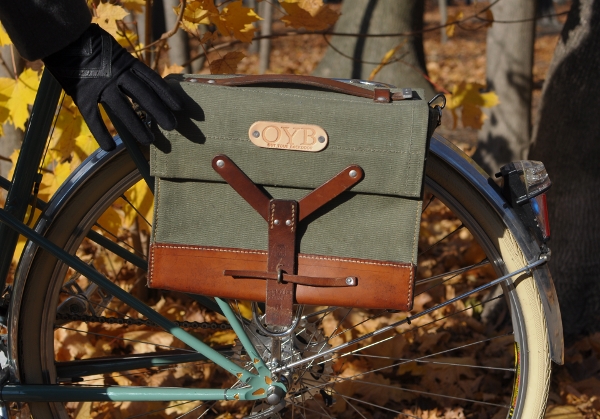
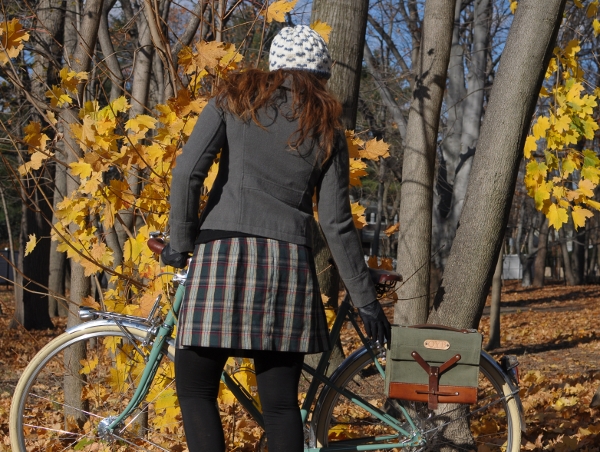
The OYB Pannier is a small Swiss army surplus bag, modified via the addition of rack attachments and other features by Jeff Potter - the owner and author of the project Out Your Backdoor ("indie outdoor lore and more"). I purchased this bag as a smaller alternative to the enormous shopper pannier I normally use. My criteria were durability, classic aesthetics, a trustworthy attachment system, a reasonable price, and a size just large enough to snugly fit my medium format camera equipment or my (very small) laptop. While I am aware that these same bags (without the bike-ready modifications) can be purchased from several other sources, I opted for the OYB version because I wanted the modifications to be made by someone with experience and because I wanted to support the "Out Your Backdoor" project, which provides some great resources for its readers.

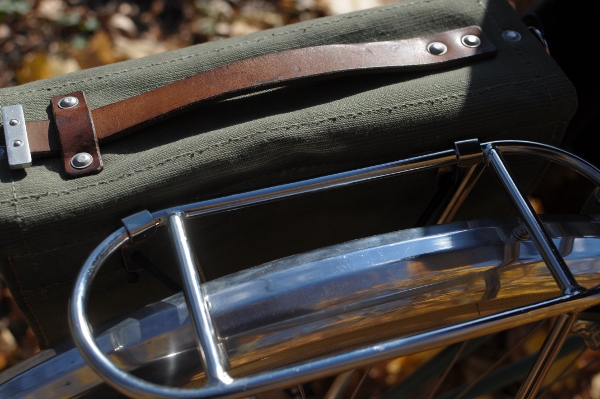
Compact and boxy, the pannier is a Swiss military bag made of a thick, stiff, olive-green waxed canvas with brown leather trim and steel rivets. The OYB leather patch is a lighter shade than the rest of the leather on the bag, but this can easily be changed with a modest application of neatsfoot oil or even Proofide. I am not sure whether this particular bag started out as new-old-stock, or whether it had been used in its previous life, but to me it looks more like the former. The condition is better than I had expected based on the pictures and product description on OYB.

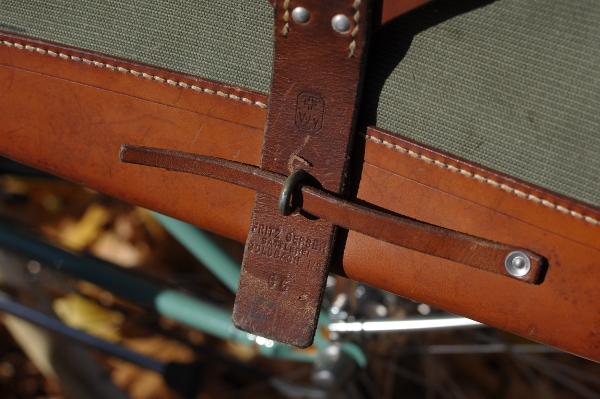
The closure system is simple and secure: That very stiff leather cord pulls out of the metal loop, and the thick leather strap lifts up off the loop to open the bag. For those curious, the imprint on the leather reads "Fritz Gerber Sattlerei, Goldbach."

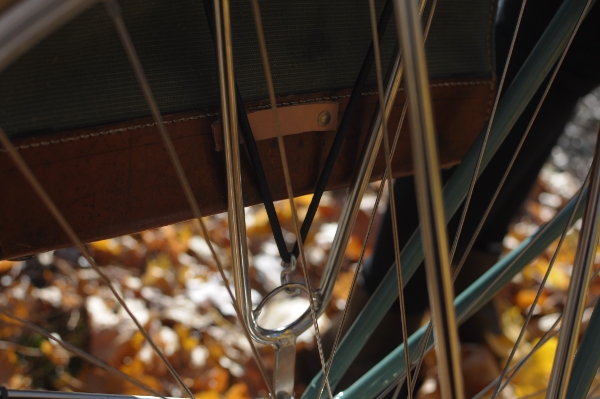
The attachment system is a combination of metal hooks and bungee cords, with which the pannier is secured to the rear rack. The rack I have on this bicycle is the Constructeur rack from Velo Orange, which is quite small. 

Here is a close-up of the metal hooks. They are riveted on to the bag.

And here is a close-up of the bungee attachment. Together, these two attachment points ensure that the pannier does not sway or bounce against the rack - a good feature when you are planning to carry camera equipment. When the bag is not being used as a pannier, the bungee hook attaches to that small leather strip you see on the back of the bag - so that it does not hang loose. [Edited to add: I am now told that the bungee cord is supposed to go through that leather loop before you hook it to the bottom of the rack - oops.]

In addition to the rack attachments, the OYB pannier can be ordered with a number of other optional features, including shoulder strap attachments with a removable shoulder strap. I asked for the strap, because I pan to carry the bag around when off the bike, and this set-up essentially this gives me a camera bag and pannier in one. Other options include lights mounts, and a variety of other attachments.

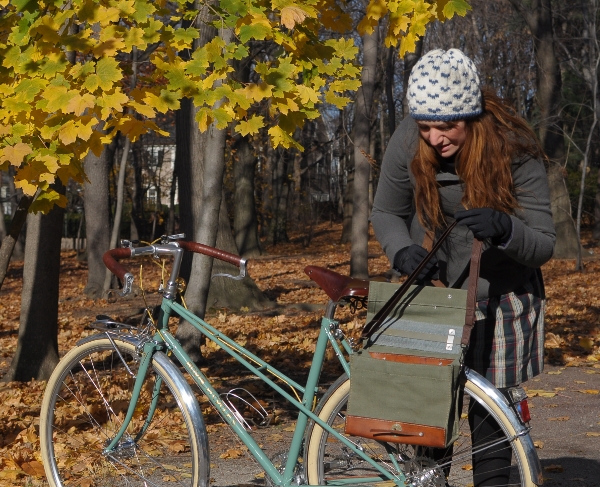
To give you a sense of scale, here is the pannier in relation to me and to the entire bike. It is a small bag. Dimensions are listed as: 8.5" tall, 4" deep, 11.25" wide (5.4 liters).  Inside, the length of the bag is listed at 10.75", but I was hoping against hope that it would fit my 8 1/2 x 11" laptop. OYB gives instructions for stretching the bag out with magazines in order to make it fit items of that size, and I will give this a try. If I can get my laptop to fit, I will be thrilled - but I am not getting my hopes up and am prepared to content myself with this being a camera bag only.

If it were not for the laptop fit issue, this would pretty much be my dream pannier.  The mil-spec colour scheme is not for everyone, but I love it, and it suits almost all of my bikes nicely. The durability of military surplus items is superb, and I appreciated getting the bag customised by Jeff at OYB. This is a classic, versatile, and reliable little pannier refashioned by someone who loves bicycles.

Saturday, November 27, 2010

Musings on MUSA Knickers

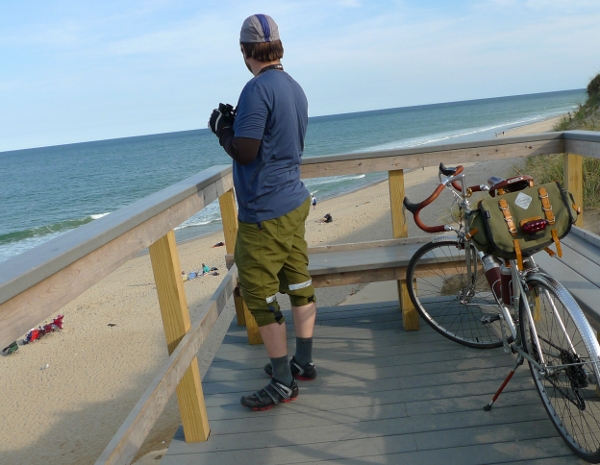
Musa is a Rivendell  house brand that stands for "made in USA." Under this label, Rivendell produces a line of clothing and accessories, including the knickers and pants that are designed specifically for cycling, but are described as being wearable "anywhere when formal wear isn't called for." The Co-Habitant ordered both the knickers and the long pants over the summer, because he was wearing out all his regular pants on long rides, and he thought these would be more durable. He immediately loved them and kept recommending them to me - until I finally bought a pair of knickers myself a couple of months later. Our impressions of this product are somewhat different, and put together they will hopefully be informative for both genders.

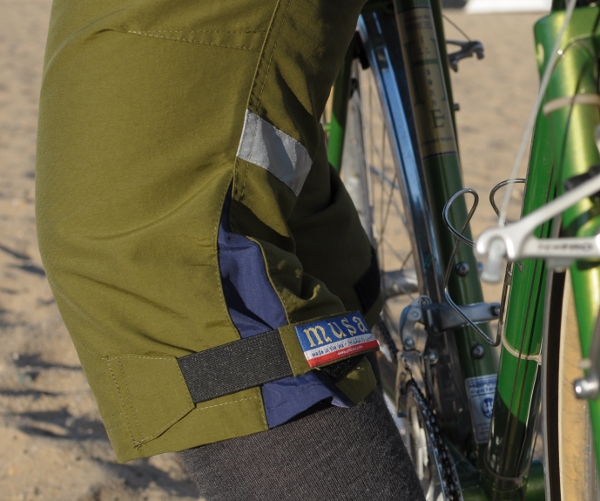
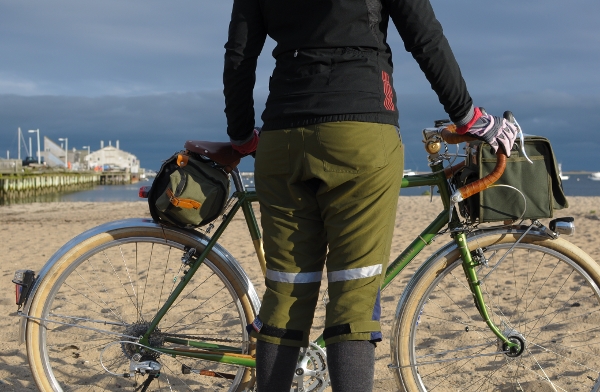
Made of lightweight, breathable, and durable nylon, the Musa knickers work well for cycling, because they feature a roomy gusset in the crotch area, adjustable-width cuffs with velcro straps, and reflective strips.

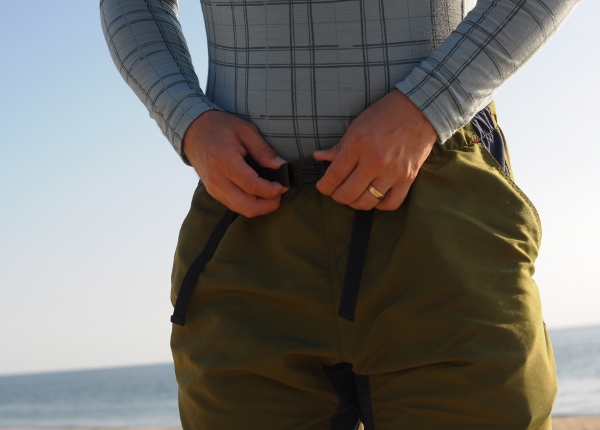
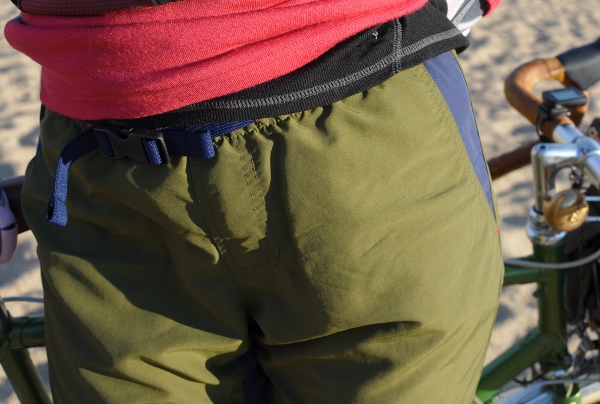
The adjustable waist closes via one of those nylon belts and plastic buckles you see on hiking pants.

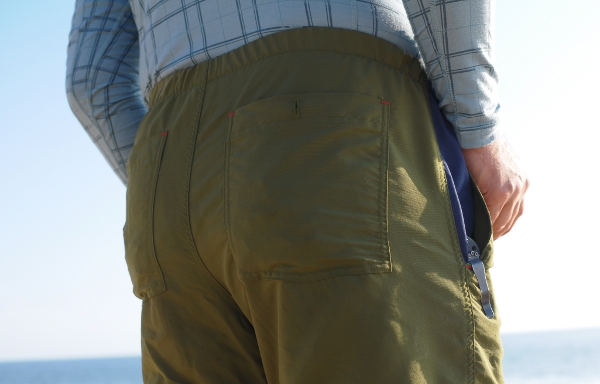
The pockets are deep and cut in a way that stuff doesn't spill out of them while cycling - a useful feature for those who like to keep small items on their person while on the bike.

The Co-Habitant normally wears pants with a 34" waist, and the XL Musas fit him well. They are relaxed, but with a tailored look to them. The cut is flattering to the male body.

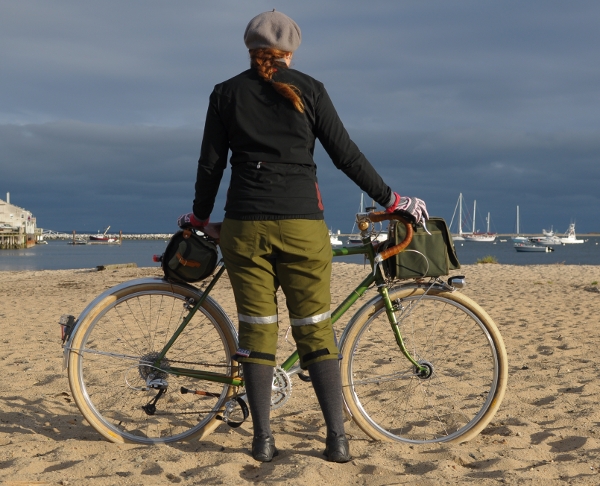
The pants and knickers are currently available in olive, gray, black and blue. The Co-Habitant has the olive knickers (pictured) and the gray long pants. The knickers he wore mostly over the Summer and early Fall; the pants he continues to wear now, including off the bike. His feedback is that his Musas are extremely comfortable and useful. Not only does the seamless gusset protect from chafing during long trips, but the pants regulate temperature well in both hot and cold weather, and are a lot more durable than the trousers he wears off the bike (one problem with cycling long distance in regular clothing, is that the clothing can get ruined from rubbing against the saddle and from sweat). For those men who do not want to wear tight, padded cycling shorts, but want something cycling-specific that looks decent off the bike, these are a good option. I do not quite agree with Rivendell's description of them looking like "normal" pants. They are definitely quirky. But I find this particular quirkiness attractive.

Moving on to my own experience with the Musa knickers (and in case you are wondering - no, we do not wear them at the same time!), my main reason for buying them was the gusset. I cannot ride a roadbike for more than 20 minutes while wearing anything with seams along the crotch, and finding pants without seams in that region is not easy. So seeing how happy the Co-Habitant was with his Musas, I finally ordered a pair for myself. Rivendell describes these knickers as unisex and has a size chart for women. Going by the waist measurements on the chart, I initially ordered an XS. However, I could not pull them on over my hips, so I exchanged them for a Small. The Small went on over my hips fine, but fit me overly loosely petty much everywhere else.

Sometimes a loose fit can be flattering, but with the Musa knickers luck was not on my side. The sagginess in the butt distorts the shape of my body in a way that just doesn't look good, and extra material bunches up around my inner thighs.

The knickers are also overly loose in the front. It is as if the fabric won't lie against my body right - bunching up in all the wrong places. This leads me to conclude that the pants were simply not tailored with a female waist-to-hip ratio in mind. While I am not the curviest woman in the world, I do have a narrow waist and comparatively wide hips - a combination that makes it difficult to get the sizing right.

But fit and sizing issues aside, the Musa knickers do have a number of features I find useful. The gusset is huge and there is not a single seam between me and any part of the saddle, which is excellent. The nylon material really is very light and breathable, as well as wind-resistant, mildly water resistant and fast-drying. The fabric does not pill or degrade after prolonged contact with the saddle  - and having worn through several pairs of leggings and shorts over the past year, such durability is welcome. The pockets are staggeringly deep - though the feature is wasted on me, as I prefer to cycle without too much stuff in my pockets. The expandable width cuffs with velcro closure are clever, if a bit finicky (I had to redo mine a few times to get them to feel right). As other owners of these have noted, the pants were shiny and slippery in the beginning, but this went away after a few long rides.

All in all, the Musa pants and knickers are excellent if you want to wear something comfortable and durable on a roadbike, and if you are male. If you are female, consider the issues with fit and compare how the pants look on a male vs a female body. For me, the gusset and other positive features are worth it - but only because I found no better alternatives. And I would never wear these knickers in a context other than on a roadbike, which does diminish the value of what was meant to be a "wear them anywhere" design.