Showing posts with label test rides. Show all posts

Monday, December 20, 2010

Celeste e Bianca: Nice Day for a Ride!

Having finally nursed my celestial beauty back to health, I was ready to take her on a proper test ride... And the snow decided to pick this day of all days to arrive? It felt like the final act of an Italian tragicomic operetta. But since the forecast did not predict snow until late morning, I set off early in hopes of beating the odds. After all the drama with this bicycle, I was not willing to forgo a test ride!

For the past few months I had been patiently hunting for one of these, but having no luck finding anything in my size and budget. Finally, an online bike-friend found something that seemed perfect and I pounced on it immediately. When the bicycle arrived, it initially seemed that my worst fears about sight-unseen deals were realised and the purchase was a disaster: Not only did every single component seem to require work, but the frame was a larger size than advertised - possibly too large for me. I considered just re-selling the bike as-is to save myself the heartbreak. But after much debate and some outside mechanical help, things began to look up and I decided to keep it. Once the wheels were in ridable condition and we put the tires on, the moment of truth came: I did clear the top-tube sufficiently, and so continuing the renovations was deemed worth the risk.

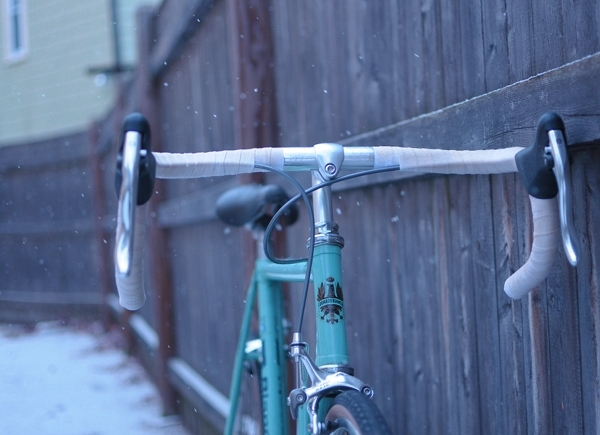
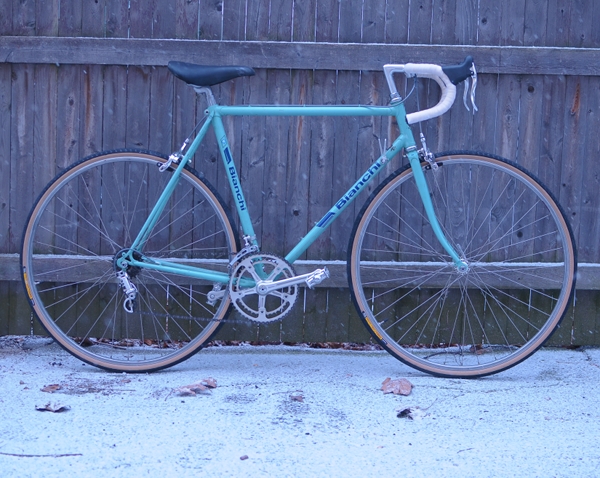
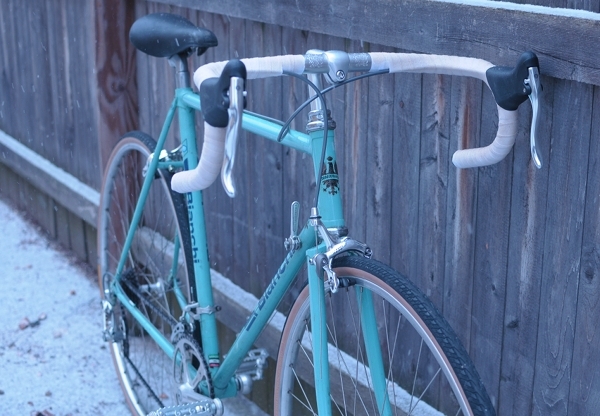
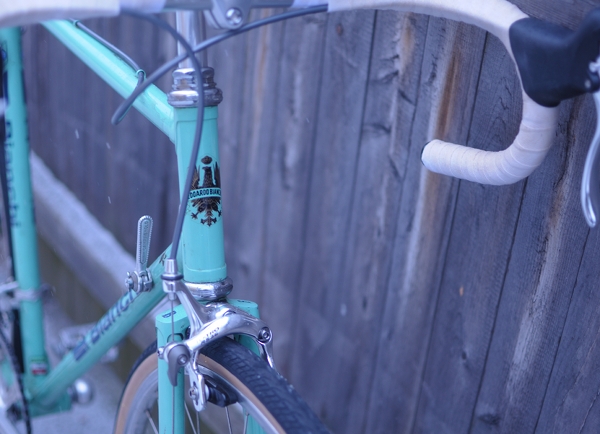
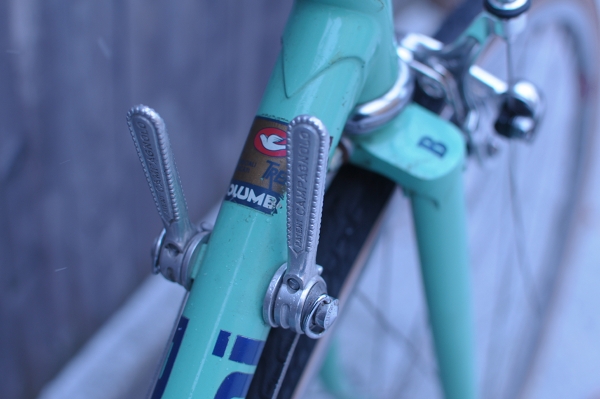
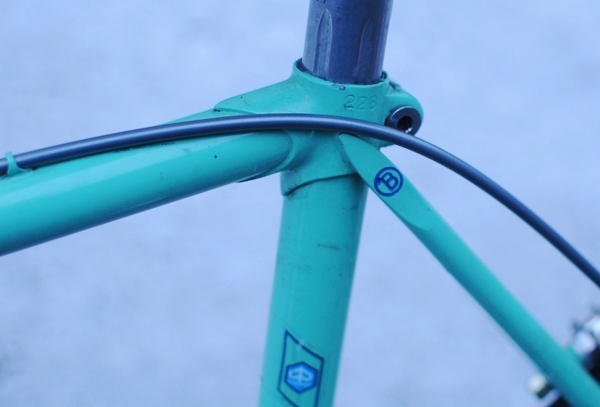
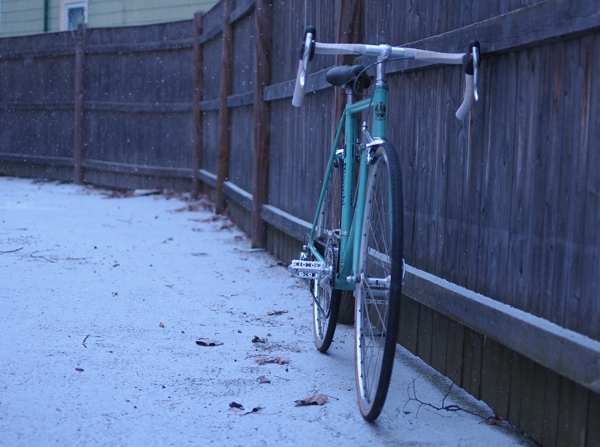
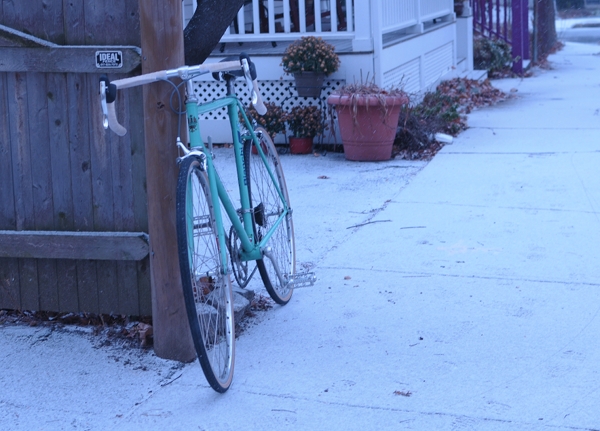
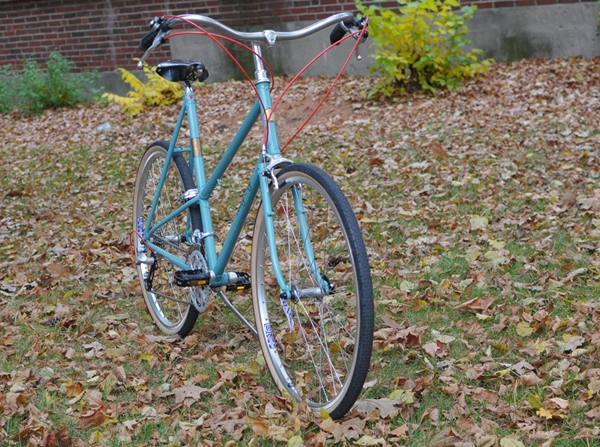
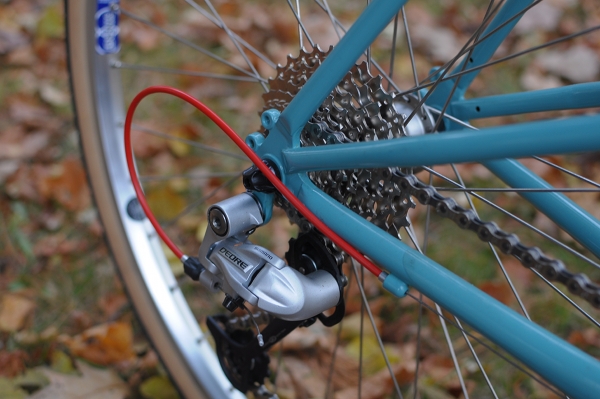
And now here she is: a 54cm Bianchi "Nuovo Racing", circa 1983. Made in Italy, Columbus tubing, some Campagnolo components. When I got the bicycle, everything was original - right down to the water bottle, which I promptly removed.

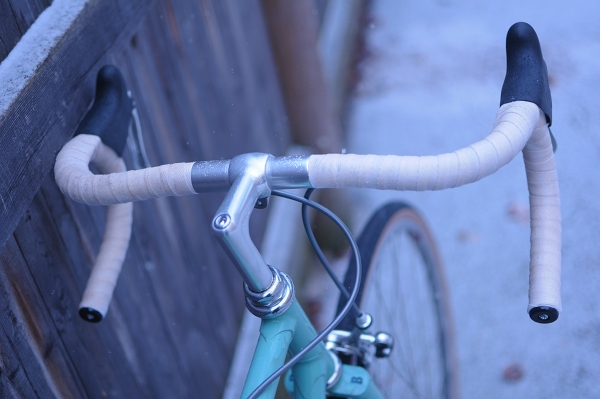
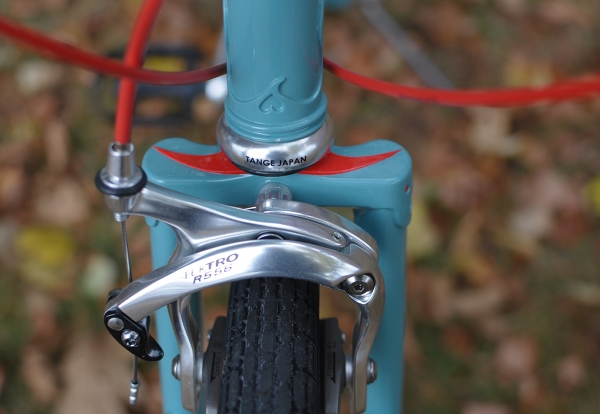
We replaced the handlebars and brake levers with modern Nitto Noodle bars and Tektro short reach levers. (The original bars and levers were damaged. But even if they hadn't been, I have trouble using vintage ones and am only really comfortable with the Noodle + Tektro combination.)

The original Ofmega stem was 11.5cm long - which felt scary, since the bicycle was already larger than what I was used to. We replaced it with a 7mm stem.

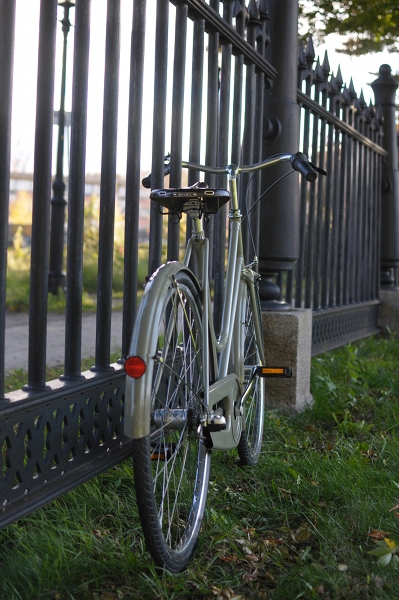
The original 23mm tires were torn to shreds and we replaced them with 28mm gumwall Panaracer Pasela Tourguards. I might eventually switch them with the cream tires on one of my other bikes, but maybe not. The original Modolo Flash brakes on the bike were damaged, and for now we've fitted it with a set of modern Tektro brakes - but they are not an ideal fit, and I am waiting to get a set of vintage Campagnolo brakes from a bike friend which I hope to replace the modern ones with. That should look much better, so I am hoping they work out.

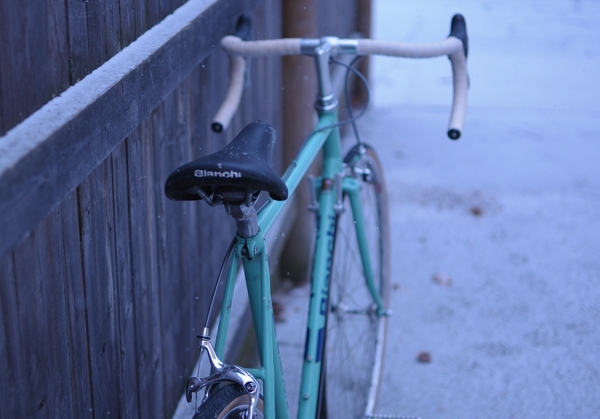
Otherwise, the bicycle is original, including - for now - the foam racing saddle, the shape of which feels surprisingly comfortable. The handlebars are wrapped with white cloth tape and covered in two layers of clear (not amber) shellac - which gives them a nice vintage-cream appearance. The end result is not "period-correct" by any means, but I don't think the modern parts look offensive either. It is subdued and evokes a sense of the early '80s, at least to me.

When you romanticise a particular bicycle and look forward to it too much, there is bound to be disappointment. For me, the disappointment was with the aesthetic aspects. I don't know what I was expecting, because I had poured over catalog pictures of this model before, so nothing should have been a surprise. But I guess, appearance-wise, the bike was more bland than I had anticipated.

I think that I hoped to see "Italian flare", and there simply isn't any. It's a very ordinary-looking early 80s lugged bike, painted turquoise, with a bunch of blue Bianchi decals. Well, that's okay, I thought: Now I know that there is nothing magical about these bicycles. I will either enjoy riding it, or not; either way, it will be a learning experience.
It was not until I rode the bicycle that I began to get attached to it. And make no mistake, get attached to it I did! - How could I have taken these snowy, romantic photos otherwise?  I first tried the bike a couple of days ago - with the long stem and faulty original brakes - for just long enough to determine that the stem was too long and the brakes were too faulty, but the ride quality was lovely. After having replaced the stem and brakes, I finally test rode the bicycle properly, just hours before the snow storm arrived. The Co-Habitant was worried about the bike's performance and about the weather, and so he extracted a promise from me to stay close to our neighborhood. And I did - riding for 45 minutes in loops until my hands went numb from the cold (winter glove recommendations for a road bike, please?) and the snowflakes started to fall.

First impressions: The ride quality is nicer than I had expected. There was no harshness at all, and the bicycle was surprisingly stable at low speeds for a racing-style roadbike. The 54cm frame feels large, but I like it - I hope that I will be able to go back to 52cm bikes after this! The lean, even with the shorter stem, is more extreme than what I am used to. But I think I am okay with expanding my comfort zone in this respect. I was able to use the drops and the downtube shifters without feeling too unstable. And most importantly, this bicycle has the same "smooth and comfy" feel that I love so much about my Moser.

Because I have now shown a preference for several bicycles with Columbus tubing, while not being as crazy about my Reynolds 531 vintage Trek, it has been suggested that I might be a "Columbus person and not a Reynolds person". I don't know about that - or at least, I don't think that I have enough experience yet to determine such a thing. But I do know that I will be keeping this Bianchi and that I will be selling the Trek in the Spring. I won't make sweeping generalisations, such as that "I like Italian bikes" - but I do very much like the ride on the Bianchi, so far. And as beautiful as the snow is, I do hope it clears up and gives us a chance to ride together again this winter.

Sunday, December 19, 2010

D2R Boogie: a Miniature Non-Folder

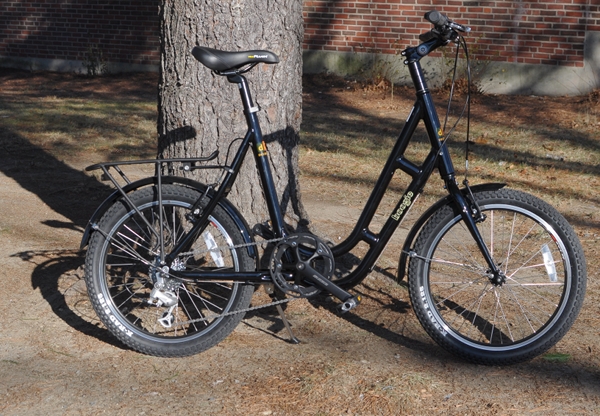
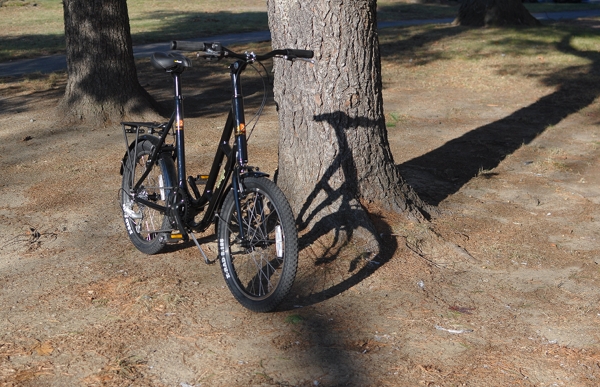
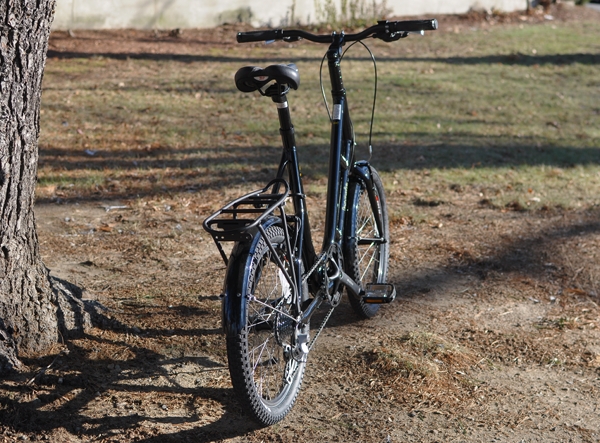
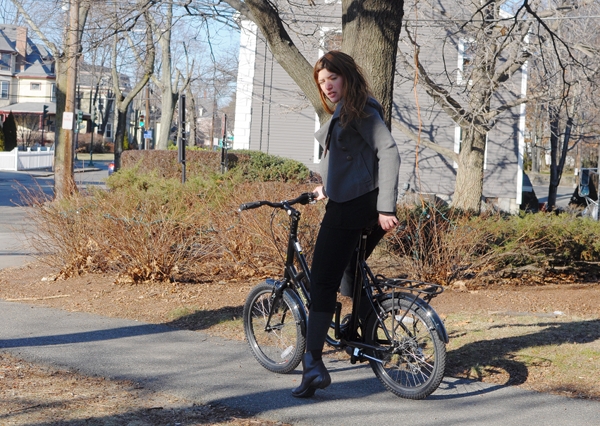
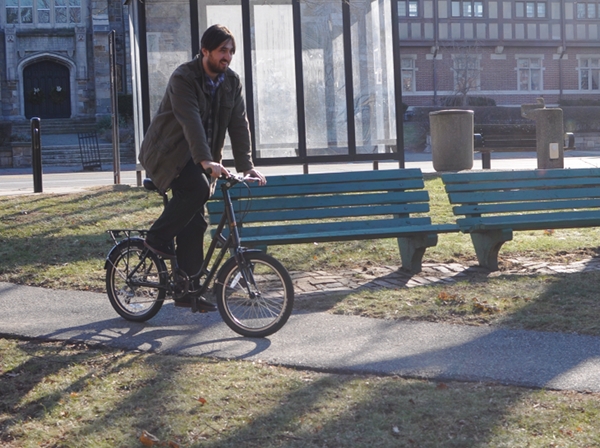
When I saw this bicycle at Harris Cyclery, it immediately caught my eye - in a "what on earth is that?..." kind of way. It appeared to be a miniature "swan frame" bike with extremely modern components, small wheels and fat tires. And for some reason, it was calling out for me to ride it. The bicycle is not yet for sale, but was apparently a sample the dealer left behind. I believe it will be available in April 2011. This creation is called "Boogie" and it is made by the company Decide 2 Ride (D2R), which has hitherto been specialising in panniers and other bicycle accessories.

What I initially found appealing about the Boogie, was the overall elegance of its design. Despite the eye-catching swan-frame, it is an un-appologetically modern bike - with techie components, industrial-style accessories, a unicrown fork, and visible welding marks on the frame's joints. But?.. I have to say, they did a good job incorporating it all into the overall design, so that these elements actually look like they "belong" on this particular bike. Everything is in harmony; everything fits together just right. The bike does not try to look "faux vintage" - and that works in its favour. It comes across as being unique and intentional. The only other modern bicycle design I have seen thus far that achieves the same equilibrium is the KHS Green, which I also like very much. And to me, this just confirms that even if you give a good designer a small budget, and limit them to modern production techniques and components, they can still come up with something that looks visually pleasing - not only in carefully lit catalog photos, but in person, up close.

The Boogie is a miniature, small wheeled non-folder. The reasoning behind creating it, was the premise that the majority of those who buy folding bikes don't actually fold and unfold them. Rather, they choose the bikes for their small unfolded size and light weight - factors especially relevant for city dwellers who must maneuver their bike through cramped spaces and drag it up staircases. In my experience, this is true of most women (but not men) I know who own folding bikes, and I suspect the Boogie will be more appealing to women than to men.

The lightweight frame of the Boogie is aluminum (I had previously received conflicting information about the frame material, but this has now been confirmed by the manufacturer). The fork is cro-moly steel either way. The bicycle is adjustable for a wide range of heights, and it comes in two sizes: for those 6 ft and below, and for those over 6 ft. The bike pictured here is the smaller size. Both saddle and handlebar height can be adjusted to fit riders of different proportions.

The wheels on the Boogie are 20", fitted with 2.125" wide tires. The model I tried comes with full fenders and a large rear rack as standard features, as well as with derailleur gearing - though single-speed and 8-speed hub versions are also available.

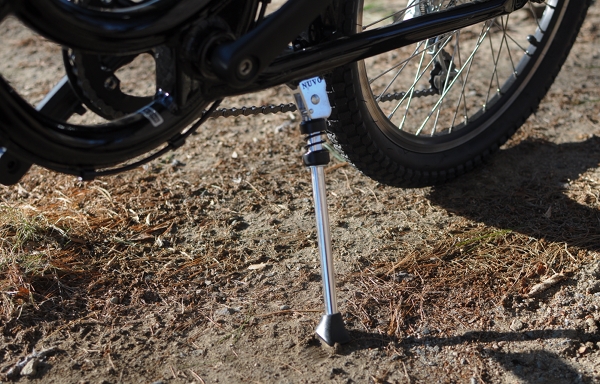
Kickstand is also standard - and it was a very sturdy one as far as kickstands go.

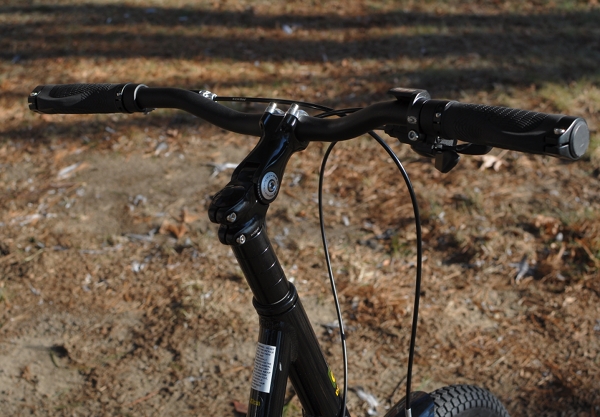
Of all the features on the Boogie, there are only two I don't like and would change if it were my bike: The padded synthetic saddle would have to go, and I would replace the handlebars with an inexpensive swept-back "North Roads" style version - simply because I can't comfortably use straight handlebars. Those who are more tolerant of stright bars may not care. Either way, the handlebar change can probably be made for $20 or so, so not a big deal. I would definitely keep all the components black, as to me that is part of the bike's charm.

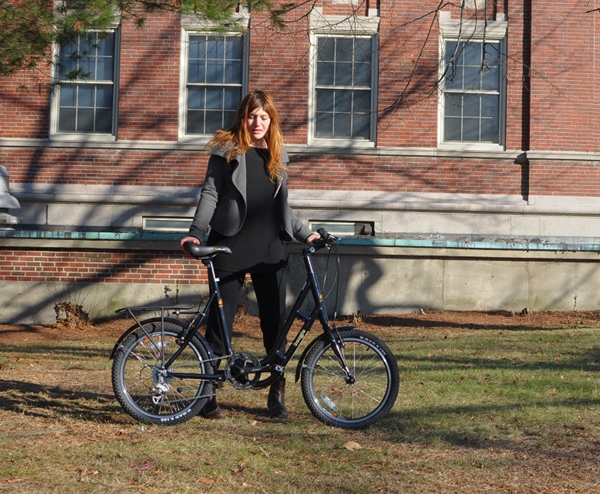
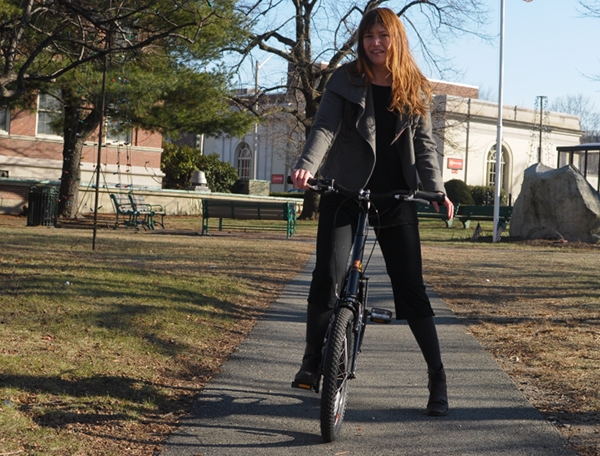
This is what the bicycle looks like next to my 5'7" frame. As you can see, the step-over area is very low - just above ankle-height, which make it easy to mount and dismount even if wearing a long skirt.

I was not sure how a bicycle like this would handle, but it felt comfortable from the get-go: Easy to get started, stable, intuitive, maneuverable.

I test rode the Boogie briefly on the roads in traffic (actual test ride not pictured), trying to determine how the small wheels and fat tires would feel over pot-holes, and also whether the bicycle would accelerate well. All was good in these respects. This is not an aggressive bicycle; it is a comfortable one. But it certainly provides enough power to be used as urban transportation. Switching gears was easy using the thumb-shifters mounted onto the handlebars. The brakes were powerful. One confession I have to make, is that I felt more comfortable with this bicycle than I did with the Brompton I test-rode earlier. I am not sure why, so cannot really elaborate. Perhaps I need to ride the Brompton again to get a better idea. And of course, the quality and the functionality of the bicycles are different: The Brompton is undoubtedly better made and it is a folder, while the Boogie is in a lower budget category and does not have the folding capacity - so in comparing how I felt on them, I am speaking solely of the test-ride experience.

The Co-Habitant tried the Boogie as well, and found it to be "fun" - though he is baffled as to why I like it so much. He thought it was a cool bike, but not that big of a deal. So - to each their own.

The version of the Boogie I tried (derailleur, fenders, rack) is supposed to retail at around $750. I believe that the single speed version will be in the $400s and the 8-speed hub version in the $900s. Given those price points, I would probably go for either the single speed or the derailleur version - though ideally I would have liked a simple 3-speed hub. Lighting is not included, so that would be an additional expense. Although the Boogie will be available in other colours (white and sage), I think that black is the only colour that really works on this bicycle: Judging by the online pictures, the welding marks look much more prominent on the lighter-coloured bikes, detracting considerably from the elegance of the design I praised here. The striking harmony between the frame colour, component colour and accessory colour is also possible only with the black version.

If you are looking for a simple city bicycle on a budget, this is one of the few in the lower-priced category I actually like. The compact proportions are not for everyone, but I find the overall design and ride quality appealing.

Monday, November 15, 2010

The Popular Girl: Test Riding the Rivendell Betty Foy

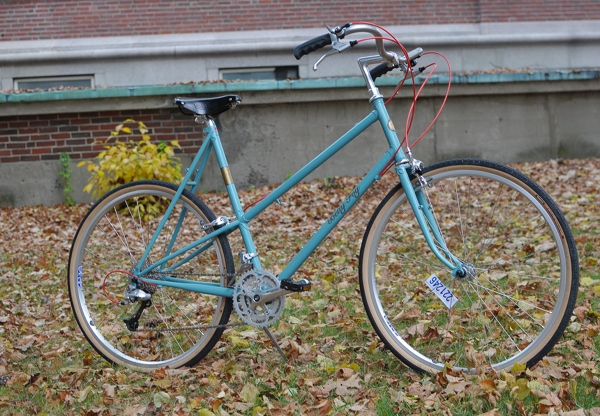
After last week's review of the Rivendell Sam Hillborne, it seemed appropriate to follow up with a test ride report of the Betty Foy. I have ridden her a couple of times before, but never had my camera with me at the time. Harris Cyclery has just built up a new floor model in my size - so I took the opportunity to take some pictures and put my impressions into words. While the pictures reflect how this particular bicycle was built up, keep in mind that it is fully customisable: You can change everything from the saddle and grips, to the handlebars and pedals, to the type of components that are on the bike.

Rivendell released the Betty Foy in Spring 2009, in conjunction with the diamond frame Sam Hillborne model. Inasmuch as a hand-built, niche-market bicycle can "sell like hotcakes" I believe the Betty does. She is charming, comfortable, and tough - and the ladies love her for that. The price of the frame alone is $1,000 and a fully built up bike starts at $2,200 or so, depending on the options. To see how this bicycle compares price-wise to other lady's frames in its class, please visit my new Semi-Custom Options page (now linked in the upper left-hand corner).

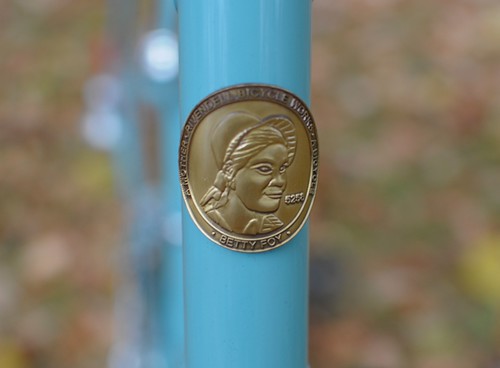
In terms of construction, the Rivendell Betty Foy is a version of the mixte frame: What starts out as a sloped single top tube splits into two stays at the seat tube and continues (at a slightly different angle than the slope of the main top tube) all the way back to the rear dropouts. The frame is lugged, with custom-made lugs in the shape of hearts and elaborate filigreed designs.

There are many cute and feminine touches, such as the downtube decal featuring tiny red apples

and the filled-in curly-cues on the fork crown. Some of the lugs are also filled in with red, complementing the robbin's egg-blue of the frame.

The Betty Foy frame is available in several sizes (47cm, 52cm, 58cm and 62cm), with the middle two built for 650B wheels, the largest built for 700C wheels, and the smallest for 26" wheels. There is enough clearance for 40mm tires plus fenders.

The frame is made for derailleur gearing, and is typically built up with three gears in the front and eight in the rear. There are eyelets and braze-ons for fenders and racks.

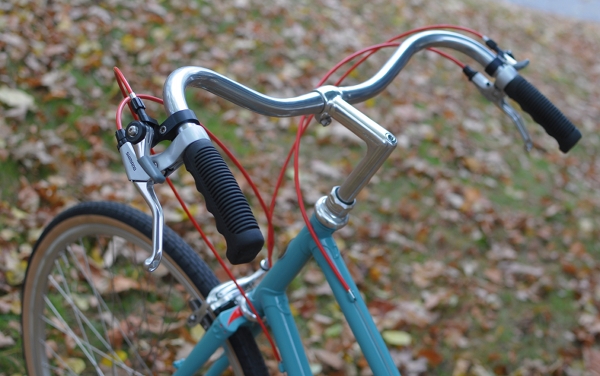
Rivendell states that the Betty frame was designed to be built up with Nitto Albatross handlebars - which are wide and swept back, similar to (but wider than) the handlebars you would find on a vintage 3-speed. I have also seen her built up with drop bars, but the upright set-up is more typical. This floor model was fitted with black rubber grips and "thumbie" shifters, though some prefer cork grips and bar-end shifters.

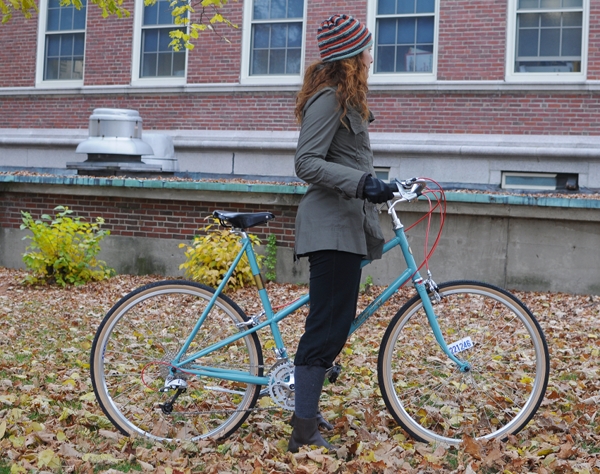
One thing to note about the Betty Foy, is the unusual sizing: The frame sizes recommended by Rivendell seem larger than what a person would normally ride. For example, I am 5'7" and normally ride a 52-54cm road bike or mixte, yet it is recommended that I ride a 58cm Betty Foy. Having tried both the 52cm and the 58cm frames, I can confirm that the recommendation is accurate. The 52cm Betty Foy felt much too small for me, whereas the 58cm version felt just right. I could have raised the saddle by another inch from the position in which it is shown above, but did not feel like going back inside the shop once I started riding the bike.

I rode the Betty Foy on the roads near Harris Cyclery (actual test ride not pictured), both this time and the previous times I've tried her. It is difficult to compare her to other bicycles on the market, because in a way she is unique. If you are accustomed to road bikes and vintage mixtes, you will find the Betty to be considerably more upright, stable, and comfortable. She is more relaxed than a typical mixte and has a long wheelbase - so that there is no toe overlap with the front tire when turning at slow speeds. I also find the step-over height to be lower than on other mixtes I've tried, which is convenient.

If you are accustomed to Dutch-style city bikes, you will find the Betty Foy a faster and sportier ride, but still within your comfort zone. The posture is slightly leaned forward, but still more or less upright. The derailleur gearing may take some getting used to if you have only dealt with internally geared hubs before, but you will appreciate how easy it makes cycling uphill.

In my view, the Betty Foy's greatest asset is her versatility. If you combine the feeling of a vintage 3-speed with that of a derailleur-geared touring bike, she handles like a union of the two: a fast, comfortable bicycle that feels safe and pleasant to ride. I can imagine riding her around the city for transportation, as well as 20 miles over some hills to the next town over. The ride is soft over bumps and potholes (not as soft as on my Sam Hillborne with 42mm tires, but I would need to ride Betty with equally wide tires to compare). Maneuverability in traffic is good, but the handling is not aggressive. I did not ride her on any serious hills, but with the derailleur gearing, the light frame, and the somewhat leaned-forward posture, I imagine it should hardly be a problem. She is what Rivendell says she is: an "all around" bike. If you plan to have only one bicycle for both urban commuting and long distance cycling, this seems like the closest thing on the market to that ideal.

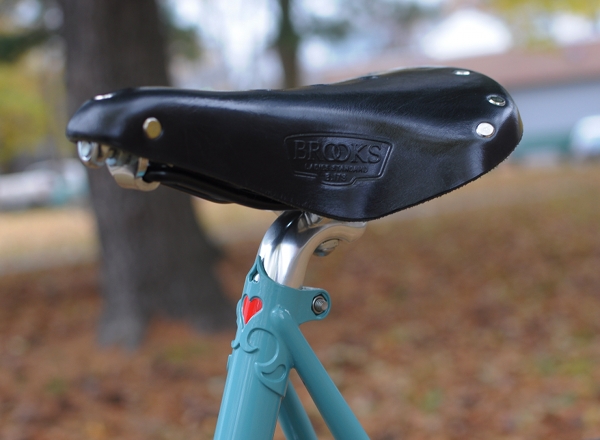
The question I am inevitably asked at this point, is why I did not get a Betty Foy for myself when I was looking for a mixte, if I think she is so great. My main reason, was that I wanted a specific kind of mixte: one with twin lateral stays and proportions that resembled the original French constructeurs. The Betty Foy is not that kind of bicycle. Additionally, I must admit that I find Betty's femininity overwhelming. All the hearts and the bright colours - it's very American 1950s, whereas I am more of a European 1920s kind of girl. And my final reason is ironic - because it is the reason most people love this bike: I don't like the way some of the lugwork is done. If you look at the seat cluster above (see here for what that is), you will notice that the seat stays are welded directly to the main lug, rather than capped. No other Rivendell bicycle is made that way, and I don't know why this model is the exception.  Personally, I would rather have a properly lugged seat cluster than hearts and curly-cues.

The same is repeated at the junction of the seat tube and support stays. My preference would be for something like this to have been done here instead. I recognise how nit-picky and obsessive these quibbles are, but little details like this are important to me and I have my preferences when it comes to the way a frame is put together. It's an excellent frame, just not what I was looking for.

After I posted the above image, it was pointed out to me by a couple of attentive readers that there is a blemish right at the weld junction, next to the big lug. I myself did not notice this until my attention was directed to it - but now that it has, it's only fair that I mention it. Personally, I am not particularly bothered by this blemish (I have seen worse on more expensive frames) and it would not stand in the way of my wanting the bike, if it were not for the other factors. Your views may vary.

These issues aside, the Rivendell Betty Foy is an attractive and well-constructed bicycle. A great deal of thought went into the design, with a special emphasis on versatility - which I feel has been achieved here better than on other bicycles I have owned or tried. And apparently others agree, as the Betty has an excellent record of owner satisfaction. All things considered, I think the Betty Foy's popularity is well deserved.

Wednesday, October 27, 2010

A Raven Flies Through the City: The Bella Ciao Corvo Citta Donna

A couple of weeks ago I received a Bella Ciao bicycle as part of a work-related trade. I have never been compensated for anything in bicycle before, but I think I could get used to this if absolutely forced to (at least for the benefit of providing test ride reports for my readers, right?). The bike was assembled with my preferences in mind, and I was invited to offer an honest critique.

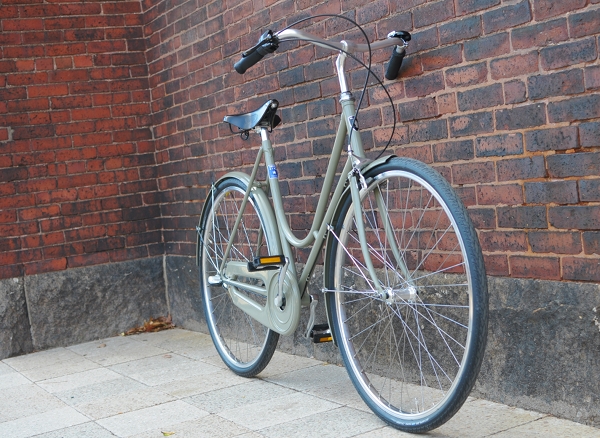
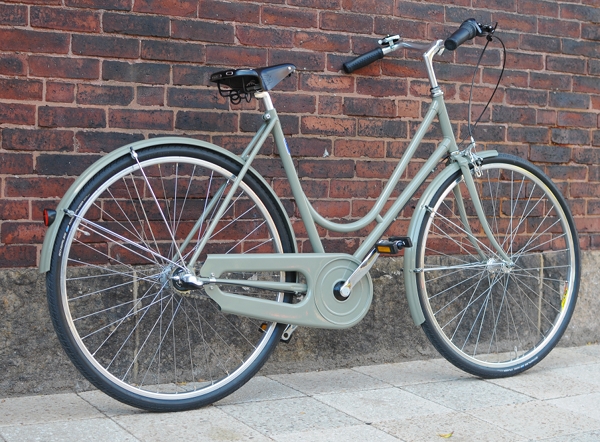
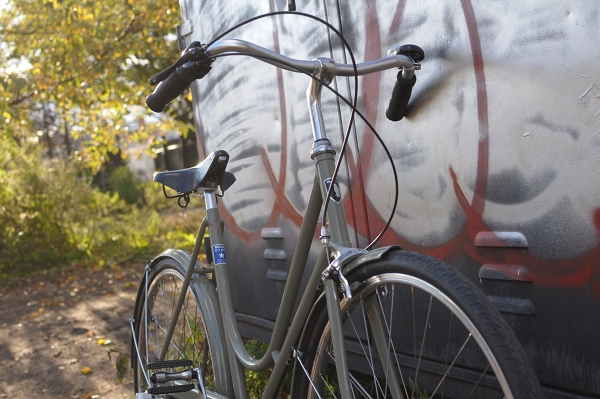
The bicycle is a Bella Ciao "Corvo Citta Donna". The model name translates into something like "urban raven" and donna indicates that it is the lady's version. The colour (chosen by me) is "verde arsenale" - a pastel army green. Half a dozen other colours are available as well. The "Corvo Citta" models can be ordered as single speeds, 3-speeds, or 7/8-speeds, with or without coaster brake. I asked for a 3-speed coasterbrake version.  The accessories are either honey or black, depending on the frame colour, and mine came with the black accessories package.

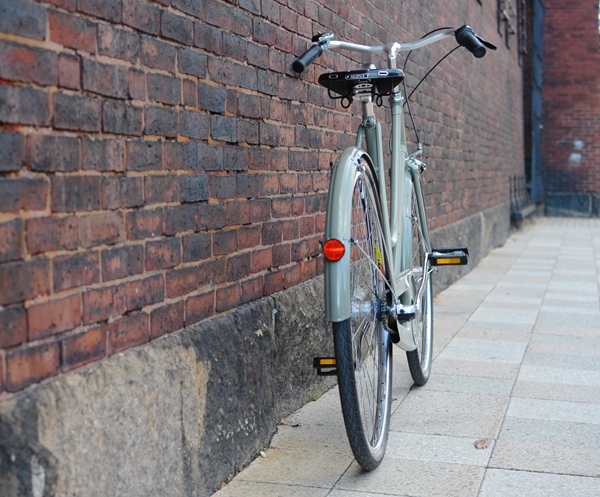
Bella Ciao frames are individually hand-made (brazed and lugged) by a small family-owned manufacturer in Northern Italy that has been building frames for generations. The standard models are cro-moly steel, though there are also limited editions made of Columbus tubing. Standard features on the Corvo Citta Donna include the classic Italian frame construction, 700C wheels with alloy rims, body-coloured fenders, an enclosed chaincase with a rear opening, leather saddle and grips, rear reflector, and a brass bell.

The frame is made in size 54cm (21.5") only, measured the "standard" way. This is an important point, especially if you are trying to compare the Bella Ciao to the Abici, whose sizing is measured differently. I would say that the Bella Ciao frame is slightly larger than the bigger of the two Abici frames.

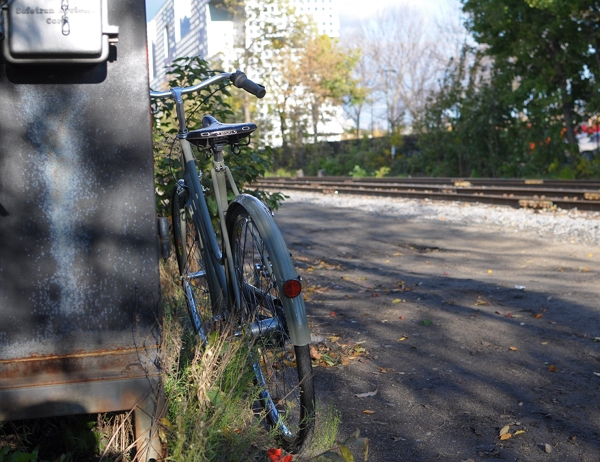
With its hardy tubing, modest lugwork, and thick powdercoating, the "Corvo Citta" is attractive, but decidedly utilitarian.

It is not a delicate bicycle by any means; the frame feels as if it can take anything that life has to offfer.

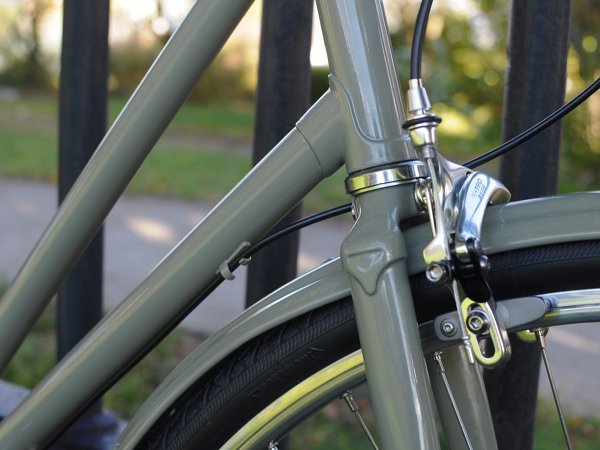
The lugged fork crown warms my heart; very nicely done. And look at the body-coloured cable guide braze-ons.

The only part of the frame that is not lugged, is the connector between the curved top tube and downtube. But if I have to choose between this and the fork crown, the latter is infinitely more important to me. (The connector on my Pashley was not lugged either.)

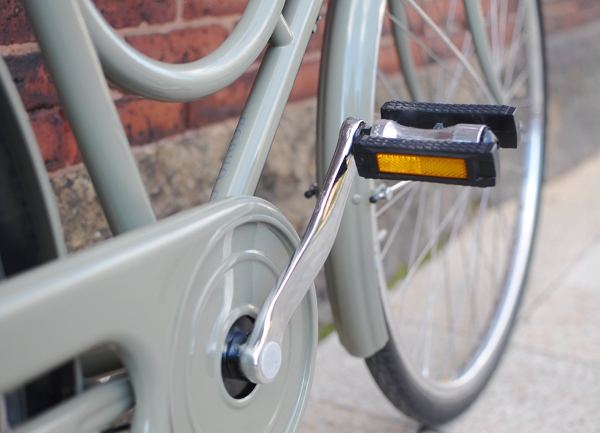
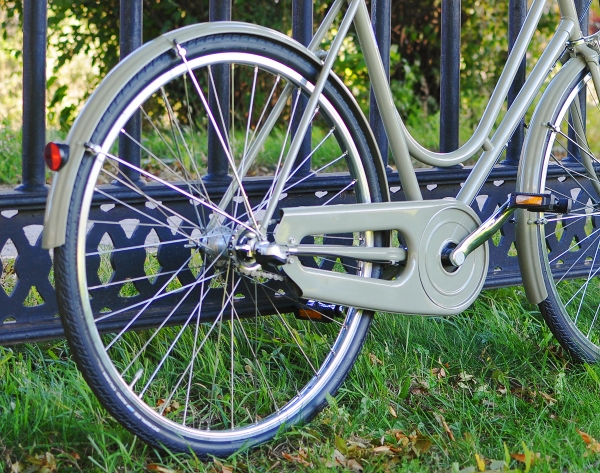
I like the elegant chaincase, and the interesting thing, is that despite being steel it is absolutely silent.

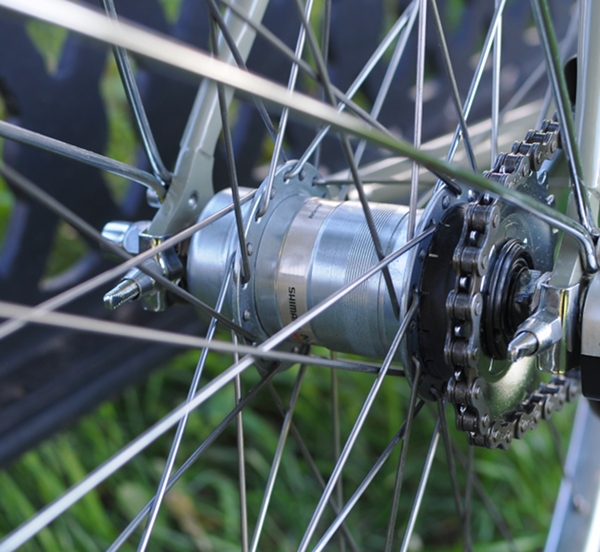
Somewhat disappointing though, was the choice of the Shimano 3-speed hub and gear shifter for such a classic bicycle. The Shimano certainly works fine, but the excruciatingly high-tech looks of the hub and shifter disrupt the bicycle's classic charm. Personally, I feel it would have been better to use the Sturmey Archer hub and shifter on these bikes - though I suspect others will disagree.

The Bella Ciao has straight fork ends, which I prefer on an internally geared hub bicycle. There are also chain tensioners installed - a detail the Co-Habitatant found especially exciting.

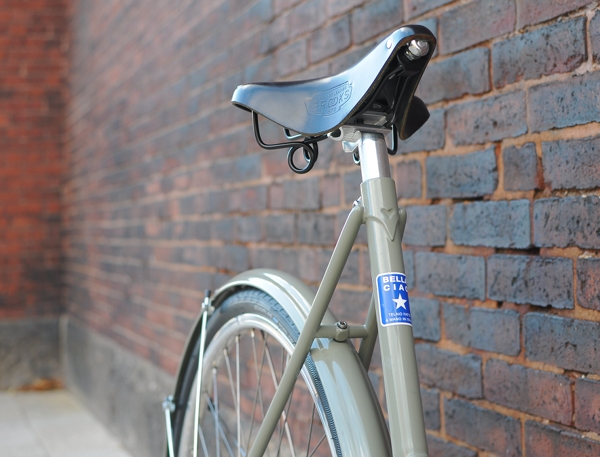
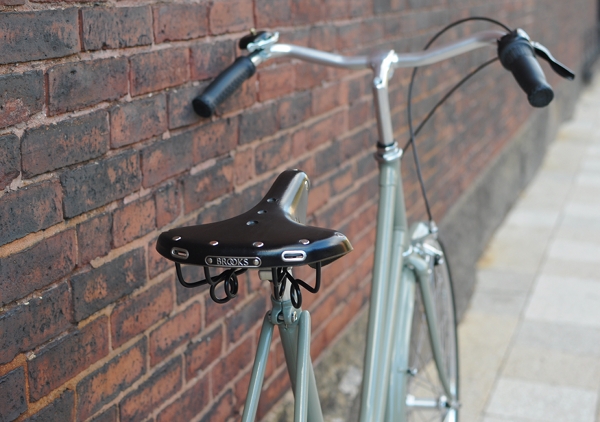
The bicycle arrived to me with a Brooks B17S saddle, but I immediately replaced it with a B72. I am not sure why both Bella Ciao and Abici use B17 saddles on their city bikes, but I think they need to rethink this choice - it is not an appropriate model for an upright ride, especially for women. The B72, on the other hand, feels absolutely at home here.

As long as I am doling out criticism, I will also mention my perplexity over the choice of brake lever: I believe it may be an interruptor lever, because it is very short. The Tektro front caliper brake provides excellent stopping power and the lever is squeezable, but it's just not the right one for this type of bicycle. A normal, full-size city lever would be more suitable.

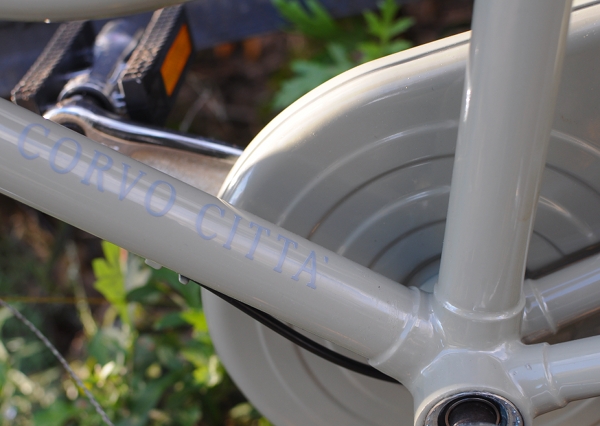
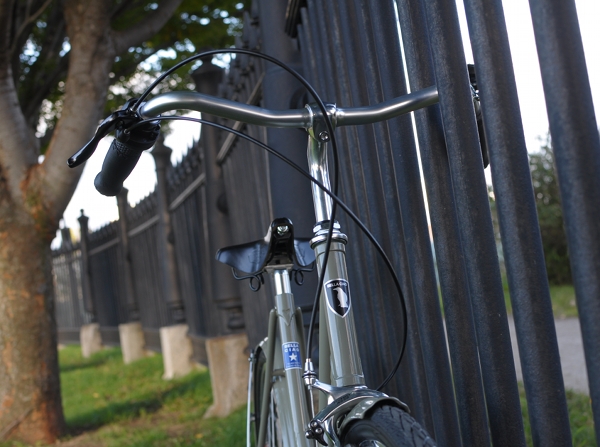
The minimal insignia on the Bella Ciao include a small headbadge on the head tube featuring the black raven logo,  the "Corvo Citta" model name inscription near the bottom bracket, and a "fatto a mano in Italia" sticker on the seat tube.

And one thing I should definitely mention is the handlebars - which are proprietary Bella Ciao. They are shaped similarly to Porteur handlebars, but with just a tad more flare-out to them. The shape is super comfortable for my hands and seems perfectly matched to this bicycle's geometry.

Moving on to ride quality... The most notable sensation I got from the Bella Ciao, was that it did not feel like a new bicycle. It felt very familiar, like an old bike that I have always owned. Lovers of classic bicycles complain that "there is no such thing anymore as a simple, well-made, lugged steel 3-speed bike". Well, I think the Bella Ciao is exactly that. It is easy. It is comfortable. It is uncomplicated. It is not as laid back as a Dutch bike, but definitely not too sporty either (more relaxed than an Abici).  It is maneuverable but unaggressive. It is just a bike. A very nice bike that anybody can ride, and that is light enough for anybody to lift.

When a bicycle is this easy, comfortable and undemanding, you end up riding it all the time... which, ironically, ushers in my next complaint: Where are the lights? And more importantly, where is the rack? I would love to ride the Bella Ciao regularly for transportation, but there is nowhere to attach my bag and all the other stuff I take along, which is frustrating. The design of the bicycle will accommodate the VO Constructeur rear rack, and when I have the money I might get one. But I think that a rack in the style you see on some of these bicycles would be more appropriate. Anybody know where I could source one?

The Bella Ciao "Corvo Citta Donna" might just be the closest I have tried to an "all around, normal" bike out there today among classic lugged bicycles. And that was rather unexpected, given the quirkiness of the manufacturer's self-presentation. Free-association collages, stories of resistance against fascism - it is enough to raise the eyebrows of some and to make others wonder whether Bella Ciao is in reality a contemporary art project rather than a real bicycle company. Well, I suppose there is no reason it can't be both...
Though currently only sold in the EU, Bella Ciao is considering North American distributors and the bicycles may be available for sale in the US sometime in 2011. The Corvo Citta Donna would certainly be welcomed by women looking for more options in classic city bicycles.