Showing posts with label local bike shops. Show all posts

Wednesday, February 9, 2011

Remembering a Man I Never Knew

[image via sheldonbrown.com]

Because I live in Boston and have been writing about Harris Cyclery from the start of this blog, I am sometimes asked whether I knew Sheldon Brown. What was he like? Did he inspire my love of English 3-speeds? But I regret to say, that I have never met him. The first time I walked into Harris Cyclery was just over a year after Sheldon Brown's death, the anniversary of which was last week. I was already reading his articles at that time (this was Spring 2009), but did not realise that he'd passed away. And then at Harris, there was this basket on the counter full of little flyers with his picture and "1944 - 2008" underneath it. Seeing the flyers was like a punch in the stomach. "Oh no, he died!" I blurted out without thinking. I remember the moment well, and particularly the disappointment and sadness of it. Somehow, this man's articles about bicycles had managed to fill me with enough affection toward him, so that his death felt like a personal loss - despite learning of it a year after the fact. 

[image via sheldonbrown.com]

Sheldon Brown was a bicycle mechanic, whose technical knowledge - particularly of classic and vintage bikes - was not only vast, but presented in the most captivating manner through a seemingly endless series of articles, glossaries and instruction pages. He shared his writing, including technical information, history, and decades worth of personal journals and travelogues, via a website he developed with Harris Cyclery, which continues to be maintained today. His writing was sincere, funny, wacky, and excellent in equal measure, and its influence cannot be overstated. I meet people from all over the world who will casually mention that they learned how to work on bicycles "from reading Sheldon Brown," or that thanks to his website they identified an old bike found in the cellar, or even that they took up randonneuring after reading his online journals and descriptions of France. Bicycle forums and news groups are replete with Sheldon Brown references and quotes.

But you can find a far better description of all this in his obituary in The Times, and the tribute on Bike Snob is worth reading as well. I don't want to attempt to paint a portrait of a man I never knew. But I do want to acknowledge his impact on me personally.

[image via sheldonbrown.com]

Like so many others, I stumbled upon Sheldon Brown's website while looking for information on vintage bicycles. And I believe it's what I found in his writing that turned what could have been a passing curiosity into the seeds of an obsession. I cannot put my finger on what it was exactly that drew me in: Maybe it was his easy relationship with technical and historical information, which made everything read like a story, rather than a boring manual. Maybe it was his open-minded curiosity about different types of bicycles and different aspects of cycling. Or maybe it was the way he embraced eccentricity, without trying to either downplay or justify it. It's hard to say, but whatever it was - it got through to me and engaged my imagination. I am just one person, but I am certain there are many, many others who would say the same. And that's quite something.

[image via sheldonbrown.com]

For the last several years of his life, Sheldon Brown suffered from Multiple Sclerosis and was unable to ride his beloved bicycles, yet managed to write an article entitled The Bright Side of MS. But the dominant image I have of him, is that of a young, strong man riding crazy bikes, as captured in his many black and white photos taken with a self timer.

Sheldon Brown was an avid photographer, and the above picture he took of himself has turned out to be chillingly prophetic. The impact he's had on "bicycle culture" is so strong, that three years after his death his presence remains vibrant. I am extremely happy about that. And I thank him for all the help and inspiration he has given me, despite my never having had the privilege of meeting him.

Thursday, January 20, 2011

What Do Bike Shops Want to Sell You, and Why?

In the comments section of a post from a couple of days ago, I made a remark suggesting that bike shops have financial incentive to sell bikes and accessories separately, as opposed to bikes that do not need additional accessories. I have since received emails asking to expand on that, so let me give it a try.

First, let me just clarify that my comment was intended to describe the financial reality of profit margins, and was not meant as a value judgment of bicycle shops. Bike shops need to make money, or they will go out of business - it's as simple as that. The question is, how to do that and still act in the best interest of their customer?

Consider first, that the retail mark-up on bicycles is usually less, percentage-wise, than the retail mark-up on components and accessories. The better made the bicycle, the more this is so, as production costs for that bike are high and there is a ceiling to what most customers are willing to pay.

Essentially, this means two things:

1. It is more profitable for a bike shop to stock mass-produced bicycles that allow for higher profit margins, and

2. It is more profitable for a bike shop to sell components and accessories than it is to sell bicycles

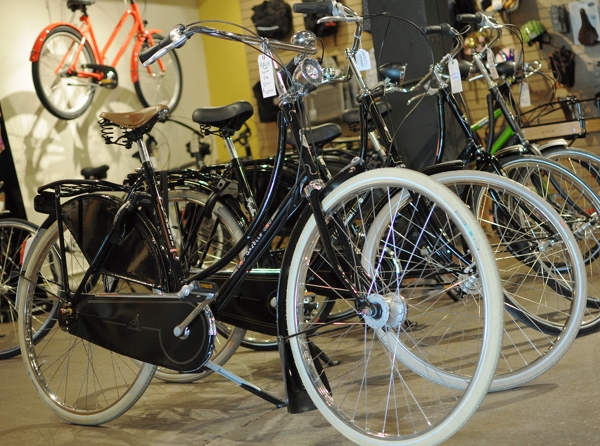
This explains why, despite the "transportation bike craze," it is still the case that relatively few bike shops stock higher-end city bicycles, especially those imported from Europe. Not only is the potential for mark-ups on those discouraging, but these bikes tend to come complete with everything, not giving the bike shop a chance to at least benefit from the sale of accessories. This provides little incentive to go through the trouble of stocking these bicycles - which is understandable from the bike shop's point of view, but unfortunate for the customer who is shopping around for a nice bike.

So, what incentive is there for bike shops to stock high quality, complete city bicycles and to be motivated to sell them to customers in leu of maximising profits by selling bikes and accessories separately? The way I see it, it is about short-term versus long-term profits - In other words, about building enduring relationships with customers. By acting in a customer's best interest - both in terms of the kind of bicycles they choose to stock in the first place, and in terms of the purchasing suggestions they make to those who walk in off the street - the bike shop is sacrificing immediate profits for the benefits of repeat business and word of mouth advertisement that could result from this customer.

I have visited many - probably most - bike shops in greater Boston at this point, and I have had all sorts of experiences. Despite there being a large number of bike shops in our area, there is only a handful that I feel comfortable in. And for the most part, that's because memories of my early bike shopping experiences remain vivid: Which shops had either ignored me, or tried to take advantage of my blatant naivité at the time - versus which shops took me seriously and acted in my best interest, despite not knowing whether they would ever see me again, or whether I would even buy anything from them in the first place. I remember, and I remain fiercely loyal to the few that did the latter.

What have been your experiences with bicycle shops in your area - Are they oriented more toward immediate sales, or toward long-term relationships?

Friday, December 17, 2010

The Vintage Bike Shop: a Visit to 'Old Roads' in Cambridge, MA

Used and vintage bicycle shops can be great resources on a number of levels. For the beginner cyclist, they can provide clean, tuned-up alternatives to the treacherous waters of Craigslist and ebay. For the DIY tinkerer, they can be a source for older parts and accessories. And for the seasoned collector, they can, on occasion, offer up a gem of a bicycle that one would not normally come across elsewhere. A vintage bike shop is certainly worth a visit, if one exists in your area. In Boston, we are lucky to have Old Roads - located in the Cambridge Antiques Market, just a 15 minute bike ride from my home.

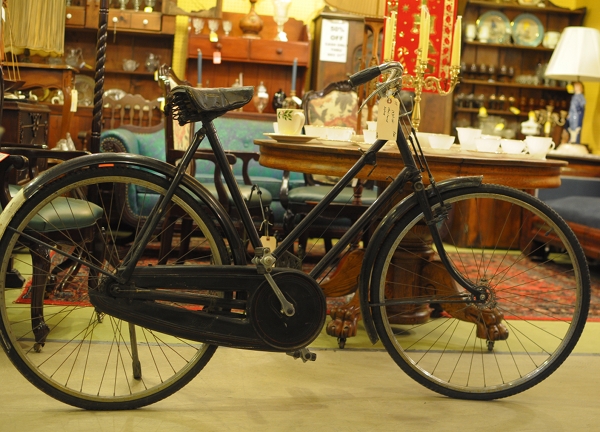
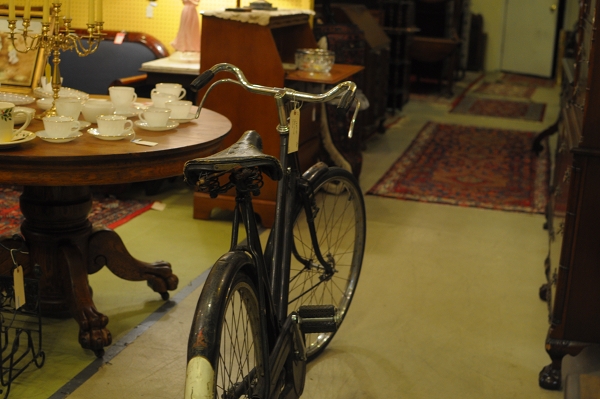
Presuming that most of the bicycles offered are found locally, vintage bike shops are in a sense like museums of history: They give you an idea of what kind of bikes were popular in your area over decades past. It amazes me that no matter how many of these bikes are sold (and I've personally played matchmaker in several deals), Boston does not seem to run out of its stock of early full-chaincase Raleighs. Just imagine how many of these things must have been on the streets in the '30s-70s. The model above is an original early 1930s version.

(Cuppa tea?)

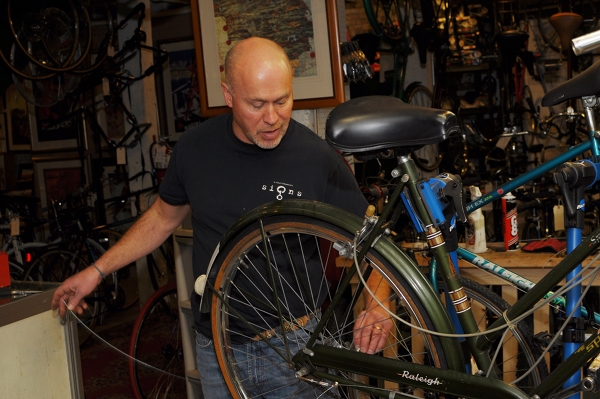
Situated in the dungeon-like basement of the Antiques Market (formerly a coffin factory!), "Old Roads" is really a joint project between two shops: Menotomy Vintage Bicycles, owned by Vinny,

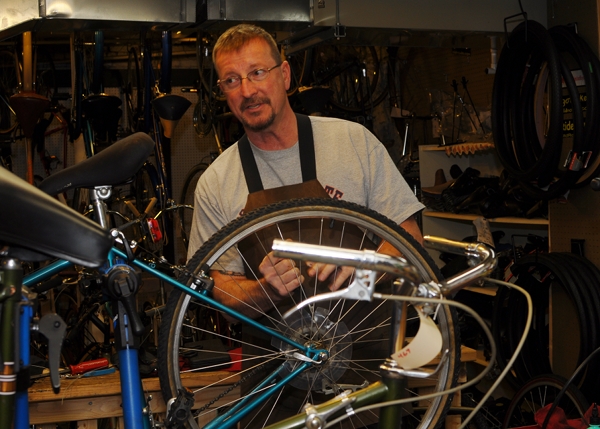
and Cambridge Used Bicycles, owned by Ed. They began selling bikes out of this space in 2008, and have since become a staple of the vintage bicycle scene in the Boston area.

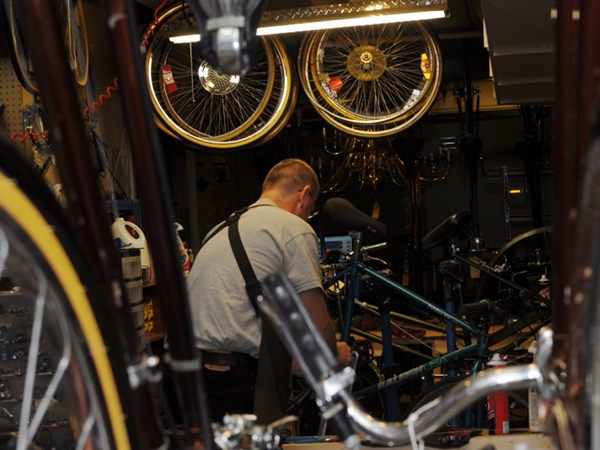
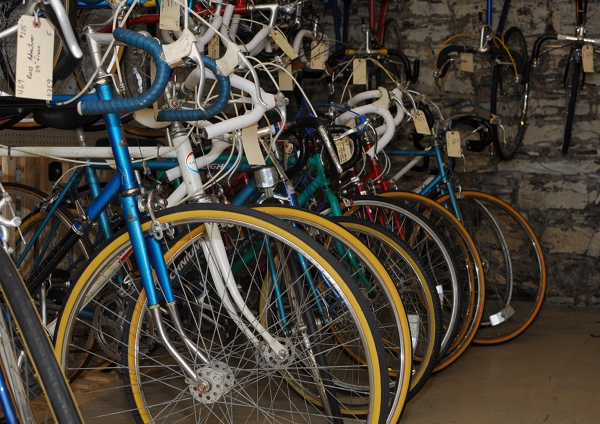
The full extend of their inventory is impossible to capture, due to the sprawling, cavernous nature of the space - which makes being there in person all the more exciting. There are rows and rows of vintage bicycles - on the floor, on the walls, on the ceiling, everywhere you look really.

Though initially, the focus of the shop was meant to be on antique bicycles, it soon became apparent that the local population was mostly interested in reliable 3-speeds and 10-speeds from the 1960s through the early 1980s, to be used as transportation. And so, increasingly, the inventory began to accommodate this. Now the shop offers a stagerring variety of bicycles, in one of five categories: vintage 3-speeds, vintage roadbikes, early vintage cruisers, antique bikes (pre-WWII), and some used newer bikes from the 1990s onward - including a couple of hand-painted "fixies".

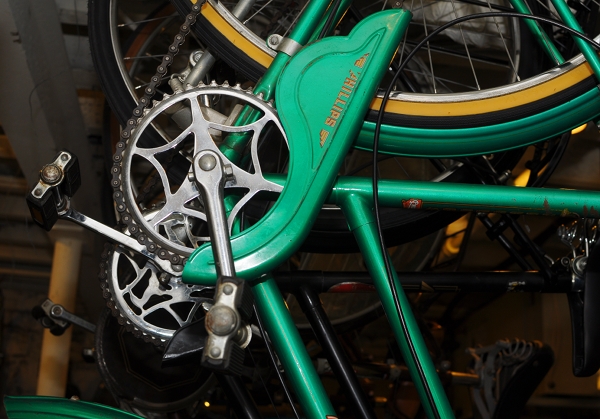
For me, the 3-speeds are the biggest attraction. There are dozens of them, both men's and ladies'. Though Raleigh and Schwinn are the names you will see most frequently, more unusual offerings are often found as well.

Phillips, England

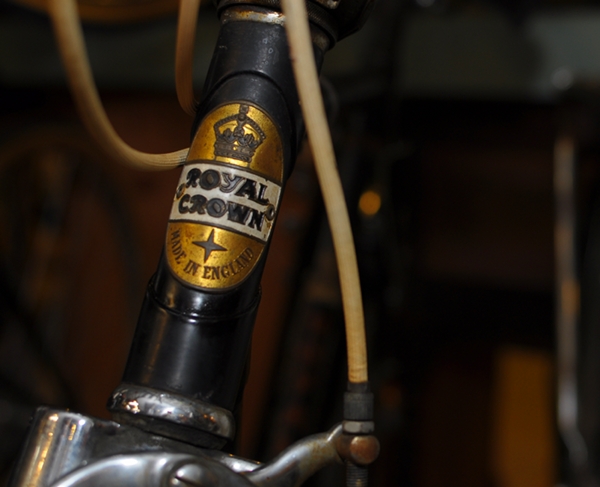
Royal Crown, England

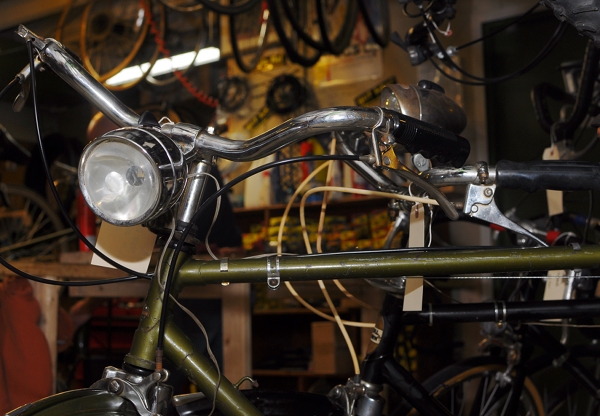
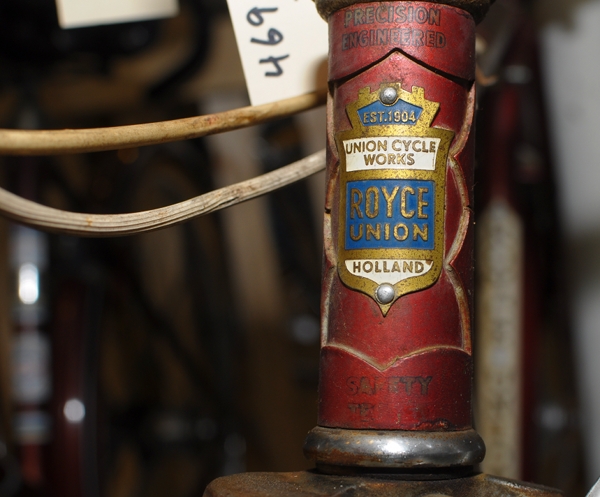
Royce Union, Holland. And there are many others. With chaincases and without, English and Dutch, step through and diamond frame, some even with the original dynamo lighting.

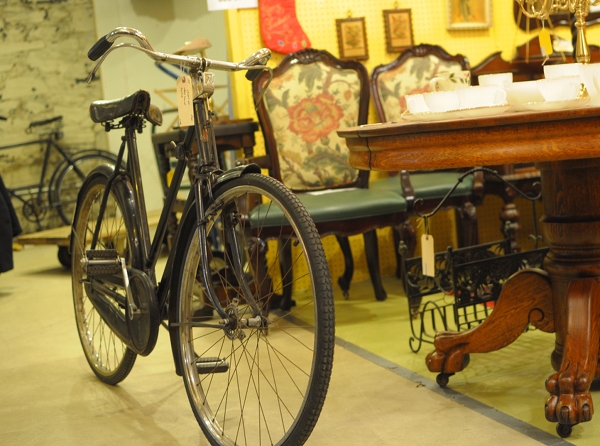
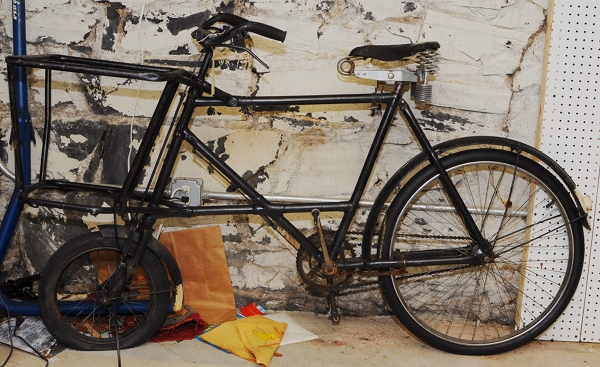
And of course the antique offerings never fail to impress. The above is a Butcher's bike, most likely from the 1920s. 

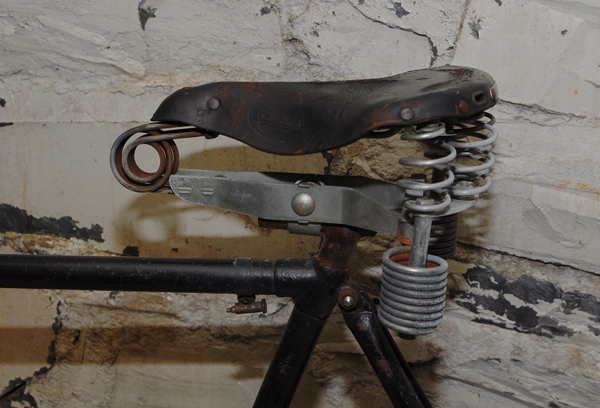
I am guessing this butcher was a heavy guy!

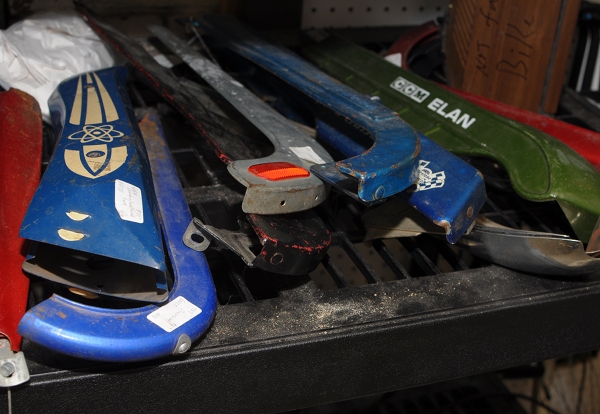
There is also a slew of accessories in stock, including chainguards, handlebars, saddles, tires and racks.

Even vintage bottle generators are available, for those who find the modern ones too high tech.

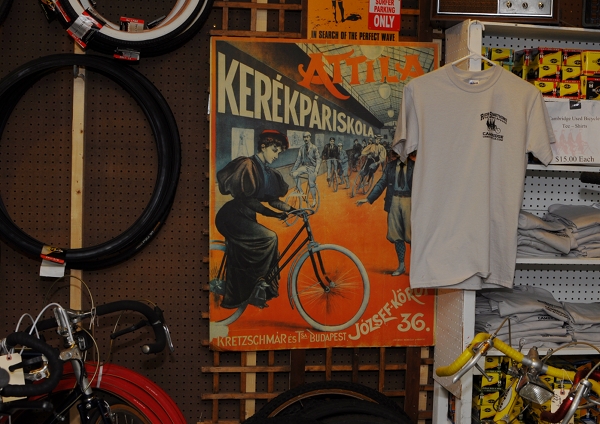
Ephemera and t-shirts, too. 

In addition to its physical presence, Old Roads offers a number of online resources for the Boston area and beyond. They host a message board where visitors can discuss a multitude of topics pertaining to vintage bikes, as well as post for sale/ wanted ads free of charge. They offer a price guide for used and vintage bicycles. And they sell some interesting hard to find parts online. While in the summer, bicycles are sold only locally, during the winter they can be shipped outside the Boston area as well. For those looking for a vintage English 3-speed in clean condition, this can be a good option if your area has a shortage. 

Like proprietors of used bookstores, vintage bike shop owners tend to be genuine enthusiasts - which means that the customer can benefit a lot more from interacting with them, than from interacting with someone who just wants to sell their old bike. Interesting stories, helpful advice, and local bicycle lore are just some of these benefits. Out of curiosity: Are there used or vintage bike shops in your area, and do you find them useful?

Saturday, December 11, 2010

The Best Time to Visit Your Bike Shop

Even though we live close to one another and normally cross paths on our own turf, this weekend I bumped into "cycler" from Biking in Heels 10 miles away - at Harris Cyclery. We'd both taken on projects that ended up throwing us curveballs, and now here we were. Even if you work on your bike yourself, it's good to find a trustworthy bike shop you can turn to just in case - and better still, a specific mechanic whose opinion and work you trust. The fact that I travel 10 miles to see Jim even though there are plenty of bike shops walking distance from my house, speaks for itself.

And if you are going to visit your local shop with a "project bike," there is no better time than the winter months. In the off season, bicycle shops tend to be less crowded, which means that they will be able to work on your bike sooner and will have more time to answer your questions. They are also more likely to have the components and accessories you want in stock, since things don't sell out as quickly as in the summer.

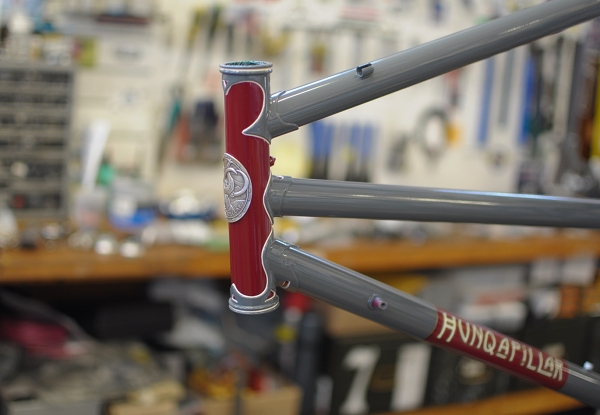
Some new floor models are likely to be available as well, since the shop will actually have time to build them up. This is the first time I've seen the Rivendell Hunqapillar - the version with the diagonal "middle tube." The design is definitely not for me and I cannot help but wonder how many people buying this bike will actually be using it in a way that necessitates this construction. But I do appreciate seeing the monster in person. The wooly mammoth headbadge and the decals are nicely done, as is the lugwork.

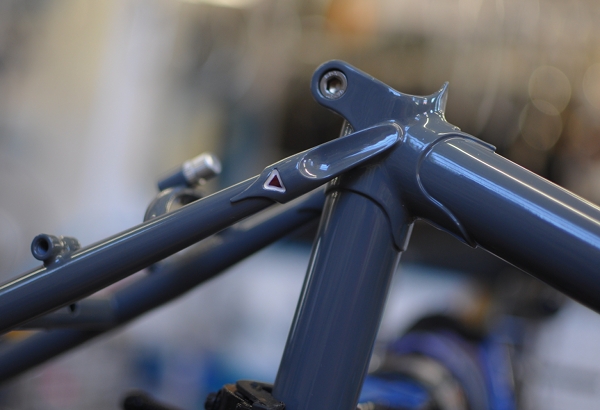
Never seen a seat cluster with a "socketed" seat stay like this before. Any idea what the purpose of this design is, assuming that it is more than aesthetic?

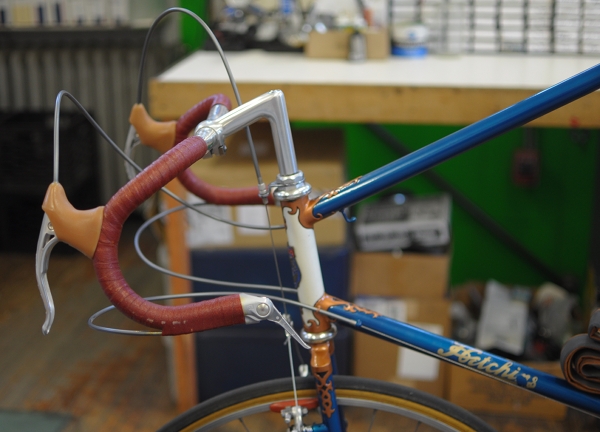
Between the Hunqapillar, the flock of other Rivendells, the vintage Hetchins, and other exotic specimens, it felt as if lugwork was declaring war on modern bikes and taking over the shop. My own modestly lugged bicycle seemed like an underachiever in comparison - though he held himself proudly and was quite happy to have the mechanic's attention.

Winter is also the time when bike shops hold end-of-the year sales, where good deals can be found if you are in the market for a new bike. And for those manufacturers whose models do not change year to year, winter is often the last chance to get a bike at the current price tag, before prices go up in the Spring. If you hang around long enough, you might also learn about non-advertised deals, including second hand bikes. Some of the most interesting vintage bicycles never make it to the likes of Craig's List or e-bay, but are sold via word of mouth. Bicycle shops can act as hubs for those types of connections. If you are looking for a particular bike, try asking your bike shop about it - they might just know of a customer, or a friend, who is trying to sell theirs. 

The winter months are infamously slow for the bicycle industry - but as a customer, you can take advantage of that in a way that benefits everyone: You get more personal attention, faster turn-around, and better deals - and the bike shop gets winter business. It's win-win!

Monday, November 1, 2010

Mixed Impressions: a Look at the Trek Belleville WSD Mixte

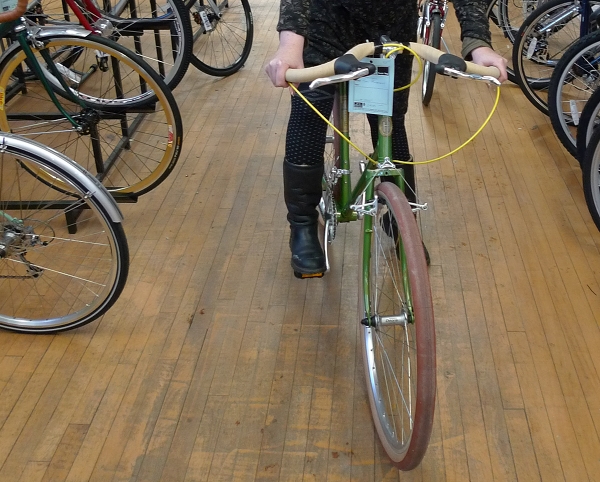
Lately, readers have been asking about the Trek Belleville WSD mixte. It has been out for about a year and looks promising in pictures, but what is it like in person? I had noticed this bicycle earlier at one of my local bike shops - the Wheelworks in Somerville, MA - and recently had a chance to try it.

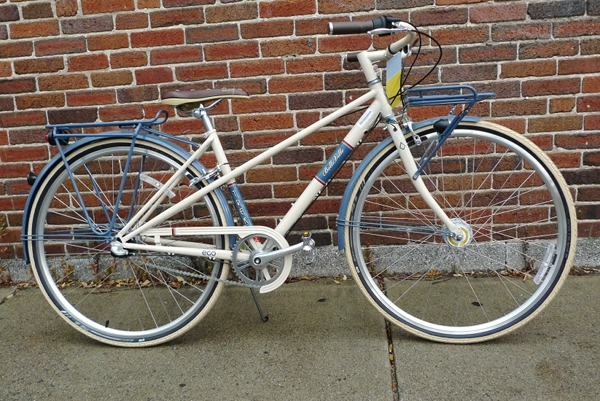
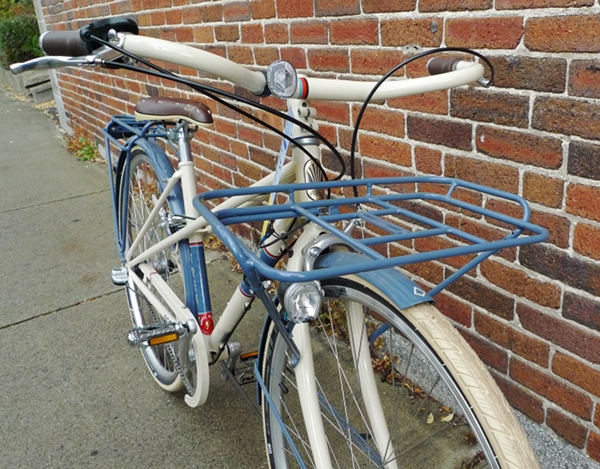
The Trek Belleville mixte is a "real" mixte  - in the sense that it is built with twin lateral stays that extend from the head tube to the rear dropouts. The bicycle reflects the ideas of the French constructeurs (or, more likely, the contemporary builders who emulate the original constructeurs) in that it is fully equipped with fenders, front and rear racks, and dynamo-powered lighting. However, unlike classic mixtes with their elegant lines and lugged steel construction, the Trek Belleville's frame is made of a strangely thick, welded cromoly tubing. The tubing is so chunky in fact, that I was certain the bike was aluminum until I was corrected. In industry photos the chunkiness is easily disguised with good lighting and careful choice of angles. But in person, the bicycle looks like what it is: a somewhat clumsy mass-produced bike fitted with some admittedly impressive extras. Trek also promotes the "eco-design" of this model, which you can read about here.

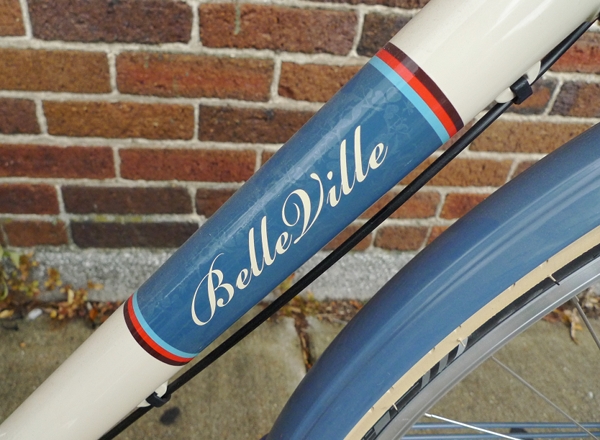
I think that one of the most successful aspects of the Trek Belleville is the colour scheme and graphics. We like to fool ourselves into thinking that this stuff does not influence us, but it does. The slate-blue and cream colour combination with subtle red accents is harmonious, beautiful, and nostalgic. It dominates the aesthetics of the bicycle, distracting the eye from its less appealing aspects.

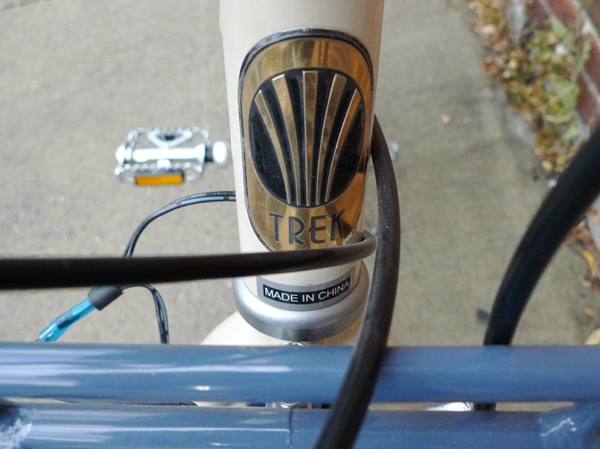
Trek also used a vintage headbadge for the Belleville, which goes nicely with the classic theme.

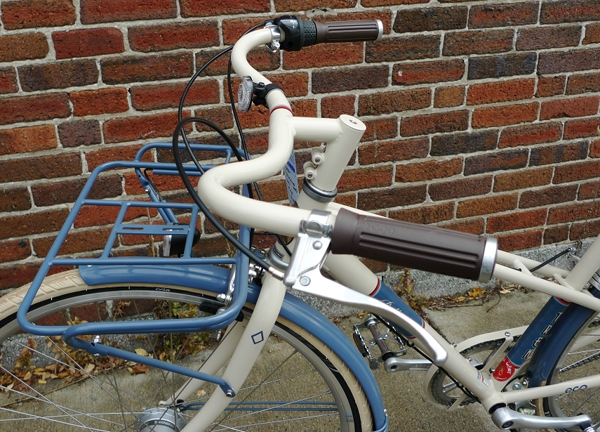
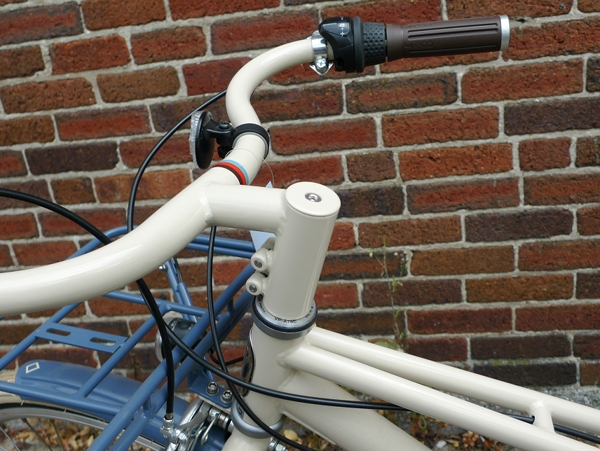
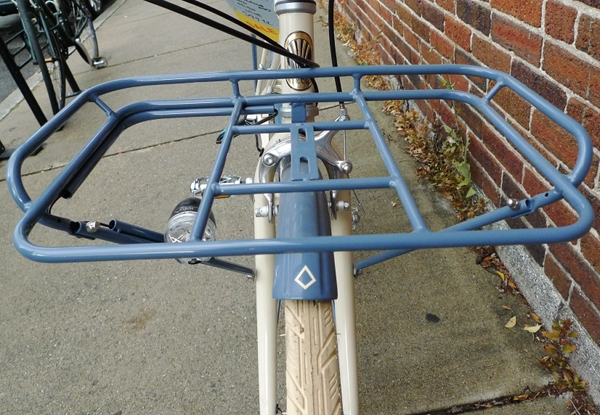
The Trek Belleville uses a threadless stem and Porteur-style handlebars. Both the stem and the handlebars are painted body colour, which is nice. A Porteur-style front rack is attached to the fork.

Close-up of the stem, grips, shifter and the points where the lateral stays attach to the head tube. While I do not normally like threadless stems and integrated handlebars, I think here the look is appealing. However, the design makes it impossible to adjust stem height and the angle of the handlebars, which is problematic.

The front rack is quite elegant, as well as smoothly integrated with the body of the bike. The tires are Bontrager, cream with black sidewalls.

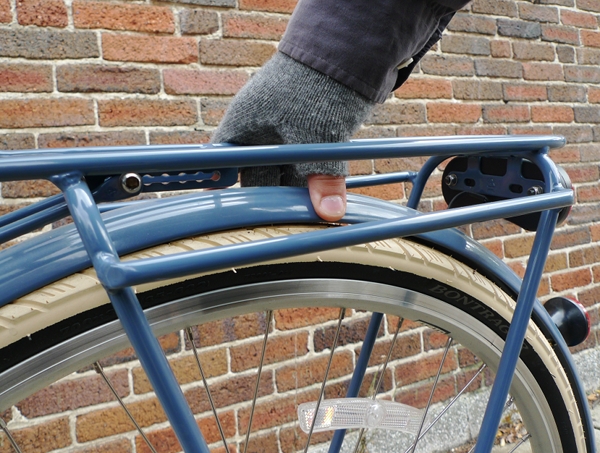
The rear rack is nice as well.  I don't remember the weight rating, but it was considerable. One thing I noticed, is that the attachment points are set back from the rear dropouts - presumably because the chainstays are otherwise not long enough to accommodate a rack?

The Trek Belleville is fitted with an internally geared hub (Shimano Nexus 3-speed), caliper brakes, a decent-looking crankset, touring-style pedals, and a body-coloured chainguard.

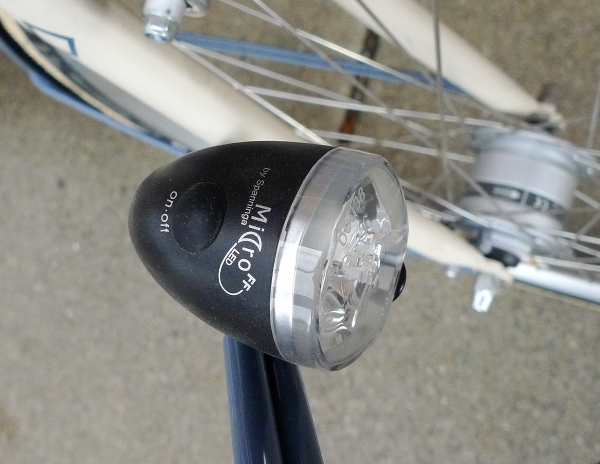
The front dynamo hub is a Shimano (I did not see the model name), and the lights used are Spanniga. The headlight is a Spanniga Micro, mounted on right stay of the front rack.

The tail light is a Spanniga Eclipse, attached to the rear rack. I have not tried the lights, as it was daytime, but I have heard good things about these models.

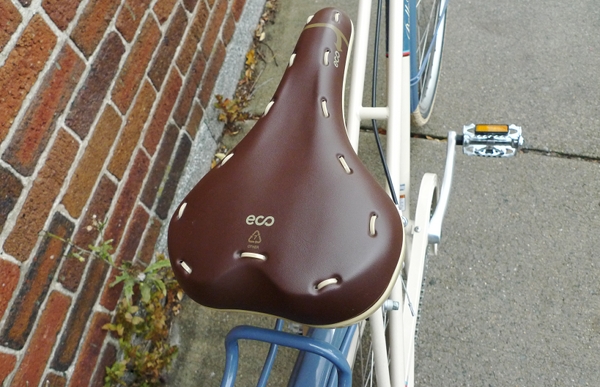
The saddle has a faux-handsewn leather look to it and feels like a typical padded vinyl saddle. I have read that it was designed to be disassembled and recycled after use, though I am not clear on the details.

The Trek Belleville mixte comes in two frame sizes - 43cm (17") and 50cm (20"). I am fairly certain that I tried the smaller frame, because I had to raise the saddle half a foot from its original position in order to ride the bike (note that the pictures here show the original position, not the raised position). However, while the seat tube was short, the rest of the bicycle seemed quite large. The step-over was high and bringing my leg over took some careful negotiating. And the reach from the saddle to the handlebars was characteristic of a larger frame.

I would estimate the weight of the Belleville mixte around 35lbs. Very reasonable, considering the steel tubing and all the extras.

Preparing to test-ride the bike, I walked it off of the sidewalk curb - at which point it made loud clunking noises. Upon investigation, we discovered that the fenders were wobbly - and the cause seemed to be in the design of the attachment points, rather than in the assembly. This could be an issue when riding over bumps or potholes.

I test-rode the Trek Belleville mixte briefly, and I apologise for my disgraceful "salmoning" - it was only done for the photo. As reflected in the picture, the first thing I noted was the unusually generous width of the handlebars - I almost felt as if I were holding the edges of a hula hoop. Maybe this was the cause of the strange feel to the steering, because I found the front end to be "aloof" - almost as if it was receiving its steering instructions via a third party rather than from me directly. I wonder whether it would handle differently with a front load, but that is not something I was able to test. Otherwise, the ride felt okay - with the exception perhaps of too much pressure on my hands despite the upright handlebars.

Of all the other bicycles I have test ridden, the Trek Belleville mixte is the most similar to the Specialized Globe Haul I tried last year. Both feature mixte-style construction and integrated racks, and are roughly in the same price range. Comparing the two, my impression is that the Globe Haul's construction is of somewhat better quality and I preferred the feel of the Globe's ride. In pictures and from a distance, the Trek Belleville comes across as a prettier and more classic-looking bicycle, but in person this is not so. As for comparing the Trek Belleville WSD to traditional, classic mixtes - there is something clumsy about the Trek, as a result of which it does not resemble the real deal despite the twin-stay construction.

The racks on the Trek Belleville mixte are impressive, and the fact that dynamo lighting comes standard on this bicycle is nothing short of amazing. The gorgeous paint job is also to be commended. But despite all the extras, the bicycle has an awkward and flimsy feel to it in person.  The current retail of the Trek Belleville mixte is around $650, and the Wheelworks in Somerville has it on sale at the moment for a lower price. Regardless of what I think of the Trek Belleville, one thing is for sure: A production bicycle with racks and dynamo lighting is a step forward for the industry that is in itself worth applauding.

Tuesday, October 5, 2010

The Bicycle Boutique: a Prognosis of the Future?

Bicycle shops in the US can be divided into several categories. Typical local bike shops sell a wide range of bicycles, from road, to mountain, to utility bikes and beyond. Then there are the specialised bike shops that stock only a specific kind of bicycle - for example, European city bikes. There are also the community co-op bike shops and the used bike shops. And finally, there are the bicycle boutiques.

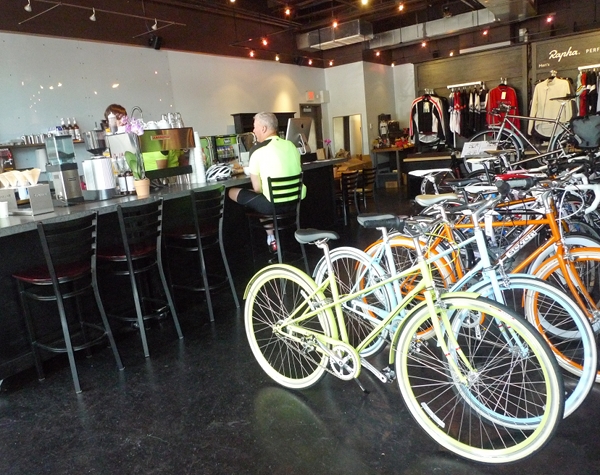
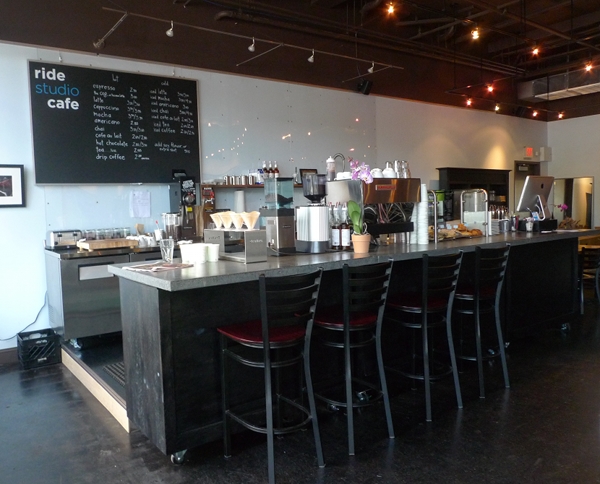
The boutique bike shop is a relatively new phenomenon. It is designed to resemble a gallery space rather than a store, and often incorporates a coffee shop or a lounge area.  The space features an open floor plan and minimalist decor. The stock of bicycles and accessories is kept intentionally sparse, so that each item receives individual attention. The staff usually have a personal connection to the shop. Instead of sales pitches, there is a calm curatorial demeanor. And the careful selection of bicycles tends to be on the high-end side.

In the Boston area, the latest and much talked about bicycle boutique is the Ride Studio Cafe in Lexington, and I have stopped by a couple of times when cycling through the area.

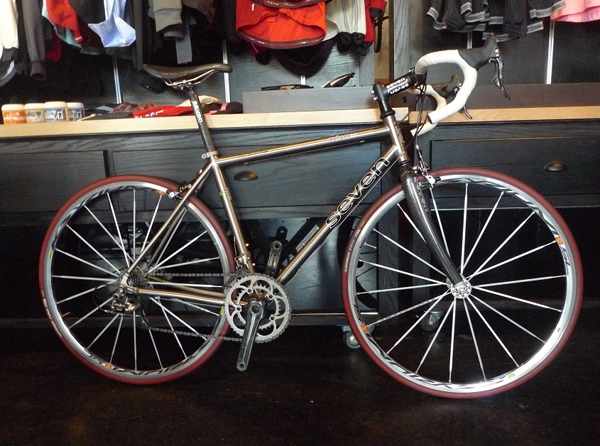
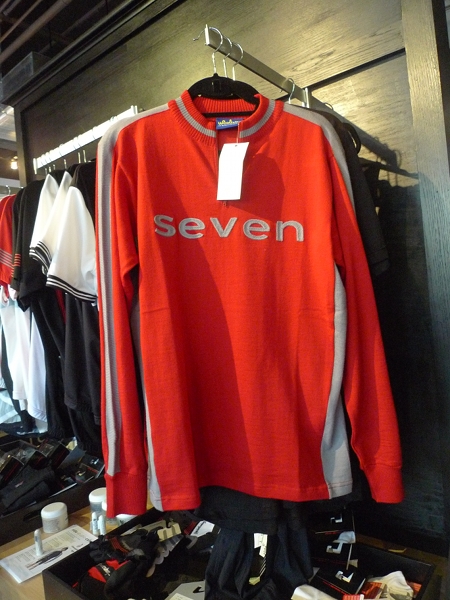
The Ride Studio Cafe sells mainly two types of bicycles. There are high end road bikes by the world-famous Seven Cycles that are built right here in Watertown, MA.

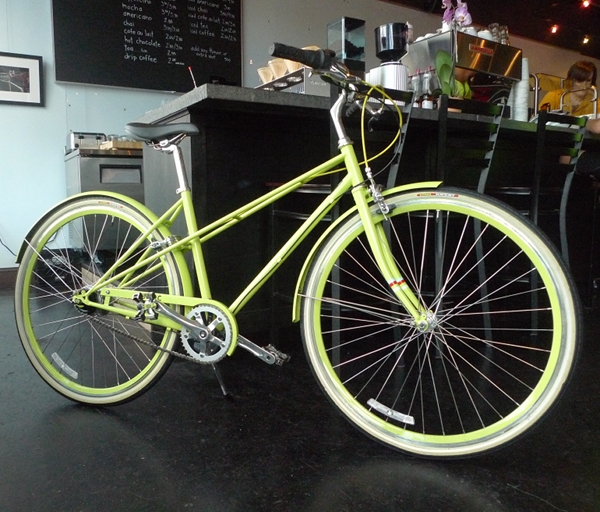
And there are budget city bicycles (diamond frame and mixtes) from the San Francisco-based Public Bikes.

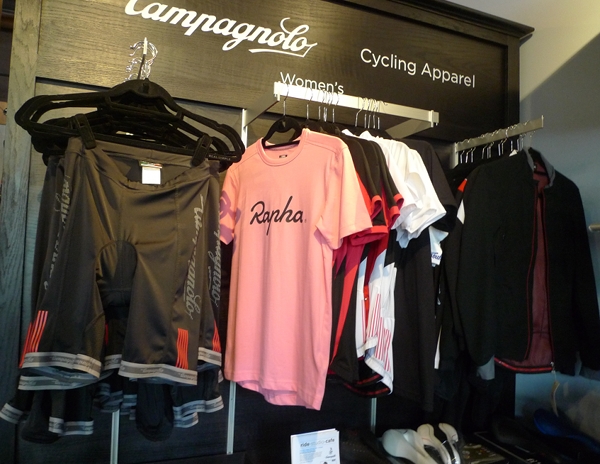
There is also apparel by Rapha and Campagnolo, as well as a variety of chamois creams and embrocation lotions. 

In the back is a small workshop and storage area that is separated from the main floor, but accessible to visitors.

My first reaction upon entering the store, was an intimidated amazement upon seeing so many (titanium?) Seven bicycles in the same place, casually propped against walls here and there. Though I am not normally attracted to modern, non-lugged roadbikes, there is something about Seven Cycles that is just so impeccable that my eye cannot help but be drawn to them. I moved one of the bikes aside in order to photograph it, but got so nervous touching and positioning the beautiful, feather-light and extremely expensive machine, that after one picture with shaking hands I decided to put it back. Later it occurred to me that these bicycles are floor models and people probably test ride them all the time. Not sure whether I would be able to handle that, but the idea of test riding a Seven is tempting.
During the several months of its fledgling existence, the Ride Studio Cafe has been a frequent topic of conversation among local bicycle enthusiasts, with speculations regarding its long-term feasibility. Is the population of Lexington and the surrounding towns really so affluent as to keep the boutique afloat with regular purchases of Seven bicycles and Rapha gear? And while the affordable Public bikes are a good way to diversify, is it enough?  If the answer to all of that is "yes", I think it is a fantastic sign of changing priorities among the segment of population with disposable income. Interestingly, the worse the economy is doing, the more of such boutiques are opening up. Could that indicate that more affluent suburban residents are choosing to purchase a silver Seven instead of the usual silver Lexus