Showing posts with label Boston. Show all posts

Friday, January 7, 2011

On Winter Skies and the Solace of Open Spaces

In a high school English class, we were once made to read an essay, called "The Solace of Open Spaces" by Gretel Ehrlich. I remember the piece only vaguely and don't want to spoil my memory's version of it by re-reading it today. It was about the great plains of Wyoming - or rather, about the author's reaction to their overwhelming vastness. I have never been to that part of the US and have not seen the landscape she describes. But I recall vividly the flash of self-recognition I experienced when reading her words. The solace of open spaces. Yes, that is how I feel.

Even as a child, I had the habit of wandering, of exploring - in a way that was driven not so much by curiosity or desire to conquer, but by what I can only describe as an emotional response to the act of moving through natural space. As a teenager I spent hours after school walking around the lakes near our house. And when I lived in England as a university student, there were these meadows that began just outside town and went on forever. I would walk through them, then turn around after an hour and lose myself in the views that surrounded me: The meadows stretched endlessly in all directions and the sky was close enough to touch. Just as the author of "The Solace of Open Spaces" describes, the vastness in itself felt sheltering - the outlines of the horizon creating the illusion of a domed structure.

In Boston, as in most cities, there is not much opportunity to experience vastness.  I can cycle to the Harbor to get my fix, but somehow that only reminds me of how far removed I normally am from such a landscape; it is not part of my everyday existence.

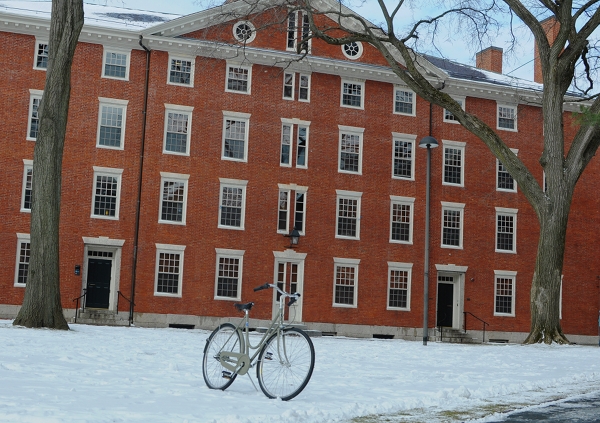
And then yesterday, I was crossing a bridge over the Charles River and looked up at the sky. The sky was everywhere. And it was a winter sky - such a surreal, piercing shade of blue can only manifest itself this time of year. The black branches of the bare trees almost looked like bits of lace trim against the satin-white ribbon of the icy river, and the expanse of the sky itself seemed otherworldly. I felt light-headed and comforted at the same time, and the speed of the bicycle, with the icy wind against my face, accentuated the experience. While I know that this is just my way of dramaticising daily existence, I am nonetheless thankful for it. Life in general happens mostly in our minds, and now my mind is filled with winter sky, the sensation of speed, and the solace of open spaces.

Tuesday, December 21, 2010

First Snow Report

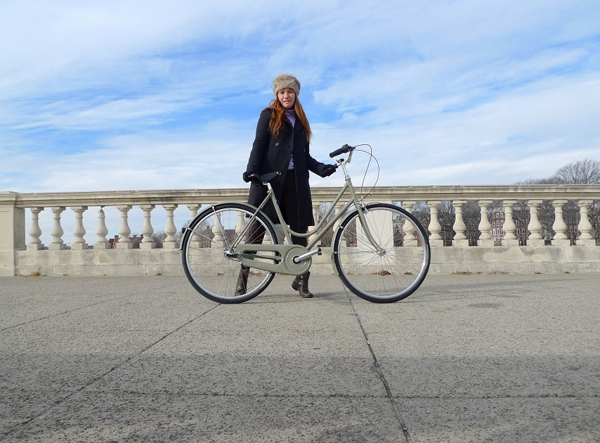
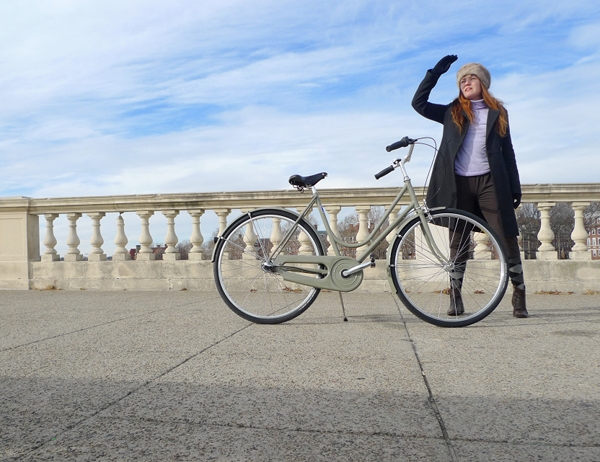
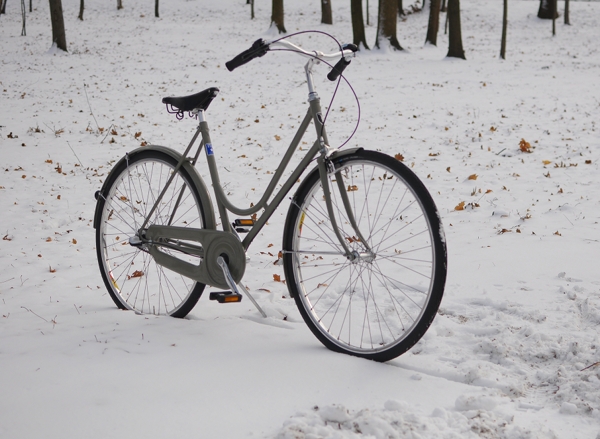
I have been looking forward to testing my Bella Ciao ("Patricia") in winter conditions, and with the arrival of the season's first snow I finally got my chance. Before I go on, I will preface with the disclaimer / mini-announcement that I have begun collaborating with Bella Ciao on a special edition bicycle, which will be sold by Harris Cyclery in Spring 2011. I will have more details about that soon, but just wanted to make that affiliation known in the meantime.

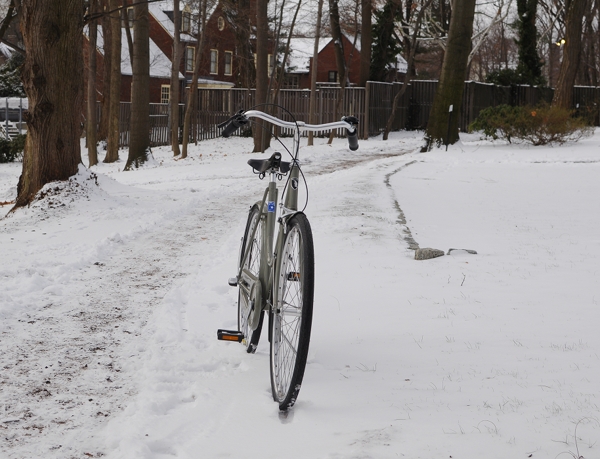
Though I love the way my Bella Ciao "Corvo Citta" model handles, I don't ride it as often as I'd like, because I haven't yet installed a rack and lights. Now that winter has begun in earnest, that will be my next project - I just wanted to first make sure that I'd actually be able to ride this bicycle comfortably in snowy conditions. At just over 30lb, the Bella Ciao is considerably lighter than the likes of Gazelle and Pashley, and - justifiably or not - I am weary of lighter bikes when it comes to cycling in poor weather. To my relief, I had nothing to worry about and Patricia handled just fine after the first snowfall: She remained stable on slush, on slush mixed with salt, and on thin layers of packed snow.

As with other bikes I have ridden in such conditions, I switched to a lower gear and went slower than usual. The bicycle remained sturdy and cooperative. When braking in slush, I used the coaster brake only, which I find easier to modulate on slippery surfaces. The bike also did well cycling on the slippery stretch of brickwork that was part of my route. As far as safety goes, I feel comfortable using the Bella Ciao as a winter commuter in Boston and will get on with the lights/ rack installation so that I can use it more this winter.

While the brave Patricia performed admirably, my first snow commute of the season was not entirely stress-free. Driver behaviour was chaotic and there were few cyclists out on the roads. Several times, I got spooked by a car's ambiguous maneuvers and ended up cycling through a mess of wet snow by the curb. Based on last winter's experience, I know that things will get better once drivers get into their "winter mode". Meanwhile, perhaps there is a reason why most cyclists seem to have chosen to wait it out!

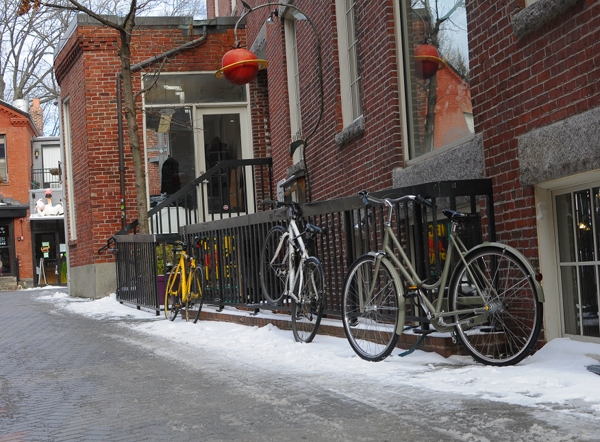
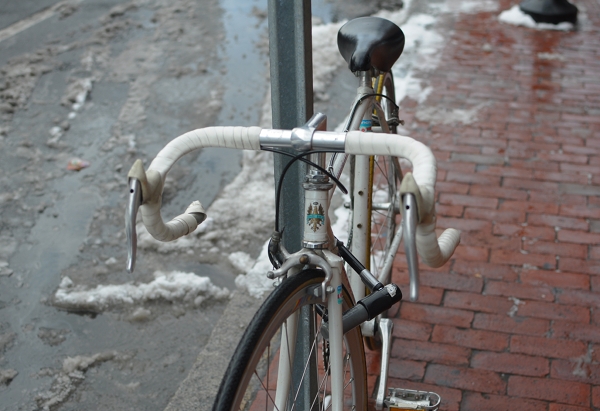
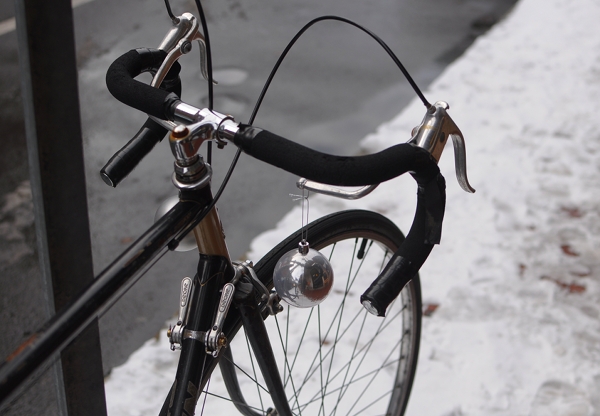
What I found fascinating about the Boston "bike scene" last winter and also noticed yesterday, is that often the only bikes on the streets seem to be those that are least suited for winter cycling - for instance, aggressive roadbikes with narrow tires and no fenders. Where are the fully equipped city bikes? Where are the rugged vintage 3-speeds?

It could be, that the aggressive roadcyclists are the ones most likely to brave these conditions, while, ironically, having the worst possible bikes for doing so. That's too bad, because winter is the time when features like fenders, stable handling, wide tires, internal gearing, and an upright sitting position, really make themselves felt. Last winter, I was extremely appreciative of the Pashley I used to own, and this winter it looks like I will do equally well on the Gazelle and Bella Ciao.

Though Patricia and I did not have many companions on our first snowy commute of the season, we hope that the winter wonderland will coax more cyclists outside soon. Once the drivers calm down, it is really not so bad: Just take it easy, dress warmly, ride a sturdy and properly equipped bicycle, and enjoy the beautiful landscape!

Friday, December 17, 2010

The Vintage Bike Shop: a Visit to 'Old Roads' in Cambridge, MA

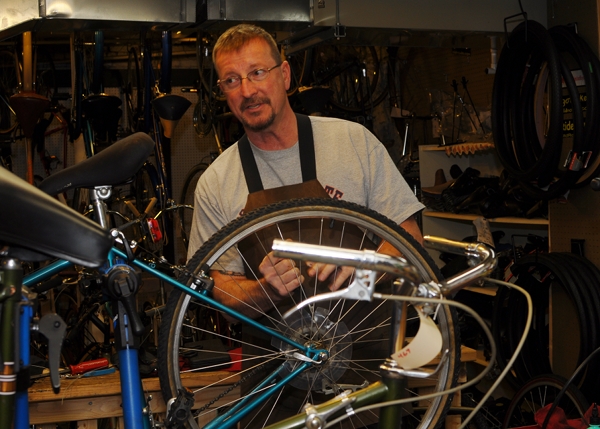
Used and vintage bicycle shops can be great resources on a number of levels. For the beginner cyclist, they can provide clean, tuned-up alternatives to the treacherous waters of Craigslist and ebay. For the DIY tinkerer, they can be a source for older parts and accessories. And for the seasoned collector, they can, on occasion, offer up a gem of a bicycle that one would not normally come across elsewhere. A vintage bike shop is certainly worth a visit, if one exists in your area. In Boston, we are lucky to have Old Roads - located in the Cambridge Antiques Market, just a 15 minute bike ride from my home.
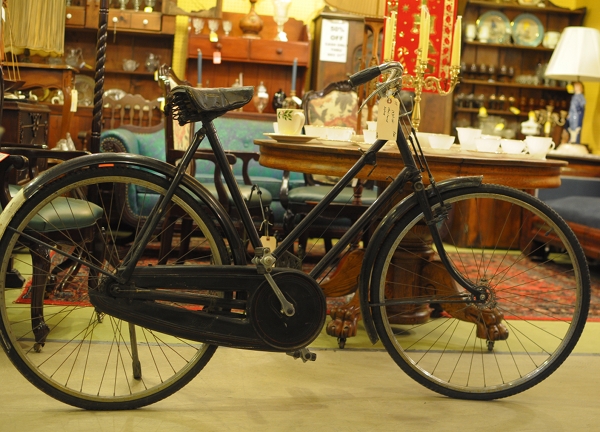
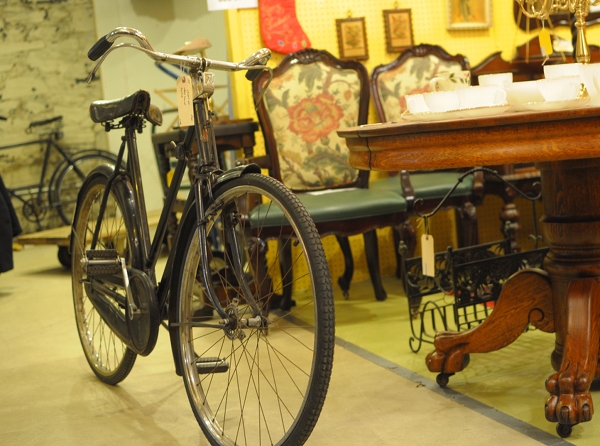
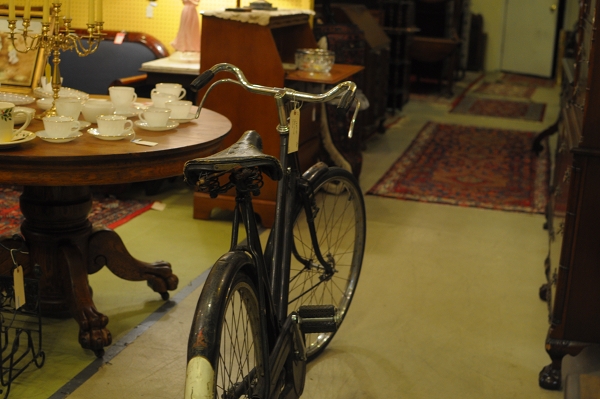
Presuming that most of the bicycles offered are found locally, vintage bike shops are in a sense like museums of history: They give you an idea of what kind of bikes were popular in your area over decades past. It amazes me that no matter how many of these bikes are sold (and I've personally played matchmaker in several deals), Boston does not seem to run out of its stock of early full-chaincase Raleighs. Just imagine how many of these things must have been on the streets in the '30s-70s. The model above is an original early 1930s version.

(Cuppa tea?)

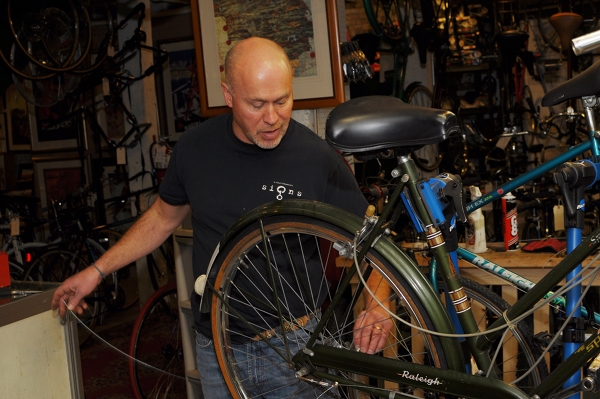
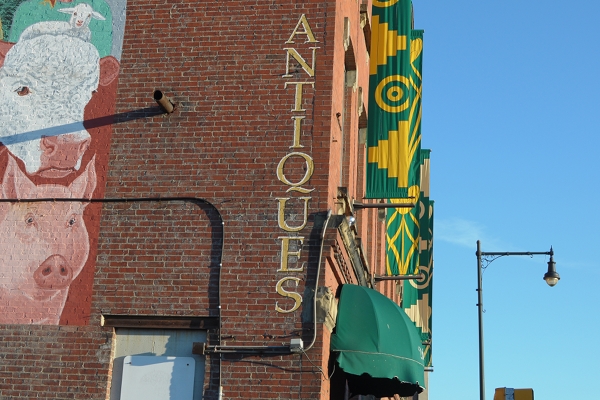
Situated in the dungeon-like basement of the Antiques Market (formerly a coffin factory!), "Old Roads" is really a joint project between two shops: Menotomy Vintage Bicycles, owned by Vinny,

and Cambridge Used Bicycles, owned by Ed. They began selling bikes out of this space in 2008, and have since become a staple of the vintage bicycle scene in the Boston area.

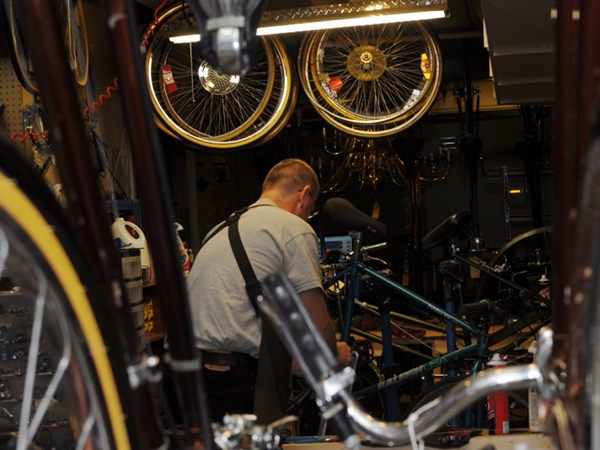
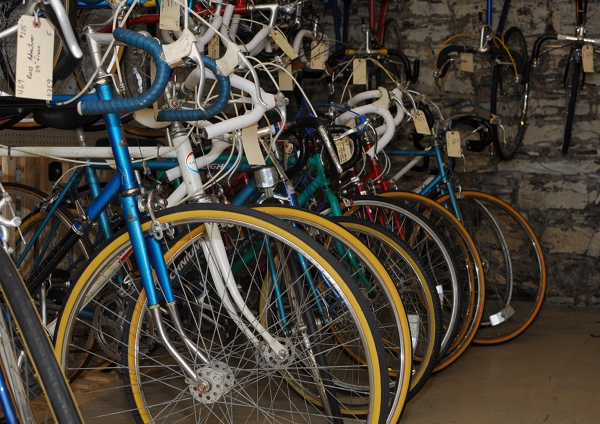
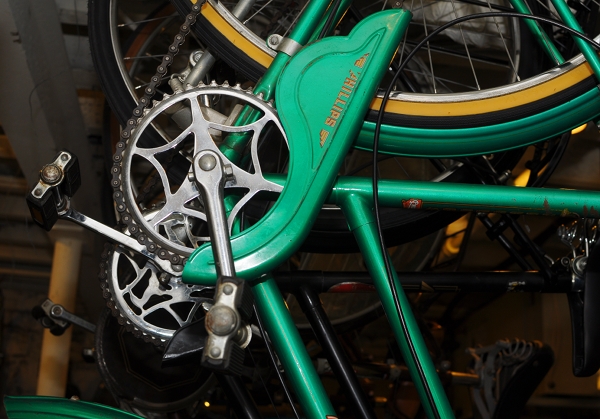
The full extend of their inventory is impossible to capture, due to the sprawling, cavernous nature of the space - which makes being there in person all the more exciting. There are rows and rows of vintage bicycles - on the floor, on the walls, on the ceiling, everywhere you look really.

Though initially, the focus of the shop was meant to be on antique bicycles, it soon became apparent that the local population was mostly interested in reliable 3-speeds and 10-speeds from the 1960s through the early 1980s, to be used as transportation. And so, increasingly, the inventory began to accommodate this. Now the shop offers a stagerring variety of bicycles, in one of five categories: vintage 3-speeds, vintage roadbikes, early vintage cruisers, antique bikes (pre-WWII), and some used newer bikes from the 1990s onward - including a couple of hand-painted "fixies".

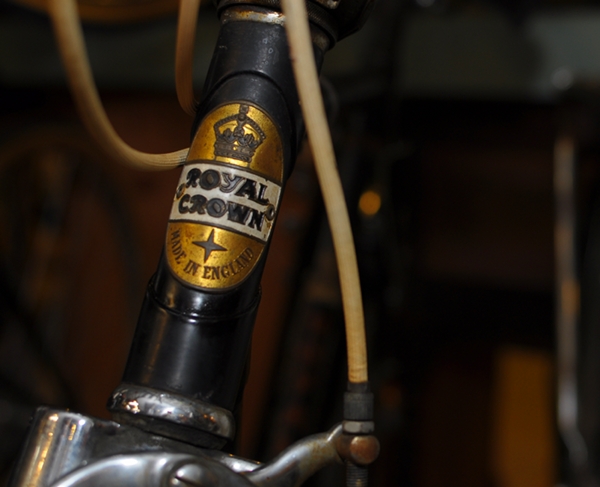
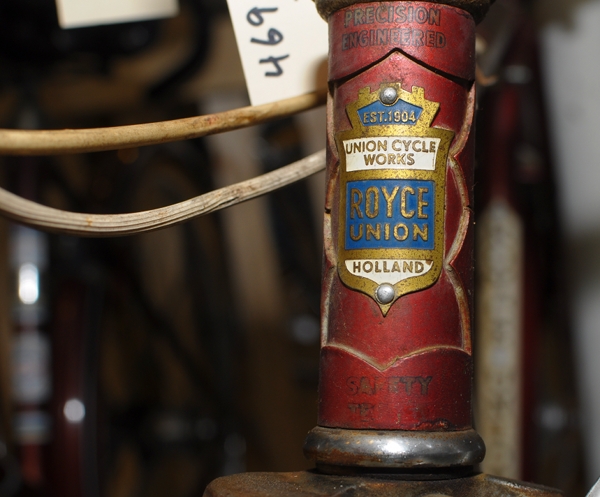
For me, the 3-speeds are the biggest attraction. There are dozens of them, both men's and ladies'. Though Raleigh and Schwinn are the names you will see most frequently, more unusual offerings are often found as well.

Phillips, England

Royal Crown, England

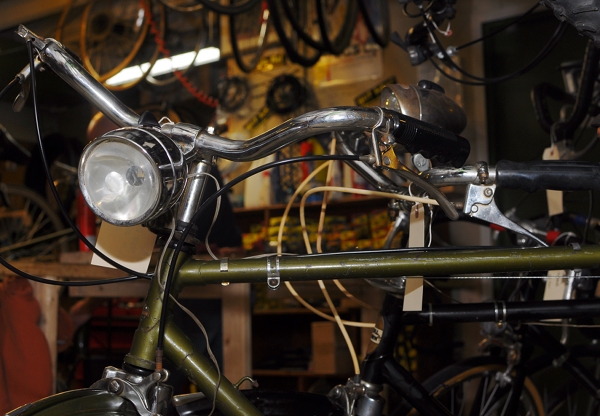
Royce Union, Holland. And there are many others. With chaincases and without, English and Dutch, step through and diamond frame, some even with the original dynamo lighting.

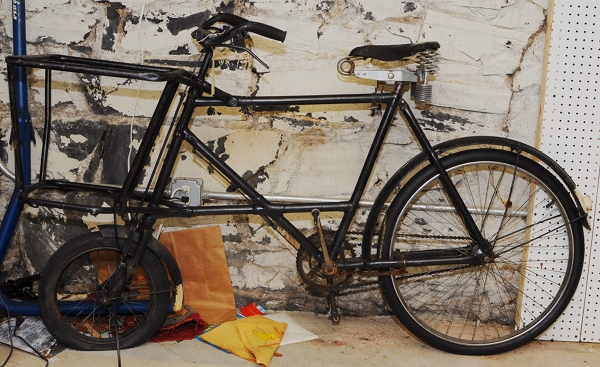
And of course the antique offerings never fail to impress. The above is a Butcher's bike, most likely from the 1920s. 

I am guessing this butcher was a heavy guy!

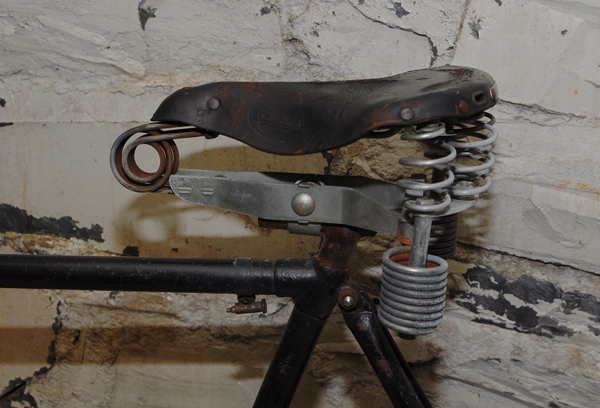
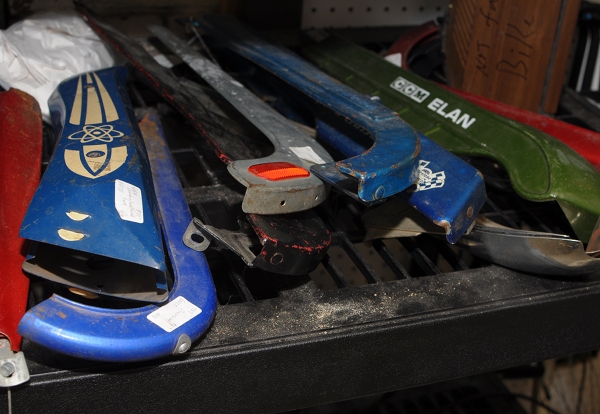
There is also a slew of accessories in stock, including chainguards, handlebars, saddles, tires and racks.

Even vintage bottle generators are available, for those who find the modern ones too high tech.

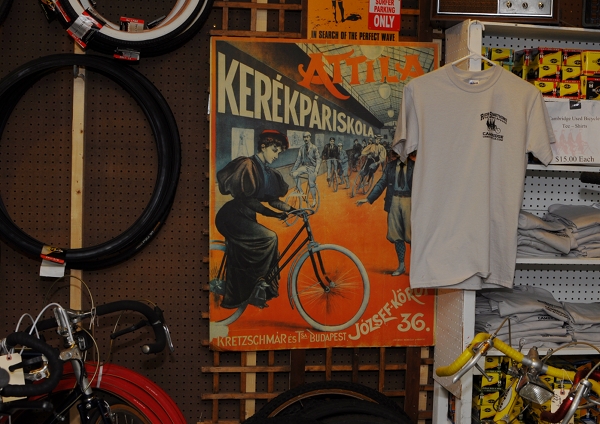
Ephemera and t-shirts, too. 

In addition to its physical presence, Old Roads offers a number of online resources for the Boston area and beyond. They host a message board where visitors can discuss a multitude of topics pertaining to vintage bikes, as well as post for sale/ wanted ads free of charge. They offer a price guide for used and vintage bicycles. And they sell some interesting hard to find parts online. While in the summer, bicycles are sold only locally, during the winter they can be shipped outside the Boston area as well. For those looking for a vintage English 3-speed in clean condition, this can be a good option if your area has a shortage. 

Like proprietors of used bookstores, vintage bike shop owners tend to be genuine enthusiasts - which means that the customer can benefit a lot more from interacting with them, than from interacting with someone who just wants to sell their old bike. Interesting stories, helpful advice, and local bicycle lore are just some of these benefits. Out of curiosity: Are there used or vintage bike shops in your area, and do you find them useful?

Friday, December 10, 2010

A Pedestrian Walking Their Bicycle is Still a Pedestrian

Lately I've felt some hostility from drivers when crossing the street while walking my bicycle. Is it the holiday spirit setting in? Either way, it's as if drivers see the bicycle and are incapable of processing me as a pedestrian, even though I am walking. The reactions have ranged from impatience at crosswalks - including honking, presumably so that I'd cross faster - to downright continuing to drive as if I were not there, even when I am already in the process of crossing the street. I have seen it happen to others as well.

A pedestrian with a bicycle is still a pedestrian. They are not any slower than a person wheeling a shopping cart or a baby stroller, so there is no reason why they should be any more "annoying." Does the mere sight of a bicycle enrage some drivers so such an extent, so as to warrant the extra hostility? That would be a sad state of affairs.

Wednesday, October 20, 2010

America's Vintage Bike Capital?

I wonder whether there is a way to get some official acknowledgement naming Boston the vintage bicycle capital of the USA. Because the sorts of bicycles we see here - and take for granted - during our daily travels, are not to be believed. Restored 50-year-old roadsters casually locked up outside office buildings, ancient step-throughs with exotic headbadges and enormous baskets, vintage folders of unknown manufacture used as canine transport - these are just some of the bicycles I see every day as I make my way through the city. Normally, I have no time to stop and photograph even a small fraction of it all, but today the Co-Habitant was with me and a couple of the bikes absolutely required documentation.

Just so you understand, this all-original 1950's Raleigh Sports with front and rear dynamo lights and original white Raleigh grips(!) is actually someone's commuter.

Secured with a U-lock to a bike rack outside a small local university, it looked so natural amidst the mixed crowd of other bikes, including a fully lugged Specialized and a couple of Peugeot mixtes.

The headlight and tail light seemed functional. These must provide sufficient lighting for the owner's commute, as there were no other lights attached to the bike. Anybody know how powerful they are?

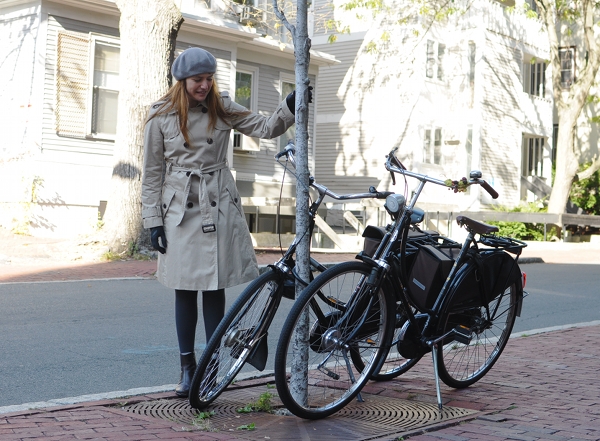
But exciting as it was to see the beautiful vintage Raleigh, it paled in comparison to what we stumbled upon next. Yes, that is my Gazelle, Linda, parked next to... another vintage loop-frame Gazelle.

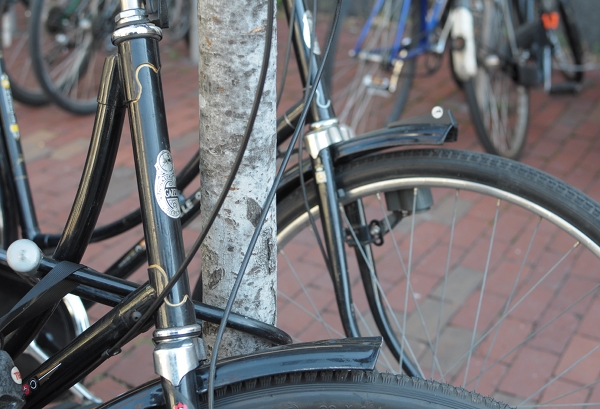
What are the chances? Unlike Raleigh 3-speeds, Gazelle "Oma" bicycles of this vintage were never imported into the USA and were never sold here.

Both my bicycle, and the bicycle next to it, have stickers indicating that they were purchased in Germany (not in the same shop or even the same town). And the (yet another) vintage Gazelle I spotted nearby a year ago, had a Dutch shop sticker on it. The bicycles' owners must have at some point brought them on the plane when moving to Boston, probably for grad school or for post-doctoral positions.

Seeing the other Gazelle and remembering the third one I spotted earlier, made me wonder whether they still belong to the same owners who brought them over from Germany and Holland. Either way, those bikes must have been dearly loved, at least at the time. Transporting a 50lb bicycle on an airplane could not have been easy!
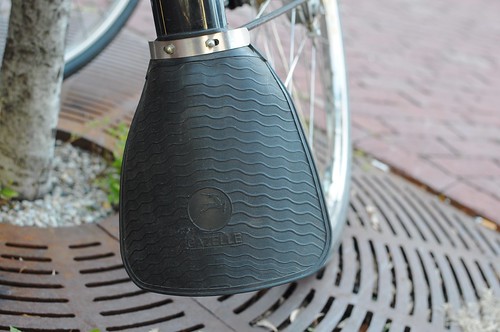
Overall, my Linda was in nicer condition than her neighbour, but one thing that evoked her envy was this mudflap on the other lady. Now she is asking me to get one for her, too. I think a leather one (possibly hand-made?) would go well with her saddle and grips, but I am curious whether these Gazelle proprietary flaps are still sold today. Also, they seem to be attached by a bracket that does not necessitate drilling the fender, but makes use of the existing holes for the stays, which seems like a fairly easy installation method.

I think that to spot several bicycles like this in an American city is highly improbable. Surely it is proof that Boston is the vintage bike capital? If you have a better story about your city, bring it on!
Sunday, October 10, 2010

The Bostonians: A Meeting of Cousins

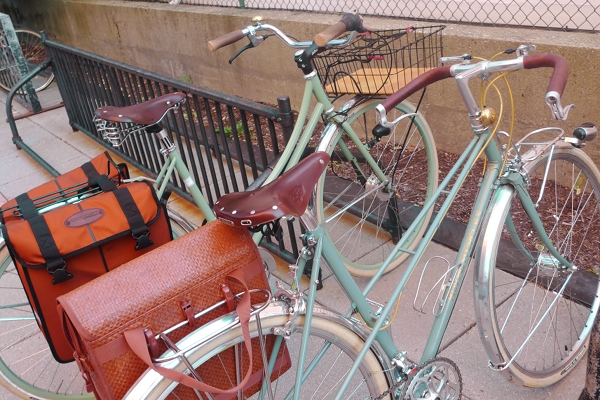
On a lovely Sunday afternoon in Boston, my Royal H. mixte ran into a cousin... an ANT Lady's Boston Roadster of the same colour.
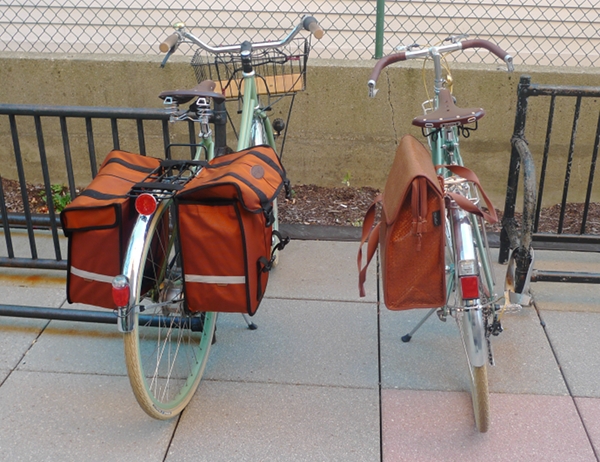
I promise the ANT is not mine. But whoever it was built for certainly has a similar taste in bicycles.

Sage green loop frame, cream Delta Cruiser tires, brown leather saddle, cork grips and huge copper panniers - I think the combination looks great. And notice that the rims are powdercoated the same colour as the frame.

It's fairly accurate to say that my Royal H. and this ANT are related. Not only because both were made by Bostonian frame builders and have similar "complexions," but also because some time ago Mike Flanigan (of ANT) gave Bryan Hollingsworth (of Royal H.) the new-old-stock mixte lugs that made the construction of my bicycle possible.

Like my mixte, the ANT roadster was built with racks and dynamo lighting. Looking at the "cycling landscape" in Boston today, I think it is important to credit ANT for resurrecting the notion that transport bikes should be built with these features. I see more and more bicycles now with dynamo lighting, whereas as recently as a year ago people would stop and ask me why my front hub was so large, amazed when I would explain that the lights are powered by pedaling. And racks are now pretty much the norm on city bicycles, whereas a year or two ago they were an anomaly. ANT bikes, and the younger local builders whose work is influenced by them, played a crucial role in this change.

It is nice to live in a city that is home to so many excellent frame builders, and to spontaneously "meet" other local handbuilt bicycles. The bike pictured here was actually the second ANT I saw today. Earlier, I was stopped at an intersection and heard the cyclist behind me say "Sick bike! Where did you get it?" I started telling him about Royal H. and handbuilt frames, then realised that he was riding a black ANT when he pulled up beside me. "Hey, yours is an ANT!" What a weird thing to bond over, bicycles. Encounters like these make me feel like a character out of a 1950s sitcom, where neighbours wave and smile to one another and the mailman whistles a happy tune. 

Sunday, October 3, 2010

Bike Lane Etiquette?

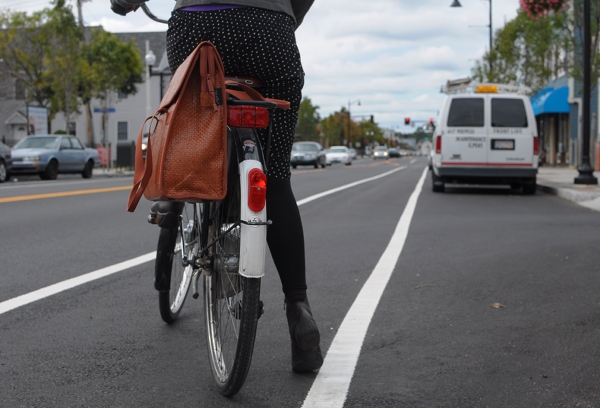
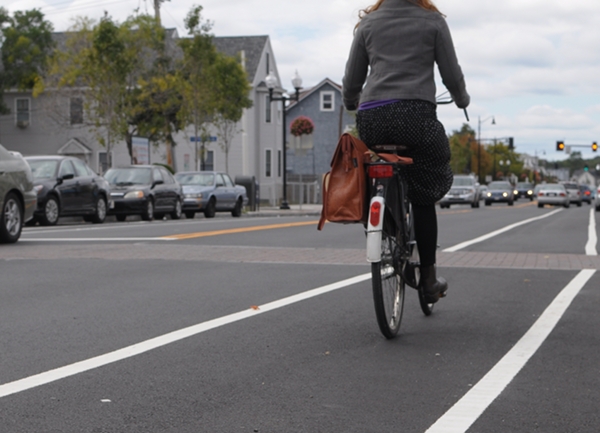
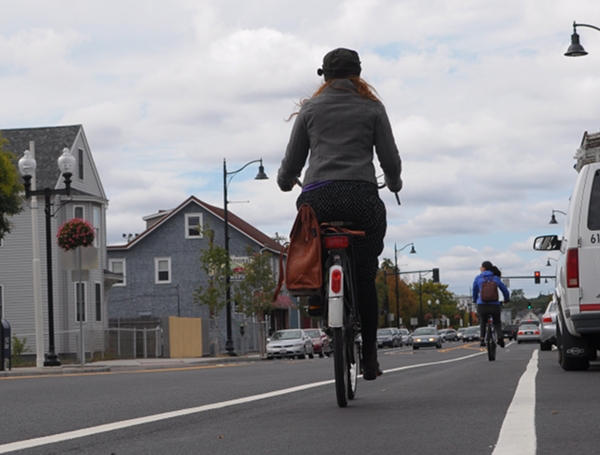
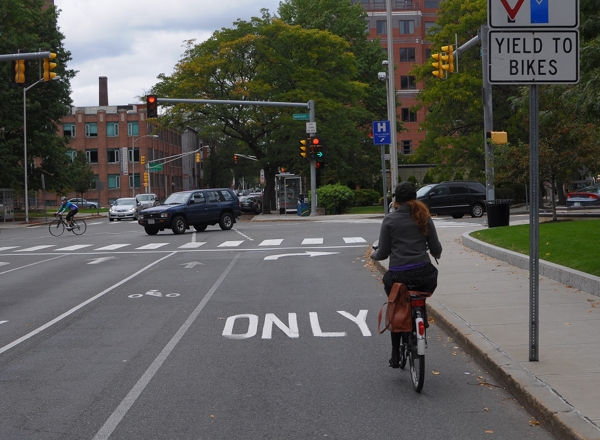
Having just returned from our stay on Cape Cod, I am greeted with a remarkable development: There are now bike lanes on one of the most hated stretches of road near my neighborhood. While normally I avoid this road, today I found reasons to travel along it multiple times just to experience its Disneyfication - for the city has also planted trees and installed decorative streetlights, in attempts to disguise the faded vinyl-siding of the multi-family homes and the peeling storefront signs that say things like "Used Tires". Why if Boston keeps this up, soon the last of the gritty neighborhoods will turn shiny and pleasant and there will be nothing to complain about!

Apparently, we are hardly the only town experiencing such shocking advances in bicycle infrastructure.  A friend from Virginia has written me with the news that there are now bicycle lanes in Harrisonburg, and he - a lifelong cyclist sans lanes - does not quite know how to behave in them.  Where is one supposed to pass? How to deal with joggers in the lane?

While I am by no means an authority, I will contribute my ideas on bike lane etiquette. Please note that although these contain commentary on safety, they are meant as thoughts on polite behaviour and are not safety tips.

1. Positioning within the bike lane
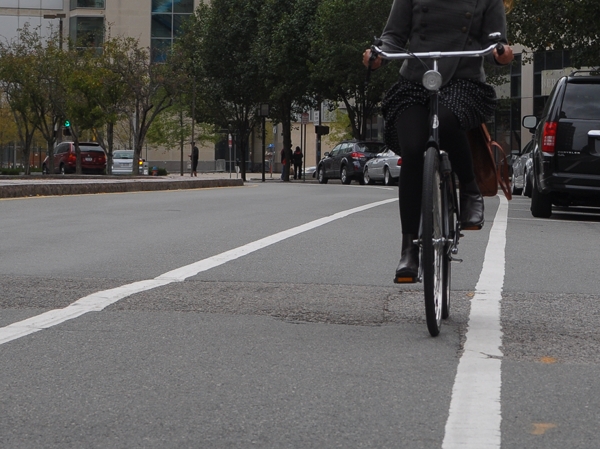
It is a good idea to cycle in the left half of the bike lane, as this positioning places you out of the "door zone" (i.e. you will not get struck by a car's door, should one suddenly fling open). Occasionally, a misguided cyclist or driver may shout at you to scoot over to the right, so that they can pass you easier - but don't allow yourself to be guilted into listening to them. Instead, politely explain about the door zone and why your positioning in the lane is necessary.

Try to keep to a consistent line within the bike lane; don't weave. Drivers and other cyclists can get freaked out by weaving cyclists, and in turn behave irrationally.

2. Passing other cyclists 
Passing other cyclists should be done on the left, never on the right.  If you pass on the right, you endanger both yourself and the cyclist you pass, by nullifying the distance between the two of you and the door zone. Pass the slower cyclist by going around them on the left (into the traffic lane), naturally checking that the lane is clear first.  Should another cyclist attempt to pass you on the right (you can sometimes sense them coming up behind you), I think it is perfectly fine to tell them not to do this ("Please don't pass on the right" or "Please pass me on the left").

3. Yielding to turning vehicles
Yield to turning vehicles in the lane, be they cars or other bicycles, instead of attempting to go around them as they are making the turn. Even if you manage to do this safely, it is disturbing to the vehicle to suddenly see you beside them as they attempt to execute a traffic maneuver.

4. Yielding to pedestrians
If the bike lane intersects a crosswalk, yield to pedestrians in a way that makes them feel safe - don't just cycle around them within inches of their person... And please don't even think of ringing your bell at pedestrians to make them cross faster (I have witnessed cyclists do this in Boston). It is the pedestrian's right to be in the crosswalk and your obligation to yield.

On the other hand, it is not the pedestrian's right to be in the bike lane itself, whether they are jogging or rolling a baby carriage, or whether it is a group of people caught up in chatting. If a pedestrian is blocking a bike lane, I think it is only fair to ring your bell and/or politely say something like "Excuse me, bike lane!" so that they move out of your way. It is rude of them to block the lane; it is not rude of you to point out that they are blocking it and ask them to move.

5. Positioning when stopped at intersections
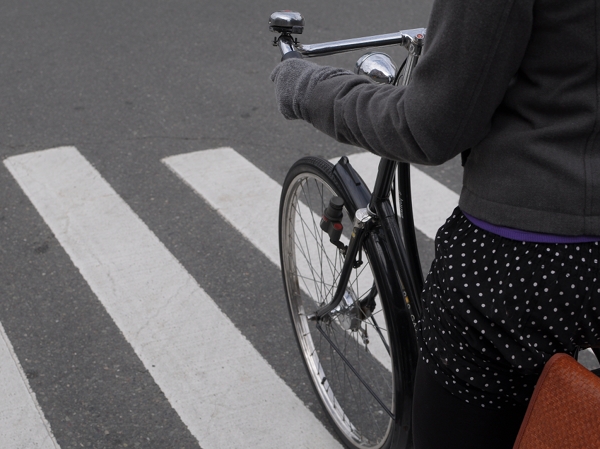
When stopped at an intersection, stop before the crosswalk - as opposed to blocking it (as shown above), as some cyclists do in order to get a head start. It's not very nice to make pedestrians go around you as they attempt to cross the street.

If other cyclists are already stopped at the intersection when you arrive, it is generally considered polite to stop behind them - as opposed to next to them, in an attempt to compete for who goes first when the light turns green.

6. Turning
Communicate your intention to turn by signaling and merging into the turn lane early on, rather than at the last moment, so that drivers are not surprised and can yield to you properly.

Observe the same rules as if you were a motor vehicle: When making a left turn, yield to oncoming traffic; when turning right on red, yield to pedestrians crossing and to cross-traffic.

7. Wrong way in the bike lane?
I think the reason some cyclists engage in this behaviour, is to make an easier left turn.  However, it is wrong and inconsiderate to "salmon" in the bike lanes; please don't do it.  And I think it is perfectly acceptable to ask other cyclists not to do it.

8. Cycling onto the sidewalk
Upon reaching their destination, some cyclists transition onto the sidewalk and continue to cycle - dismounting when they reach the bike rack, or the front door of the building they will be entering.  My view is that cyclists should dismount upon reaching the sidewalk, and walk their bike thereafter.

9. Speed 
As while driving, it is common sense and common courtesy to slow down when executing delicate maneuvers in traffic. It is also common courtesy not to jeopardise the safety of other cyclists, even if you are in a hurry. Sometimes you just have to go with the flow of bicycle traffic, even if technically you are capable of going faster.

10. Interaction with drivers and other cyclists
Please... just be polite. If you are annoyed or frightened by a driver or another cyclist, it is never a good idea to express that sentiment by immediately insulting them or shouting obscenities. An urgent tone of voice does not need to be abusive. "You almost killed me!" in an alarmed voice is more effective than "You almost killed me, you goddamn idiot!" in a hostile voice. While it may be tempting to shout the latter version, consider that doing so can actually escalate conflict and further endanger you.

With more cities across the US creating bicycle lanes, the numbers of new cyclists out on the roads is growing. And while different states have different degrees of regulations when it comes to cycling, I think there are certain aspects of using the bike lanes that are a matter of common sense and courtesy. I hope my suggestions are useful to new users of bike lanes. Your feedback, whether in agreement or disagreement, is welcome.