Showing posts with label clothing. Show all posts

Tuesday, January 25, 2011

Regular Wool vs 'Technical' Wool

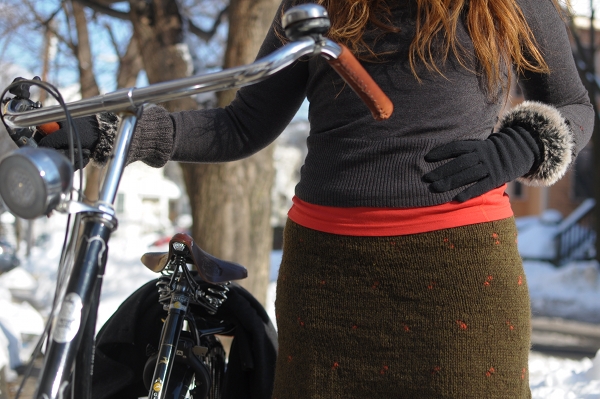
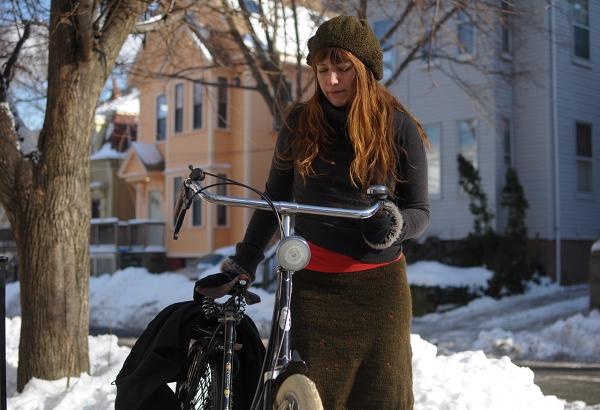
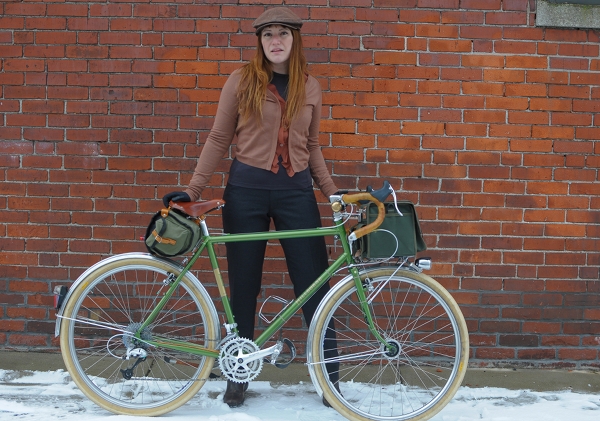
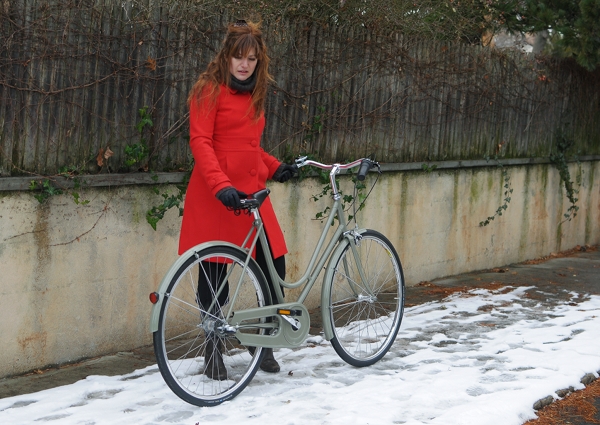
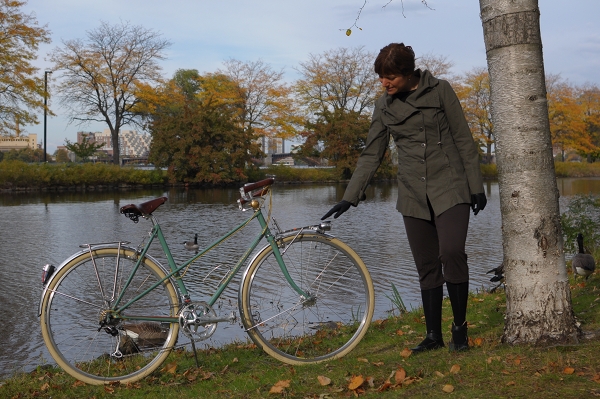
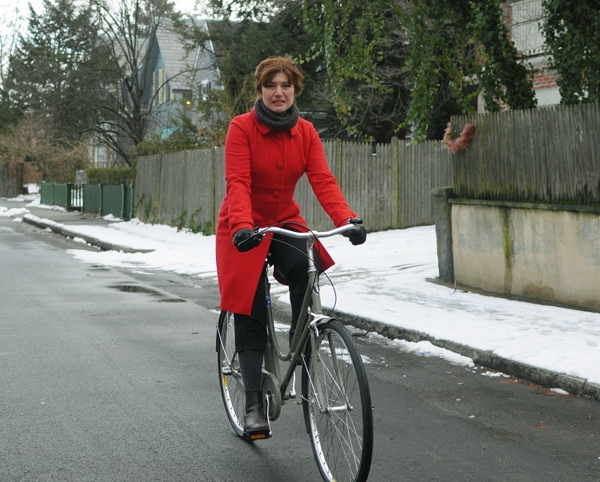
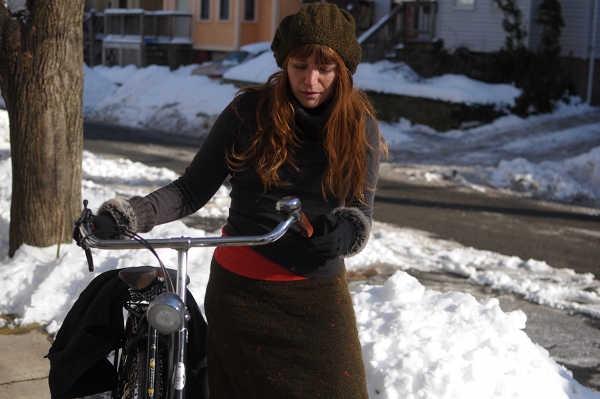
Despite this winter being colder than last, I am finding cycling in freezing temperatures easier this time around. The reason, is that I have finally surrendered to wool. Clad in head to toe wool, I no longer complain about the cold and life has gotten easier. Pictured here: a long sleeve wool t-shirt from Icebreaker (the red bit sticking out), wool sweater and gloves from Jigsaw, wool skirt and hat that I knitted myself, and wool coat (folded over the back of the bike) from Benetton. Not visible here are Icebreaker leggings, Smartwool socks, and I/O Bio underwear and bra - also all wool.

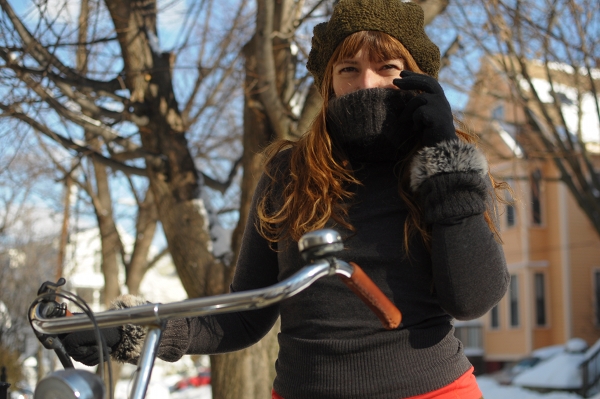
I've certainly worn wool in the past, and - like Dottie from Let's Go Ride a Bike - I have always loved sweaters with enormous turtle/cowl necks that can be unfolded over my face to protect against the frost. But before this year, I have limited wool clothing to outer layers, and did not think I was tolerant of wool right next to my skin. That was why I repeatedly ignored advice that was given me last year to buy lightweight "technical" wool. I remember trying to wear wool shirts and tights next to my skin before, and finding them irritatingly itchy. Today's manufacturers of technical wool - the most popular being Smartwool, Ibex and Icebreaker - promise featherweight, itch-free garments. But they are also super expensive. It took me a long time to suspend my disbelief and commit to giving these things a try, and it also took me a long time to find everything I wanted on sale. But now that I have, I can never go back. The stuff works, and it really is non-itchy - even for someone whose skin is normally sensitive to wool.

I am not sure how exactly "technical wool" is made, and most likely every manufacturer's version is different. But the idea is, that the merino fibers are kept super fine, but made to interlock in a way that results in efficient temperature regulation. In comparison, if you examine a "regular wool" garment - like the sweater I am wearing here - you will find that it is more porous, not quite as smoothly textured, and thicker. Even the finest merino and cashmere sweaters do not have the same tissue-weight quality and smooth, dense texture as the technical wool garments.

All this makes it possible to wear "technical wool" next to one's skin, and for those struggling with the cold, I would highly recommend it. Wearing a wool sweater and overcoat did nothing for me last year, when the stuff I'd wear underneath was made of cotton or some other fabric. My underlayers would get soaked with sweat, and then the wind would chill me to the bone when I would stop at intersections. The feeling of my skin being covered with frozen sweat underneath three layers of clothing was just awful. But wearing wool underwear, bra, tights, and long-sleeve tee, has solved this problem for me completely. As far as the difference between the popular brands, I think they are all pretty good and I just get whatever is on sale. For ultra-thin layers, I prefer Icebreaker. And I also love Icebreaker leggings - they are gusseted, whereas Smartwool leggings are not.

For layers that are not directly next to the skin, I find "regular" wool sufficient - either store bought wool clothing, or things I knit myself. While Smartwool, Ibex, Icebreaker and others do offer technical outer layers, I think it is just too expensive for most people to amass an entire wardrobe out of that stuff. And, of course, it is also stylistically limiting. For me, as long as the layers next to my skin are the technical garments, I can wear pretty much anything over them and it will feel fine. I like to knit my own hats and skirts, because making them is fairly easy and I can invent my own styles. But sweaters are complicated, so mine are all store-bought.

One thing to keep in mind, is that thin merino sweaters are usually warmer than chunky sweaters, because the tightly-knit merino is less porous. Unfortunately, I have noticed lately that even stores that used to sell simple wool sweaters no longer do: I could not find a single sweater at our local Gap, Old Navy, or Banana Republic stores that was 100% wool over the past couple of seasons - and I checked at various points in time out of curiosity. Several years ago, you could walk in and buy a wool sweater without a problem, so I wonder what accounts for this change. Has the price of wool risen? J. Crew still offers a good variety of merino sweaters, as well as cashmere, but I wonder whether that is on its way out as well. It would be a shame, since it seems that an increasing number of people are re-discovering the benefits of natural fibers over synthetics - particularly in the winter. What are your experiences with "regular" wool, "technical" wool, and other fibers?

Monday, January 10, 2011

The Mary Poppins Effect?

Lately, there has been some discussion in the comments about whether drivers display more courtesy when cyclists ride upright bicycles and dress in "regular" clothing. One reader wrote that "the uprightness [is] more visible and [the clothing] maybe less offensive to your average driver... The images generated revolve around Mary Poppins. Only a monster would do anything mean to Mary Poppins" (Christopher Fotos, December 10, 2010). Do you agree?

When Bike Snob NYC poked fun at the Tweed Ride last week in his typically colourful manner, I was laughing my head off about the associations with colonialism and Civil War re-enactments: I never found Tweed Rides appealing for precisely those reasons. But I disagree with his conclusion that nice clothes on a bike are generally "not traffic calming." It's one thing to be dressed in what appears to be period costume, joined by dozens of others who have done the same while taking a joyride through the city. It's another thing entirely to be cycling to work in a suit and a wool overcoat, because that is what you normally wear to work.

Speaking solely from my own experience, I'd noticed as soon as I started cycling for transportation that drivers are nicer to me when I dress "normally." And since having begun to ride a roadbike recreationally, the difference between how I am treated on the roads when on a bike with drop bars, wearing "sporty clothing" and my hair tucked away, in comparison to how I am treated when on an upright bike in "city clothing," with my work bag in the basket and my hair visible, is notable. The majority of the time, when a driver is rude to me or impatient with me, I am on my roadbike - which is odd, since I am faster on a roadbike than I am on an upright bike, and thus should be less "in the way."  To me, this just confirms that drivers' perceptions of how annoying a cyclist is, are entirely subjective. You can be going 10mph and somehow this might be okay, or you can be going 25mph and they might still be annoyed.

In part, I think the idea of not wanting to harm Mary Poppins is valid - in the sense that a cyclist dressed "normally" looks more human to the driver. The way people process each other visually and emotionally is governed by a complicated system of simulation and self-recognition (this is actually my research specialty, so I've spent a lot of time thinking about it!). And from that point of view, it makes sense to speculate that the more "I am human! I am you!" signals we give off when cycling, the more empathy a driver will feel towards us. Dehumanisation, on the other hand, makes it easier to cause harm to another human being - because we fail to simulate their emotional state and relate to their suffering. And dehumanisation is facilitated by things like uniforms (one reason it is easier to kill soldiers and war prisoners, than civilians), or anything else that obscures individuality and hides signs of "humanness".

But in addition to the Mary Poppins effect, I think that there are also implicit "right of way" rules that are present in the driver's mentality, from which "normally" dressed cyclists benefit. I am not suggesting that this is right or justified in any way, but I get the impression that drivers are enraged by the associations with leisure and recreation that a road cyclist's attire evokes. The cyclist is on the road because they are "going for a ride." The driver, however, is on the road because they "need to be somewhere." So the reasoning follows, that the person who needs to be somewhere clearly has more valid reasons to use the limited road space than the person who is going for a ride, which is why the presence of the road cyclist causes annoyance. On the other hand, when the cyclist's appearance suggests that they are also engaging in transportation and "need to be somewhere" just like the driver, their presence on the roads seems more justified. This is just a theory, but the fact that drivers will shout things like "Get a job!" to roadies, but will ask me "How long does it take you to get to work?" at red lights when I am dressed up, gives it some plausibility. They associate the "normal clothes" look with going to work, and they associate the sporty look with recreation.

All of this is, of course, entirely speculative and none of it is to say that cyclists should strive to dress in any particular way in order to secure the driver's compassion. Only the certainty of criminal prosecution can reliably deter a driver from causing harm to a cyclist, and I hope to see that become the norm in the US in the near future. Until then, let's hope that drivers can find a way to see Mary Poppins in all of us, whether we are dressed in lycra, tweed, or something in between.

Saturday, January 8, 2011

Stealth Pantaloons: Clever Wool Trousers for Cycling

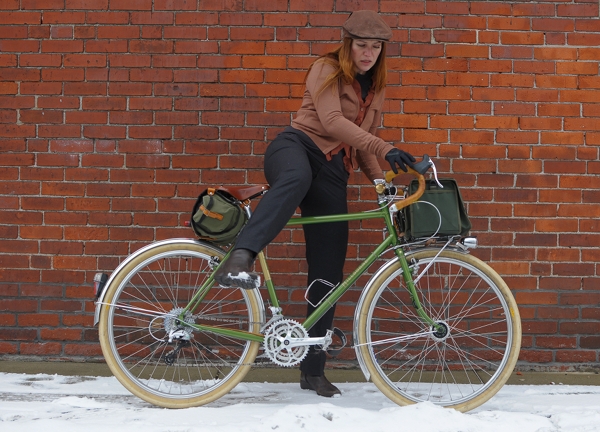
For some time now, I have been searching for "cycling pants" to be worn on a roadbike that look sufficiently like trousers. Regular trousers have seams in the crotch that start to hurt me after cycling for more than 15 minutes in a forward-leaning position. And women's trousers specifically tend to be quite form-fitting, which makes it uncomfortable to swing a leg over the diamond frame, as well as to pedal. I explored several possibilities for trousers that would work, but everything was either too sporty or had too much of a "cycling culture" look. I wanted something conservative and subtle. The "Stealth Pantaloons" from Clever Cycles seemed to fit the bill, and being my sponsors they graciously allowed me to try the pants before deciding whether to buy them. The pants ended up being just what I needed, and I have since purchased them.

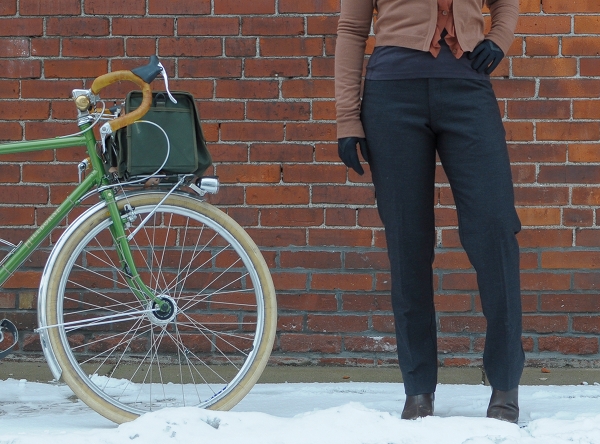
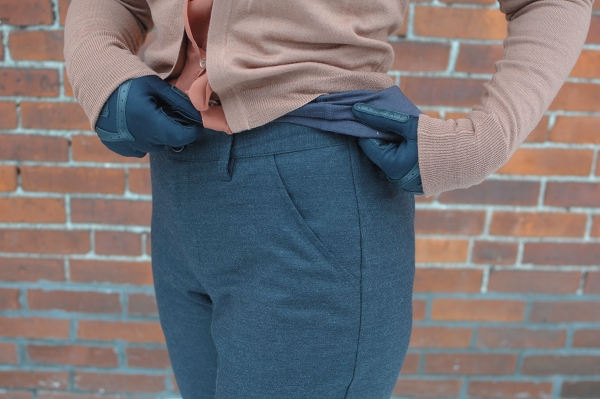
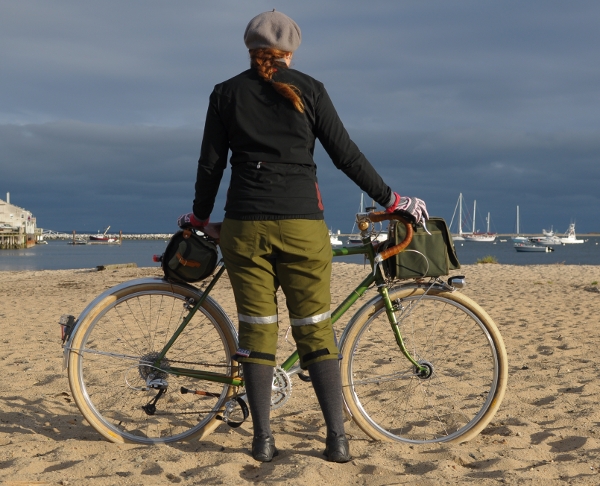
Upon superficial examination, the Clever Cycles "Stealth Pantaloons" look like regular trousers in every way. They are made of a lightweight wool and have a classic, straight cut to them that tapers slightly towards the ankles.

The cut is unisex, and after reading my MUSA knickers review Clever Cycles warned me that I might find some aspects of these not ideal for the female figure either. However, I found the "Stealth Pantaloons" to be reasonably flattering. For instance, compare the above picture to this. Not even in the same category.

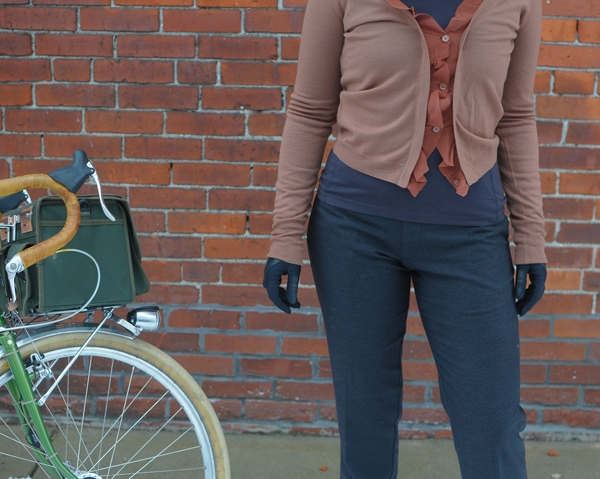
I am 5'7" and wear a US women's size 4.  I got the Stealth Pantaloons in size 30. They look form-fitting in the pictures, but in fact they are fairly loose in the abdomen, inner thighs, and below the waistband in the back - similarly to the Rivendell MUSAs. What's not similar, is that the wool fabric falls and drapes in a way where this is not noticeable. As a result, I can wear these pants with leggings underneath or without, and the fit will be flattering either way. The versatility is good for when the temperatures fall below freezing.

I believe the waistband is supposed to hit about mid-waist. However, due to the elasticised area in the back (picture below), I find this to be adjustable: I can wear the pants both high on my waist and low on my hips by simply pulling them up or pushing them down. Here they are shown relatively high on the wait.

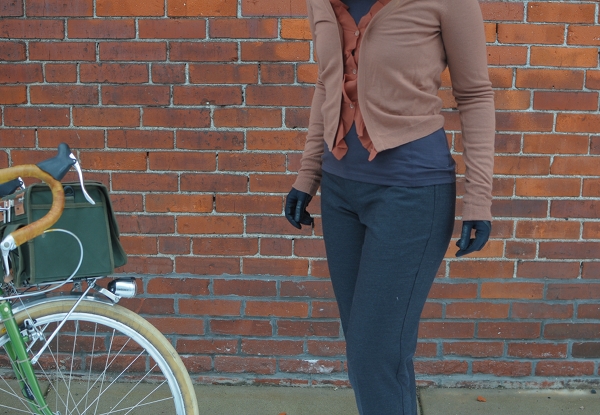
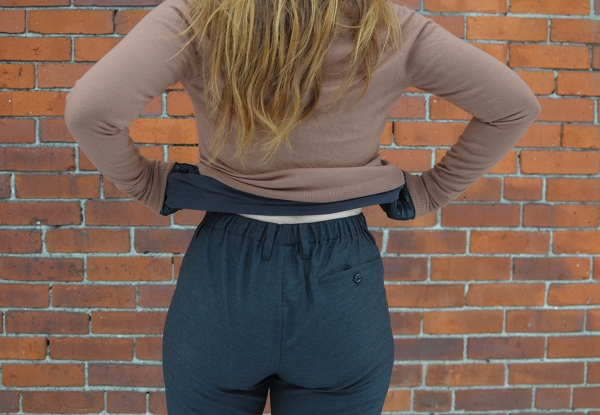
And here is the elasticised waist in the rear. This is the only aspect of the "Stealth Pantaloons" that is potentially unflattering to the female figure and it all depends on how you are built. The feature is useful in that it makes the fit versatile and prevents the waistband from digging into tummy fat when cycling in a leaned-forward position. However, it also detracts from the formal look of the trousers, and makes the fabric bunch up under the waistband. For me both of these problems are solved by the fact that I do not like to wear tucked-in blouses: My top covers up the elasticised area and the bunching underneath. If you like to wear your tops tucked in, beware. However, even with the elastic and the bunching, the look suits me better than this.

In addition to the elasticised feature, there is something about the fit of the "Stealth Pantaloons" that allows for unconstrained movement. I can mount a diamond frame while wearing without feeling any pulling at the seams. Same with pedaling or pretty much any motion. This is not typical of form-fitting women's trousers.

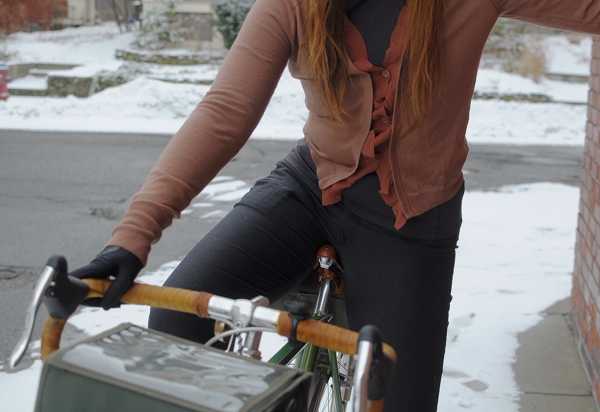
Another cycling-specific feature is the flat seam construction. The "Stealth Pantaloons" do not have a gusseted crotch. However, the seams are flat and do not cut into my "soft tissue" (crotch-related problems on a roadbike are an ongoing theme for me!) when I lean forward on the saddle. I have not gone on long rides with these yet, but I can usually feel seams right away once I am on the saddle, whereas these I cannot feel.

There is no bunching in the rear while on a bike, which is good.  As a woman with a smallish waist and an obscenely voluminous behind, I find it difficult to find even regular trousers that offer a flattering fit, let alone cycling-specific pants. The "Stealth Pantaloons" fit me better than I had imagined they would after the very cautious description I was given by Clever Cycles.  My experience may or may not be applicable to you, but I am happy. They are comfortable on and off the bike, they are all-wool, and they are a neutral colour. They can be worn with shoes, tucked into tall boots, or pushed up the calves like knickers. I am also told that they are fairly stain-resisant, though I have not yet tried this out. Oh, and today I was trying on a jacket in a clothing store and two women complimented the pants as they walked by. I am pleased with the purchase and might get another pair in black a few months from now.

Wednesday, January 5, 2011

My Concessions to the Bicycle

In the past, I've expressed my view that an effective transportation bicycle is one that "allows us to be ourselves" - meaning that we should not have to change the way we dress or lead our lives in order to ride it. Recently a reader called me on this, asking the following (edited) question over email:
You write that you do not believe in compromising personal style when it comes to cycling for transportation and I am wondering just how far you take this idea. Have you really never made any compromises in your wardrobe in order to commute by bike? 
That is a good point, and I did not mean to imply that I never compromise on my clothing choices in order to cycle for transportation.

For one thing, I have stopped wearing high heels since I began cycling. While I know that many women find it perfectly natural to cycle in heels and I admire this ability, I myself cannot do it in a way that makes me feel safe and comfortable. I was willing to give up heels, because my relationship with them was already waning - the bike was simply the last straw. Throughout my late teens and all of my twenties, I pretty much wore 3-3.5" heels all the time. In fact, my body got so trained to the resulting posture, that my lower back would hurt when I would attempt to wear flat shoes! The wisdom of having done that for so many years is a separate topic, but either way - I somehow grew out of it, or maybe just became more messy/natural over time, and gradually lost the addiction to towering footwear. My point being, that by the time I gave them up altogether in order to feel safe on my bicycle, it no longer felt like a sacrifice. 10 or even 5 years ago it would have been a problem, but not now.

Another wardrobe adjustment since I began cycling, has been my choice of skirts. I wear almost exclusively skirts and dresses, and they vary in design. I have always favoured "a-line" styles, which flare out at the bottom, over "pencil" styles, which fit tightly around the knees. I do own a couple of pencil skirts and skirt-suits that I am fond of, but I cannot wear them on a bicycle at all, as they constrain both my pedaling and my ability to mount the bike. Hiking the skirt up does help, but it wrinkles the fabric, shows my underpants to the world, and is just generally too much hassle for me. So I have mostly stopped wearing pencil skirts, favouring a-line, pleated, flared, fluted and full styles instead. I also cannot wear super-mini skirts on a bike, because somehow the hem tends to catch on the back of the saddle when I dismount. Again, not really a huge sacrifice, as I've mostly stopped wearing mini skirts anyway.

And finally, on the hottest days of summer, I seldom wear solid pastel colours since I started cycling - especially blouses - because they show sweat stains. Instead, I opt for florals, paisleys, stripes, or some other pattern that disguises sweating. It's a useful trick for cycling in extreme heat and humidity while still wearing work clothing.

While I do make some compromises in the way I dress in order to ride a bicycle comfortably, I feel that they are relatively minor and don't sacrifice my sense of individuality. It's one thing for someone like me to stick to a-line skirts and to stop wearing high heels when I was already in the process of abandoning them. But it would be another thing to suddenly start wearing pants, sneakers and neon windbreakers in order to commute on a diamond frame roadbike. It's basically a difference between making compromises "within your stylistic comfort zone" vs. changing your style entirely. So the next question is: What if wearing high heels is super-important to someone and they view it as a crucial part of their identity, yet they cannot cycle in heels? Well, if they are absolutely unwilling to give up the heels, they have two options really: to make an extra effort to get comfortable cycling in them, or to choose other transportation options. Riding a bike is not for everyone and it can't be forced if other priorities overshadow the desire to cycle.

But on a separate note, it is worth considering that style evolves. Our choice of clothing is a function of how we live our lives, and the way we dress can change over time - influenced by a myriad of factors. Who is to say that cycling cannot be one of them? I am curious to see how something like that would play out in the wardrobe of, say, a corporate lawyer or a diplomat. Could be interesting! 

Sunday, December 26, 2010

25th December, 25 Degrees... First Attempts at Winter Road Cycling!

Rejoicing at the empty roads on Christmas Day, the Co-Habitant and I decided to give winter roadcycling a serious try. Once the snow arrives, I find riding a roadbike to be inherently more challenging than cycling for transportation, and have not succeeded in doing it until now. One major concern is the slippery road conditions. On an upright step-through bicycle, navigating winter roads is fairly easy: If there is slush or snow, my tires can usually take it and the bike is sturdy enough to remain upright even if the wheels start to slide. But on a roadbike, my weight is distributed differently and the handling is "twitchier" - making for a potentially hazardous situation under the same conditions. When cycling for sport, I am also going quite a bit faster - giving me less time to react to slippery patches ahead.

The other challenge of roadcycling in winter, is figuring out how to dress. On an upright transportation bicycle, I can simply bundle up in my regular winter clothes and potter along at whatever speed I am comfortable with until I reach my destination. But when cycling for sport, it is more difficult to regulate body temperature: Most of my body warms up almost immediately once I pick up speed, so bundling up will cause overheating. At the same time, my hands and face are more vulnerable to the windchill than on a transportation bike because of how they are positioned on a roadbike. To find the perfect balance is tricky and can only be done via experimentation.

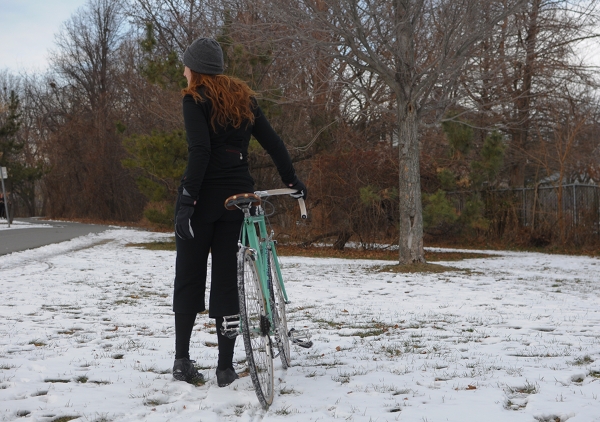
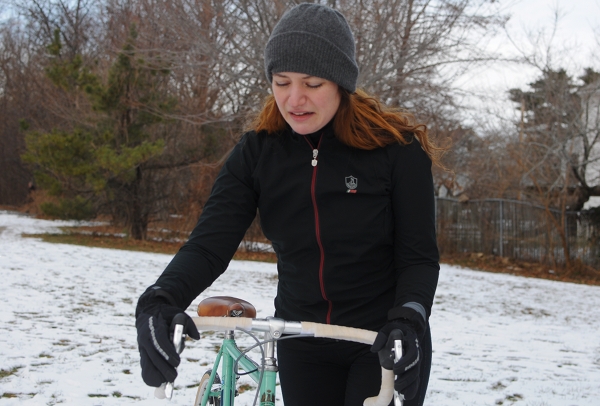
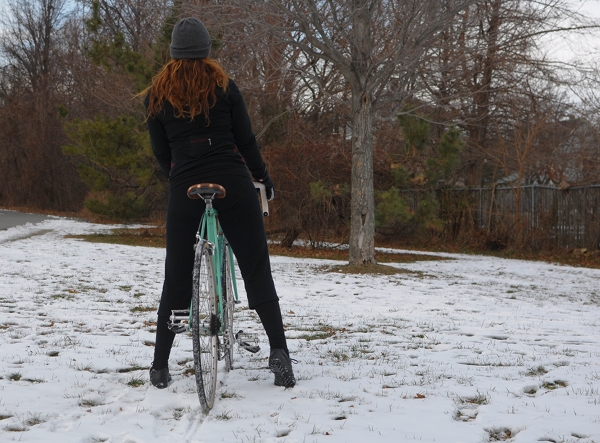
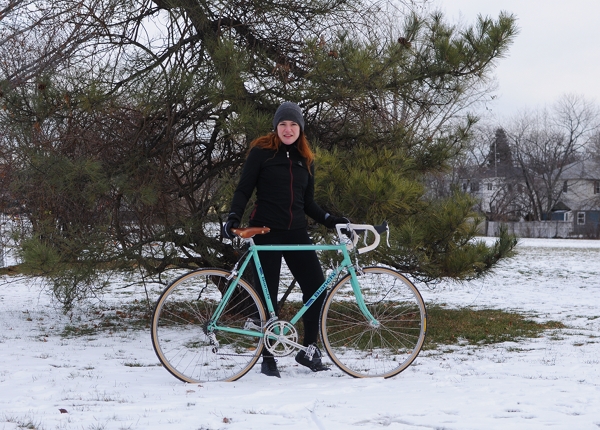
After resisting "technical wool" for as long as I could, I finally gave into it, because nothing else was working for me. I hope to write a comparison review of some popular wool brands soon, but basically what I am wearing in these pictures are just a couple of thin layers by Icebreaker and I/O Bio, an old wool hat, and a wind-proof cycling jacket. I am embarrassed to admit that the jacket is Campagnolo, but it is the best athletic jacket I have worn, ever, and I should write a separate review of it as well, as it certainly deserves it.

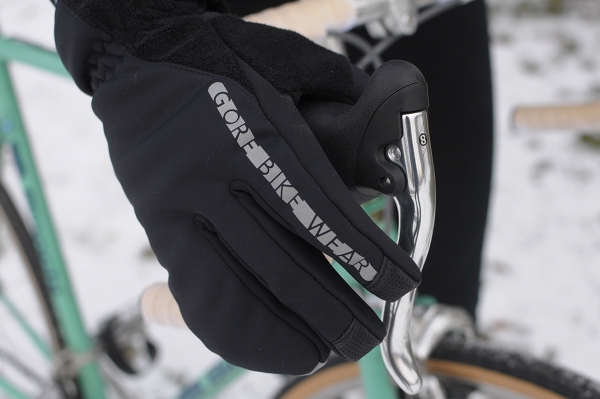
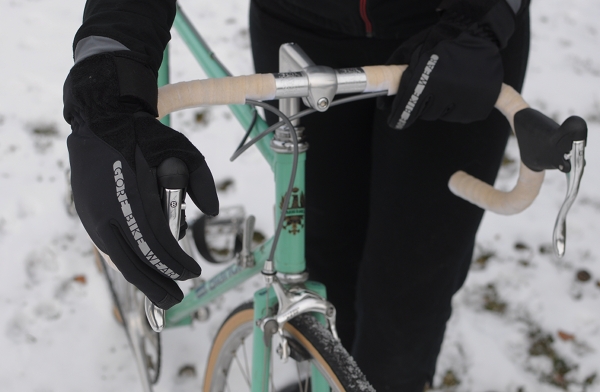
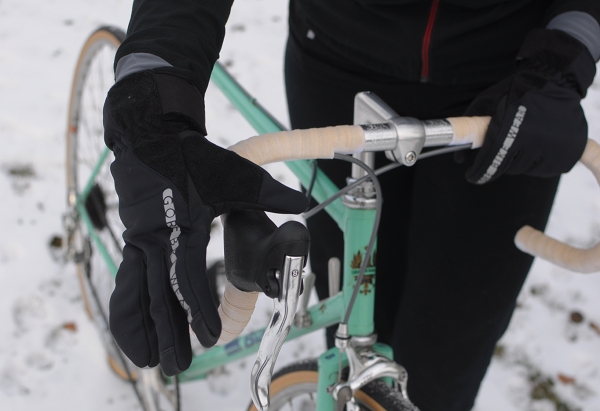
But my most interesting (as in "bizarre") acquisition for winter road cycling are these Gore Bike Wear "lobster gloves". After mentioning in a previous post about my hands freezing when riding with drop bars, I received suggestions from readers for this style of gloves, and the Co-Habitant got them for me as a gift. The concept of "lobster gloves" was new to me, but I was willing to try anything to keep my fingers from going numb when positioned on the brake hoods. These gloves really do make your hands look like enormous, mutant lobster claws, and whether you consider that cute or unacceptably grotesque is a matter of taste.

The ideas is, that, unlike regular mitten shells, "lobster gloves" make it possible to squeeze roadbike levers while still keeping at least your pinkie and ring fingers together for maximum warmth. There are different variations of this style, and some versions keep the index finger and middle finger together as well. We went to a local Eastern Mountain Sports store to look for these gloves, and I tried several versions by different manufacturers. I chose the ones by Gore Bike Wear (called "Radiator Gloves"), because they were the only ones that allowed me to freely squeeze the brake levers on the floor model roadbikes they had in the store. Similar-looking gloves by Pearl Izumi and other manufacturers constrained my hands too much and interfered with lever squeezing motions. The sizing of the Gore gloves was unisex, and size 6 fit me perfectly. Normally I wear I size 7 in women's gloves.

Once I wore the "lobster gloves" in action, I had to make some adjustments to how I positioned my hands on the brake hoods. Braking while wearing the gloves was more difficult than without, but do-able. And they did keep my hands warm, as well as dry. The inside material is soft and silky, and the outside material is textured, preventing slippage on the handlebars. Of all the available choices, I am glad that I got this version. But I would recommend that those looking for gloves in this style try them on in person if at all possible, especially if you have brake lever reach issues on a roadbike.

As for the handling of the bicycle itself - the Bianchi was great, except when encountering patches of ice or snow, at which point it was not great at all (think ice skating) and I had to get off and walk. After doing that a few times on the Minuteman Trail, it became clear that the trail was no longer usable at this time of year and it was only really possible to cycle on the main roads. A pity, as the roads leading out of town are usually heavy with traffic and unpleasant to negotiate. By the time I get through Arlington on my way to the more open countryside areas in Lexington, I am usually in a bad mood from competing with the aggressive drivers - not a situation I want to put myself in under slippery winter conditions. The additional difficulties of decreased visibility from my eyes tearing up, and a constantly running nose, contributed to my feeling of extra vulnerability on the road.

Although this is the closest I've ever gotten to winter roadcycling, it was still far from an actual success - especially since the the emptiness of the roads on Christmas Day is not something I can normally count on. From a logical standpoint, I don't think it's worth it to cycle for sport in the winter under these conditions - particularly for someone like me, whose bicycle handling skills are still relatively poor. But from an emotional standpoint, I am afraid I'll go nuts if I have to stay off roadbikes until late March; I had not realised until now how addicted I've become. Maybe I should snap out of it, be an adult and wait till Spring. Or maybe I should get goggles for my eyes, stuff wads of kleenex in my sleeve for easy nose-wiping access, consult with local cyclist about the safest winter routes, and try again. I guess we'll see how much I really want this. I am not big on setting goals or making resolutions, but I am curious about what will happen next.

Tuesday, November 30, 2010

What Our Hands Can Do

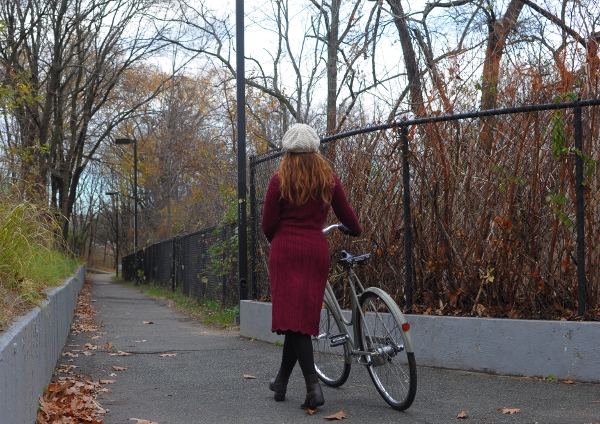
Looking over these photos from the Friday after Thanksgiving, I noticed something interesting: Almost everything pictured here is hand-made. The dress I am wearing was made by my mother. The hat and scarf were made by me. Even the bicycle was hand-made by an Italian frame builder for Bella Ciao. This combination was not intentional, but once I noticed it, I found it striking. 

My mother knitted this elaborate wool dress for herself in the early 1980s and wore it all through her 20s and 30s, after which point she gave it to me. The dress suited her much better, but that has not stopped me from wearing it since I were a teenager. It only occurred to me recently how remarkable it is for a dress like this to survive being worn for three decades by two different women - neither of whom are at all gentle with their clothing. And yet here it is, still looking fresh and current. The tailoring, the textural variation, and the attention to detail are incredible by today's standards - and my mother made tons of this stuff when I was a child, while being a busy career woman, too. (I remember seeing her knit while speaking on the phone and reading a book about mathematics at the same time... )

While my own attempts at knitting are fairly pedestrian compared to my mother's past projects, they do have one feature in common: longevity. I knitted this scarf back in grad school, and 8 years later it remains alive and well, while countless store-bought ones have since fallen apart. My friends, for whom I've made clothing as far back as high school, give me the same feedback - some of them still wear the things I made in the mid-'90s. Noticing this was a big reason why I started to knit and sew again this year: I am not that great at it, but the stuff I make lasts and fits me better than store-bought.

Over this past year I have done something a little nuts: I've sold or given away most of my clothing - stuff that I had collected and saved for more than 10 years. When I was younger, I was into edgy fashion and quirky designers, but lately that interest has all but faded - replaced by a curiosity regarding how far I can go making things on my own. Aside from knitting, I have been cutting up some of my remaining old clothing and handsewing "new" clothes out of it. Hopefully I will get a sewing machine for the holidays, which will allow me to take things further. In the past I have dabbled in making my own fountain pens as well. And eventually - maybe, just maybe, I would like to try my hand at building bicycle frames - or at least designing them à la Grant Petersen.

While my framebuilding days are not yet on the horizon, I do have enormous respect for bicycles hand-made by others, and an insatiable curiosity about the process. Whether independent framebuilders such as JP Weigle, Peter Mooney, Royal H. and ANT, or small manufacturers such as Mercian, Rivendell, Velo Orange and even Pashley and Bella Ciao - I am impressed by the sheer amount of work and consideration it takes to get the design, the construction, and the finishing just right. The more I learn about the process, the more overwhelming it seems. In a world of homogenous, mass-produced goods, it is amazing to witness what our minds and our hands are capable of creating.

Saturday, November 27, 2010

Musings on MUSA Knickers

Musa is a Rivendell  house brand that stands for "made in USA." Under this label, Rivendell produces a line of clothing and accessories, including the knickers and pants that are designed specifically for cycling, but are described as being wearable "anywhere when formal wear isn't called for." The Co-Habitant ordered both the knickers and the long pants over the summer, because he was wearing out all his regular pants on long rides, and he thought these would be more durable. He immediately loved them and kept recommending them to me - until I finally bought a pair of knickers myself a couple of months later. Our impressions of this product are somewhat different, and put together they will hopefully be informative for both genders.

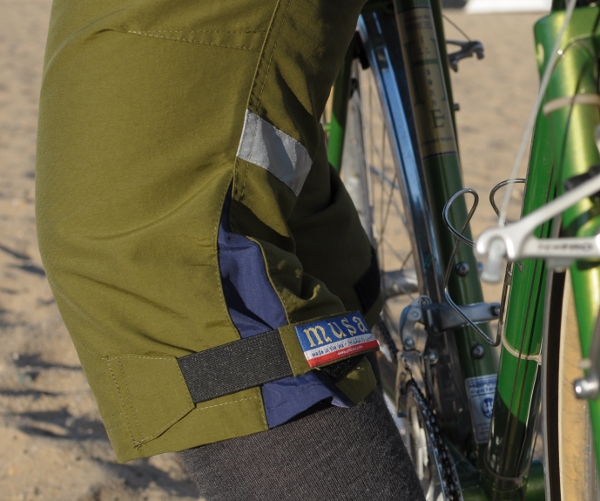
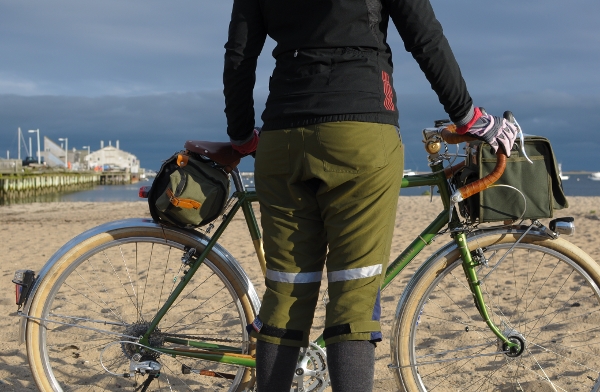
Made of lightweight, breathable, and durable nylon, the Musa knickers work well for cycling, because they feature a roomy gusset in the crotch area, adjustable-width cuffs with velcro straps, and reflective strips.

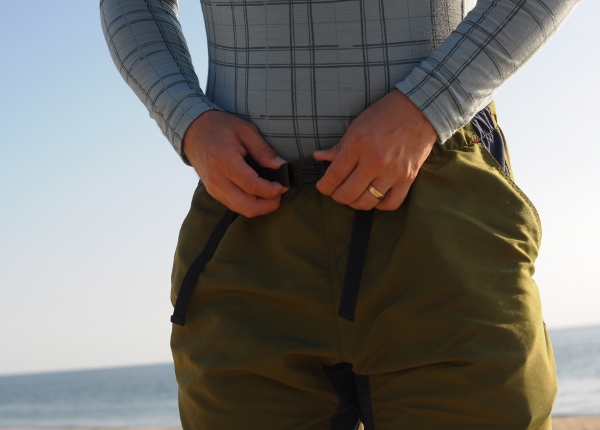
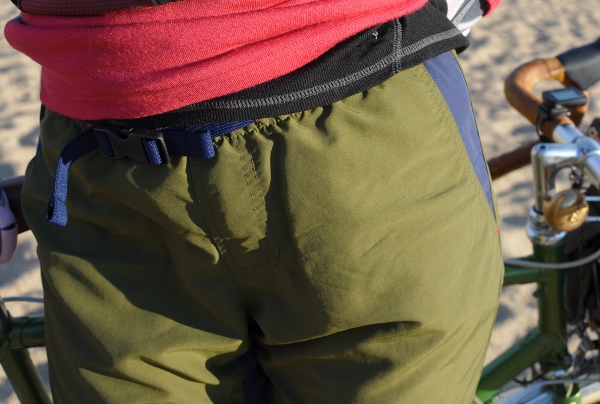
The adjustable waist closes via one of those nylon belts and plastic buckles you see on hiking pants.

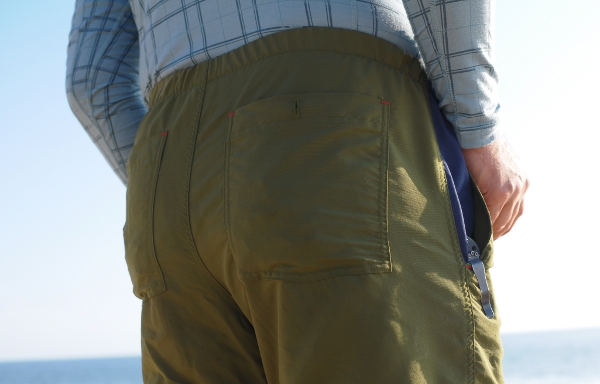
The pockets are deep and cut in a way that stuff doesn't spill out of them while cycling - a useful feature for those who like to keep small items on their person while on the bike.

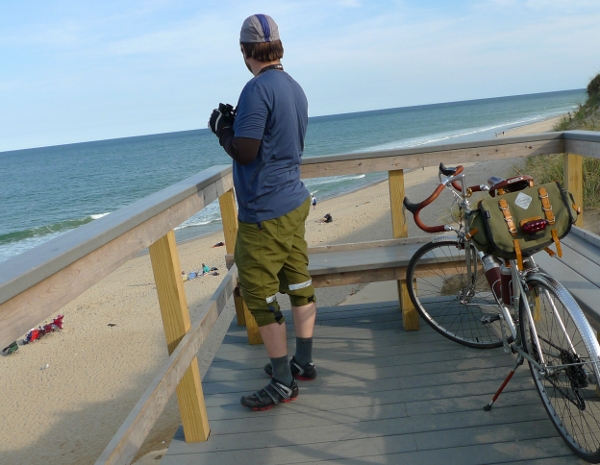
The Co-Habitant normally wears pants with a 34" waist, and the XL Musas fit him well. They are relaxed, but with a tailored look to them. The cut is flattering to the male body.

The pants and knickers are currently available in olive, gray, black and blue. The Co-Habitant has the olive knickers (pictured) and the gray long pants. The knickers he wore mostly over the Summer and early Fall; the pants he continues to wear now, including off the bike. His feedback is that his Musas are extremely comfortable and useful. Not only does the seamless gusset protect from chafing during long trips, but the pants regulate temperature well in both hot and cold weather, and are a lot more durable than the trousers he wears off the bike (one problem with cycling long distance in regular clothing, is that the clothing can get ruined from rubbing against the saddle and from sweat). For those men who do not want to wear tight, padded cycling shorts, but want something cycling-specific that looks decent off the bike, these are a good option. I do not quite agree with Rivendell's description of them looking like "normal" pants. They are definitely quirky. But I find this particular quirkiness attractive.

Moving on to my own experience with the Musa knickers (and in case you are wondering - no, we do not wear them at the same time!), my main reason for buying them was the gusset. I cannot ride a roadbike for more than 20 minutes while wearing anything with seams along the crotch, and finding pants without seams in that region is not easy. So seeing how happy the Co-Habitant was with his Musas, I finally ordered a pair for myself. Rivendell describes these knickers as unisex and has a size chart for women. Going by the waist measurements on the chart, I initially ordered an XS. However, I could not pull them on over my hips, so I exchanged them for a Small. The Small went on over my hips fine, but fit me overly loosely petty much everywhere else.

Sometimes a loose fit can be flattering, but with the Musa knickers luck was not on my side. The sagginess in the butt distorts the shape of my body in a way that just doesn't look good, and extra material bunches up around my inner thighs.

The knickers are also overly loose in the front. It is as if the fabric won't lie against my body right - bunching up in all the wrong places. This leads me to conclude that the pants were simply not tailored with a female waist-to-hip ratio in mind. While I am not the curviest woman in the world, I do have a narrow waist and comparatively wide hips - a combination that makes it difficult to get the sizing right.

But fit and sizing issues aside, the Musa knickers do have a number of features I find useful. The gusset is huge and there is not a single seam between me and any part of the saddle, which is excellent. The nylon material really is very light and breathable, as well as wind-resistant, mildly water resistant and fast-drying. The fabric does not pill or degrade after prolonged contact with the saddle  - and having worn through several pairs of leggings and shorts over the past year, such durability is welcome. The pockets are staggeringly deep - though the feature is wasted on me, as I prefer to cycle without too much stuff in my pockets. The expandable width cuffs with velcro closure are clever, if a bit finicky (I had to redo mine a few times to get them to feel right). As other owners of these have noted, the pants were shiny and slippery in the beginning, but this went away after a few long rides.

All in all, the Musa pants and knickers are excellent if you want to wear something comfortable and durable on a roadbike, and if you are male. If you are female, consider the issues with fit and compare how the pants look on a male vs a female body. For me, the gusset and other positive features are worth it - but only because I found no better alternatives. And I would never wear these knickers in a context other than on a roadbike, which does diminish the value of what was meant to be a "wear them anywhere" design.
Tuesday, November 23, 2010

The 'Thanking Your Bicycle' Give-Away!

Have you thanked your bicycle lately? Just think of all the wonderful things our velocipedian friends have done for us! Surely they deserve a little thanks? To inspire you, I have prepared a little give-away for the Thanksgiving holiday.

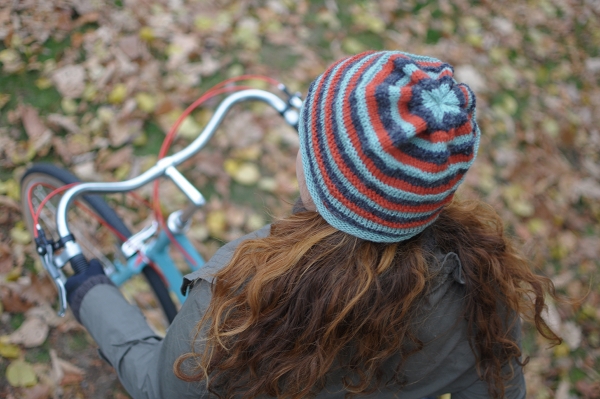
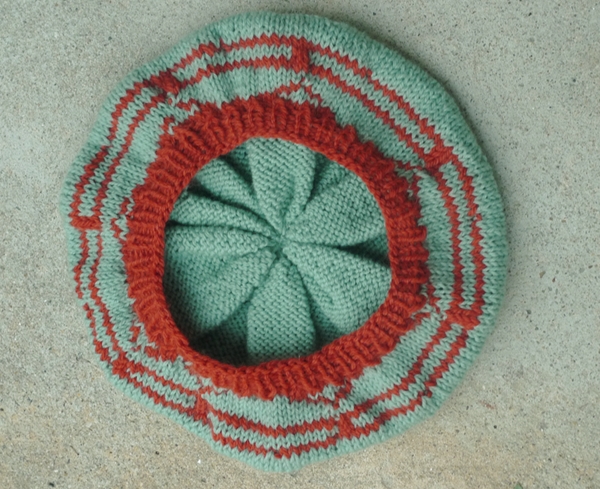
As a small "thank you" to my readers, I will be giving away a hand-knitted "cycling hat" - made especially for the recipient, in their size. The hat will be 100% wool - a soft wool that feels nice against your skin, densely knitted to protect against the wind. The shape is as pictured above and also here. It covers the ears, and can either be worn on its own or (and I am 98% sure about this) will fit under a helmet. The pattern will be stripey - using whatever colours spontaneously come to mind out of what I have available. If the recipient is male, I can make "manly coloured" stripes as well. And if you hate a particular colour, you can request that I not include it. The finishing at the top of the hat is as shown in the picture above. Just a simple, fun and (hopefully) useful hat, custom made for you by me.

If you would like to be considered for the "Thanking Your Bicycle Give-Away," here are the guidelines:

Please write a thank you note to your bicycle in the "Remarks" section of this post. 
Description of your bicycle and a links to pictures are a bonus, but not required. 
If you have multiple bicycles, multiple entries are eligible. One entry per bicycle. 
Entries should be posted between the start of Wednesday, November 24th and the end of Friday, November 26th.
International entries are eligible from all corners of the world with reliably functional postal systems.
Shipping will be taken care of.
Recipient will be announced Sunday, November 28th.

Thank you for reading Lovely Bicycle, and enjoy!

Sunday, November 14, 2010

Hats and Scarves for Cold Weather Cycling: What to Look For

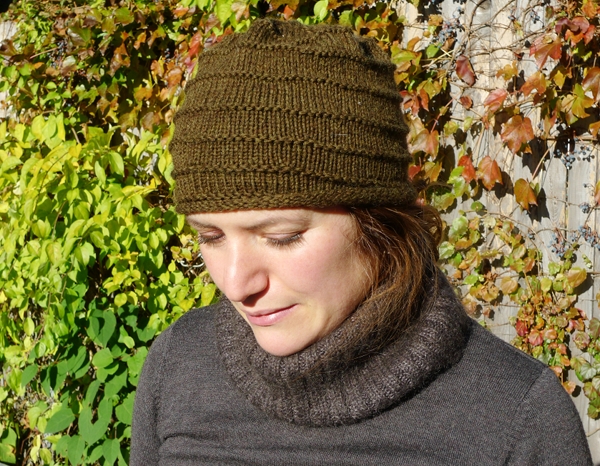
This Fall I've been sick a lot, so I am using the downtime to knit. After making a couple of skirts, I moved on to a special project: hats and scarves specifically designed to resist the cold and wind while cycling.

While it may seem that any hat and scarf should be sufficient for this, last winter I discovered that this wasn't so. Store-bought knits can be a mixed bag in terms of how well they work, even if they "look" warm and cozy. So while making my own, here are some criteria I've come up with that may help as you're winter shopping.

1. Adequate coverage

This may be obvious, but a hat is most effective if it covers your ears. It should also be tight enough around the opening so that it does not slide while cycling - especially if it's windy. For me, hats that are "slouchy" are often too loose and quickly slide off my ears - or off my head entirely - when I cycle. I solved this problem by making the openings on mine extra tight, and you can watch for that factor in store-bought hats as well.

As for scarves, they can often come loose and unravel, or at least slip in a way that exposes your throat to the wind while cycling. If you have found this to be a problem, consider getting what is called a cowl neck, or a neck warmer instead. This is basically a thick, knitted turtleneck, without a sweater attached to it. You slip it on over your head and tuck the bottom under the collar of your coat. Unlike a scarf, it stays put and provides adequate coverage - even when cycling against the wind.

2. 100% wool

Assuming that you are looking for knit hats and not for sporty high-tech fleece, pay close attention to the material. I have been amazed to discover just how much better 100% wool is at keeping out the chill than a blend that includes even a small percentage of cotton, acrylic, or other materials. It can be convincing to see a fluffy knit hat with fair isle patterns of reindeer on it - but if it's even partly acrylic or cotton, it just won't work as well as wool.

Some might worry about wool feeling scratchy agains their heads or necks, but today it is easy to find wool with soft textures - wool that feels cotton-like or silk-like. While cashmere is nice, it is not necessary if you can't afford it. To me, peruvian alpaca has a very pleasant feel to it, and it is fairly affordable.

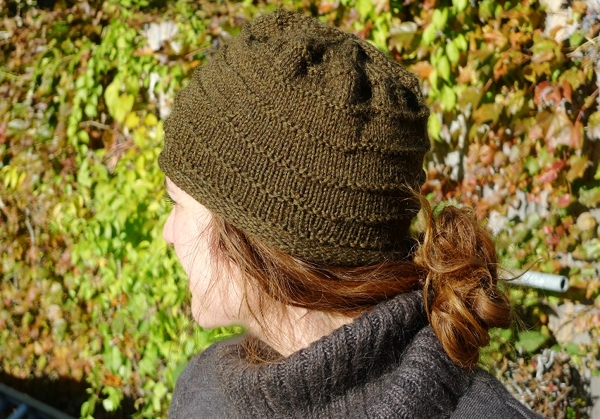
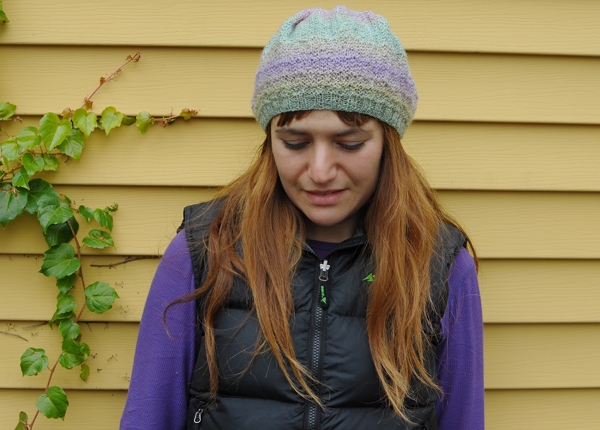
Even a gauze-thin wool hat can be surprisingly effective against the cold and wind while cycling. I made this one when it was still summer-ish, but it works well even in November.

2. Dense stitching

It is easier, less time consuming, and requires less wool to make a loosely-knit piece than a tightly-knit one. Chunky, loose stitching also "looks" warmer. But in actuality, it means that the knit is more porous - making it easier for the wind and the cold air to pierce right through it. If you want a hat or scarf that will really provide an impenetrable border against the frost and wind, look for one with dense stitching, and not necessarily in the chunkiest wool possible. It will be more functional.

Cycling in the cold is a special challenge for knitted hats and scarves, because they need to remain effective when you are moving against the wind at 10-20 miles per hour. I own lots of knitted accessories, but when the temperatures fell to below freezing last winter, I discovered that only a few of them truly kept me warm. Pieces that provide full coverage of the ears and throat, are 100% wool, and are densely knit, will be up for the job where others fall short.

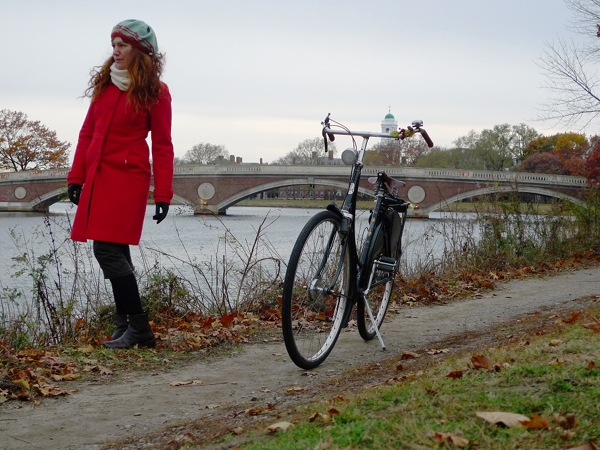
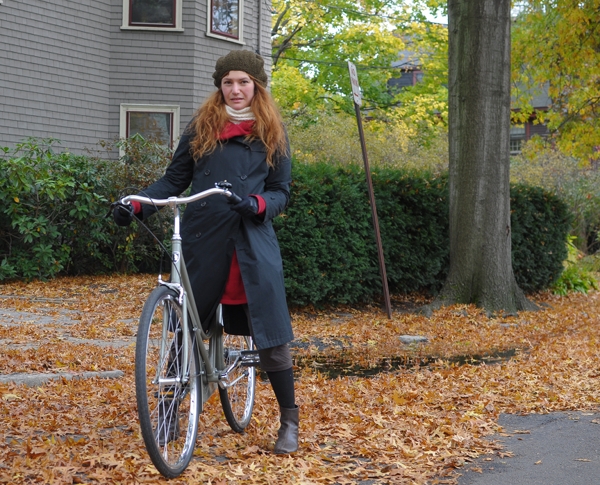
{all hats and scarves pictured here made by me}